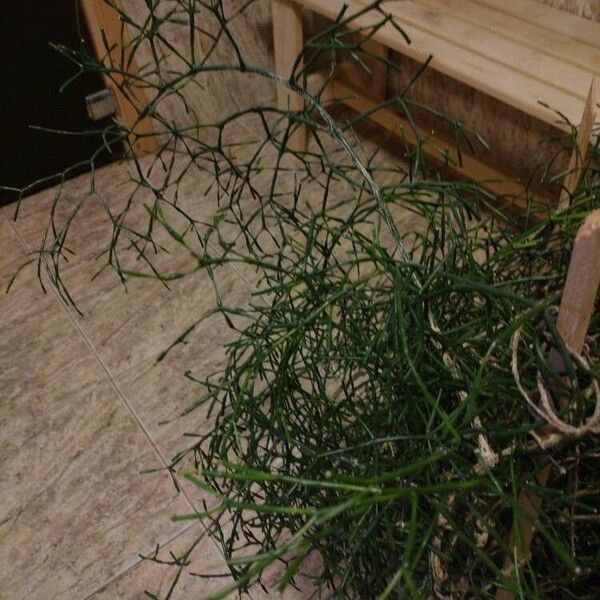
Plant Overview
Known affectionately as the Drunkard’s Dream or Dancing Bones Cactus, this whimsical Brazilian native looks like a collection of tiny, green glass bottles stacked end-to-end. Unlike its desert-dwelling cousins, this epiphytic cactus thrives in the dappled light of the rainforest canopy rather than the scorching sun. It is a true conversation starter that brings a touch of architectural strangeness and vibrant personality to any indoor plant collection.
🔍 How to Identify
- 🦴 Segmented Stems: The most striking feature is the branching stems made of small, club-shaped segments that resemble miniature bones or inverted bottles.
- 🌼 Golden Blooms: In late winter or early spring, vibrant, bell-shaped flowers in shades of neon yellow or burnt orange burst from the very tips of the "bottles."
- 🌿 Growth Habit: It starts as an upright, bushy plant but gracefully arches and trails as it matures, eventually reaching lengths of 12 to 20 inches.
🏡 In Your Garden
- ☁️ Atmospheric Needs: Because it originates from the humid Atlantic forests of Brazil, it craves higher humidity than your typical cactus. It appreciates being grouped with other plants or placed near a humidifier to mimic its tropical home.
- 💧 Thirst Cues: This plant hates "wet feet" but dislikes being bone-dry. If the segments start to look wrinkled or lose their turgidity, the plant is likely using its internal water reserves and is ready for a thorough soak.
- ☀️ Light Nuance: Think "jungle floor" rather than "sand dune." It prefers bright, filtered light. Direct afternoon sun can scorch the delicate segments, turning them a stressed reddish-purple or causing them to drop.
⚠️ Safety & Toxicity
- ✅ Safe Status: This plant is generally considered non-toxic to cats, dogs, and humans, making it a fantastic choice for households with curious pets.
- 🧴 Mild Irritation: While not poisonous, the sap inside the stems can occasionally cause mild skin irritation for people with high sensitivity. It is always a good practice to wash your hands after pruning or propagating.
✨ Fun Fact
The nickname "Drunkard’s Dream" comes from the unique shape of the individual stem segments, which look exactly like old-fashioned whiskey bottles! In the wild, these "bottles" act as perfect catch-basins for organic debris and rain.

Detailed Care Instructions

Place in a window with dappled sun or a spot in the middle of a room. Or directly in a window facing west or east.

The presence of a dry surface layer of soil does not indicate that the plant requires water. Instead, stick your finger 1-2" (3-5 cm) deep in the soil to feel dampness or moisture content. If the soil seems dry, it's time to water your greens. If the soil is still moist, however, it is better not to water your plant and instead wait a day or two. Overwatering or waterlogging raises the risk of root rot. So if the soil takes longer than a week to dry, check the light conditions because it's likely that the plant isn't getting enough light. It's fine if the upper layer of soil is dry between waterings, but the deeper soil layer should always have some moisture.
These plants can thrive without taking help from any fertilizer. However, if the medium of growth is something other than soil for instance sand then you may need to add little fertilizer. The best way to know if your plants need fertilizer or not is to check for yellowing of leaves. If the leaves start to turn yellow it’s fertilizing time.
You may use Cactus Fertilizer for your Drunkard's-Dream
Common pests of the drunkard's-dream include Scale insect, mealybugs, spider mites. Make a habit of checking your drunkard's-dream frequently for pests so that any infestations can be caught and managed early.







