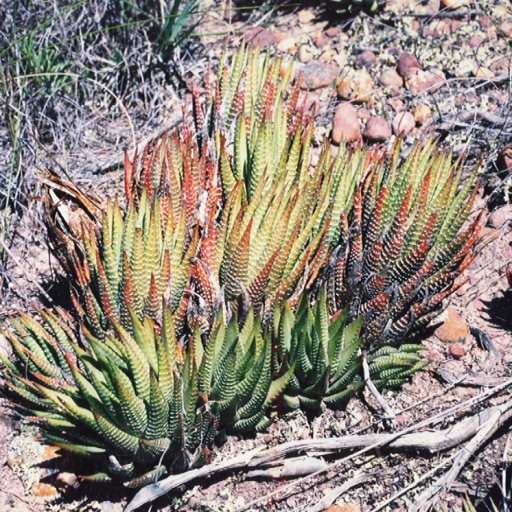
Plant Overview
Often called the "Zebra Plant" or "Zebra Haworthia," this charming succulent is a miniature marvel from the Eastern Cape of South Africa. While it looks like a tiny, aggressive Aloe, it is actually quite gentle and slow-growing, making it a favorite for "desk-top" gardeners. Its architectural shape and striking white stripes give it a modern, clean aesthetic that fits perfectly in any home.
🔍 How to Identify
- 🍃 The Leaves: Thick, fleshy, triangular leaves that grow in a tight, structural rosette. The leaves curve slightly inward, giving the plant a "clenched fist" appearance.
- 🦓 The Stripes: The outer surface of the dark green leaves is covered in distinct, raised white horizontal bands or "tubercles" that feel like tiny, hard pearls.
- 📏 Stature: This is a compact species, rarely exceeding 5–8 inches in height, which makes it perfect for small pots and terrariums.
🏡 In Your Garden
- ☀️ Light Nuance: Unlike many of its desert cousins, the Zebra Plant prefers bright, filtered light over direct, scorching sun. If the leaves start to turn red or white, it’s likely getting too much direct UV and needs a shadier spot.
- 💧 Thirst Management: Because it stores a significant amount of water in its leaves, it is highly drought-tolerant. It is far more likely to die from "kindness" (overwatering) than neglect. Always wait for the soil to feel bone-dry before watering again.
- 🪴 Clumping Habit: As the plant matures, it will produce "pups" or offsets around the base. These can be left to create a lush, crowded cluster or snapped off to be gifted to friends as new individual plants.
⚠️ Safety & Toxicity
- 🐾 Pet Safe: One of the best features of the Haworthia family is that they are non-toxic to cats and dogs. It is a perfect "worry-free" plant for pet owners.
- 👶 Kid Friendly: Unlike Agaves or Cacti, the Zebra Plant does not have sharp, skin-piercing spines or irritating sap, making it safe for curious little hands.
✨ Fun Fact
Almost every "Zebra Plant" sold in big-box stores is actually Haworthiopsis attenuata. You can tell if you have a "true" Fasciata by feeling the inside of the leaf; the true Zebra Plant is perfectly smooth on the inner leaf surface, while the common lookalike is bumpy on both sides!

Detailed Care Instructions
Here are some tips to help you grow Haworthia Fasciata successfully:
- Light: Place your Haworthia Fasciata plant in bright, indirect sunlight. It prefers bright but filtered light, so avoid direct sunlight that can scorch its leaves.
- Temperature: This plant thrives in average room temperatures, between 65-80°F (18-27°C). It can tolerate slightly cooler temperatures during winter.
- Watering: Haworthia Fasciata is a succulent plant, so it stores water in its leaves. Water it thoroughly but infrequently, allowing the soil to dry out between waterings. Overwatering can cause root rot.
- Soil: Use a well-draining cactus or succulent soil mixture to prevent waterlogged roots. Adding perlite or pumice will improve drainage.
- Potting: Choose a small pot with drainage holes to avoid water accumulation. Repot your Haworthia Fasciata only when necessary, generally every 1-2 years.
- Humidity: Haworthias prefer low humidity environments, so you don't need to increase humidity levels, especially if you live in a dry climate.
- Fertilizer: Feed your Haworthia Fasciata with a diluted, balanced houseplant fertilizer once a month during the growing season (spring and summer) to promote healthy growth.
- Propagation: Haworthia Fasciata can be propagated easily through offset pups or leaf cuttings. Allow the offsets to dry for a few days before planting them in well-draining soil.
- Pruning: You can trim off any damaged, dead, or yellowing leaves with a clean and sharp pair of scissors or pruning shears.
- Pests and diseases: Haworthia Fasciata is relatively pest-free, but it can occasionally suffer from mealybugs or aphids. Treat any infestations with insecticidal soap or neem oil.
Remember to observe your plant regularly to ensure it is healthy and adjust your care routine accordingly.

Place in a window with dappled sun or a spot in the middle of a room. Or directly in a window facing west or east.

To properly care for this particular species of plant, it is recommended to water it once every two weeks. This plant should be placed in porous soil that allows for adequate drainage, and it is important not to over-water as this can lead to root rot. When watering, pour the water slowly onto the soil, allowing it to soak in before adding more. It is important to only water the soil and avoid getting water on the leaves and stem as this can cause damage. This plant prefers bright, indirect sunlight and should be kept in a temperature range of 60-80°F.
To fertilize this plant, it is recommended to use a balanced, water-soluble fertilizer diluted to half strength. Apply this fertilizer every three to four weeks during the growing season, which typically spans from spring to fall. Avoid fertilizing during the dormant season, which occurs during the winter. It is important not to over-fertilize this plant, as excessive nutrients can lead to leaf burn and other issues. Always follow package instructions and use caution when fertilizing any plant.
The ideal soil for the plant is one with good drainage. It should be loose and well-aerated to allow for proper root growth. The soil should also be slightly acidic, with a pH level between 6.0 and 7.0. A recommended mixture is 50% perlite or pumice and 50% succulent soil. This will provide the plant with enough drainage and aeration. Avoid using heavy soils or soils that retain too much moisture as this can lead to root rot and other fungal diseases.
One way to propagate this plant is by taking offsets from the parent plant. To do this, gently remove the offsets from the base of the parent plant using a clean, sharp knife or scissors. Make sure to include some of the root tissue with each offset.
Next, allow the cut edges of the offsets to callus over for a few days to prevent excess moisture from entering the cut area. Once they have callused, plant the offsets in a well-draining potting mix and water lightly. Keep the newly planted offsets out of direct sunlight until they have fully established new roots.
Alternatively, this plant can also be propagated through leaf cuttings. Simply cut a healthy leaf from the parent plant and allow the cut edge to callus over for a day or two. Plant the leaf in a well-draining potting mix with the cut edge buried slightly and water lightly. Place in a bright location but avoid direct sunlight until the leaf has rooted and new growth appears.
Common pests of the zebra haworthia include Mealybugs, thrips. Make a habit of checking your zebra haworthia frequently for pests so that any infestations can be caught and managed early.








