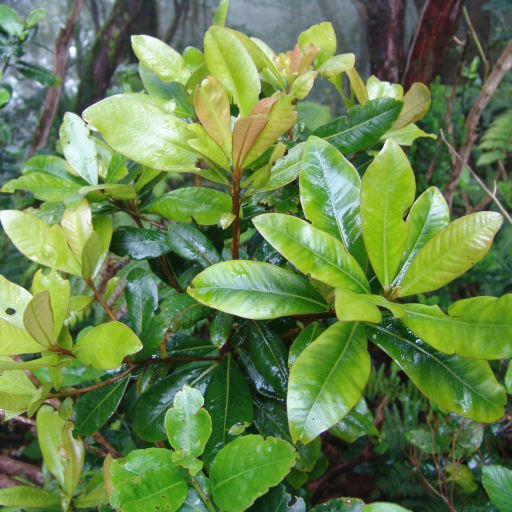
Plant Overview
Native to the misty, ancient laurel forests of the Canary Islands and Madeira, the Heberdenia excelsa, commonly known as the Aderno, is a living relic of the prehistoric Tertiary period. This elegant evergreen tree feels like a piece of a forgotten world, typically found thriving in cloud forests where it "combs" moisture directly out of the passing fog.
🔍 How to Identify
- 🍃 The Foliage: Look for leathery, oval-shaped leaves with a deep, glossy green hue. They are remarkably thick, a specialized adaptation that helps the plant retain water in humid environments.
- 🌼 The Flowers: In late winter or spring, it produces clusters of tiny, bell-shaped flowers. They are often a subtle yellowish-white or greenish tint, tucked discreetly among the leaves.
- 🔮 The Berries: Following the blooms, small, fleshy fruits appear. These pea-sized drupes transition from green to a dark, moody purple or jet black as they ripen.
🏡 In Your Garden
- ☁️ Microclimate Needs: Because it originates from cloud forests, the Aderno craves high humidity and protection from dry, scorching winds. It is an excellent choice for a sheltered, "woodland style" corner of a garden.
- 💧 Moisture Balance: While it loves humidity, it cannot stand "wet feet." Ensure your soil is rich in organic matter but drains freely to prevent root rot. It is surprisingly hardy once established but grows slowly, rewarding the patient gardener.
⚠️ Safety & Toxicity
- 🟢 General Status: The Aderno is generally considered non-toxic to touch, and there are no widespread reports of severe poisoning.
- 🐾 Berries & Pets: While not classified as "deadly," the berries are not edible for humans or pets. Ingesting them may cause mild stomach upset or nausea in curious dogs or cats, so it is best to keep it as an ornamental piece rather than a snack.
✨ Fun Fact
The Aderno is what botanists call a "Tertiary relict." This means it is part of a group of plants that once covered much of Europe and North Africa millions of years ago, before the Ice Ages pushed them back to the tiny, sheltered volcanic islands where they survive today!

Detailed Care Instructions








