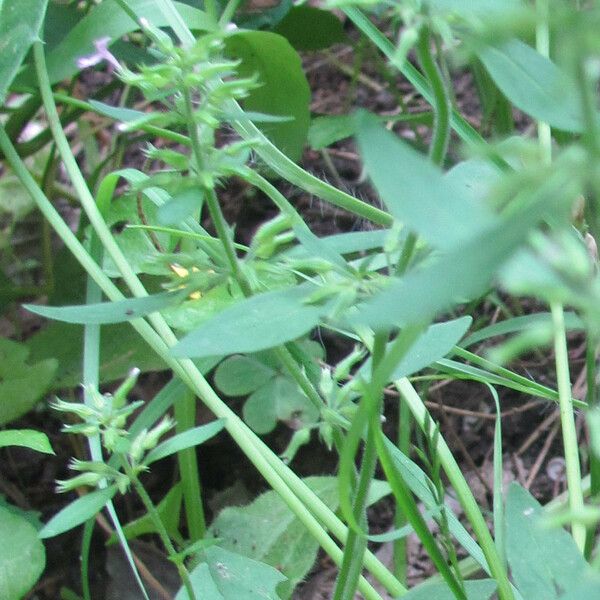
Plant Overview
Often called the Slender Pennyroyal, this petite native of the American Southwest is a hidden gem of the mint family. Though it looks delicate, it is a tough survivor frequently found blooming in rocky limestone soils and cedar glades. Its most enchanting trait is the refreshing, zesty mint perfume it releases whenever you brush against its tiny, unassuming leaves.
🔍 How to Identify
- 🌸 Mottled Blooms: Look for tiny, tubular flowers in shades of lavender or pinkish-purple. The "lower lip" of the flower usually features delicate dark spots that serve as nectar guides for bees.
- 🌿 Square Stems: True to its membership in the Lamiaceae (mint) family, the stems are distinctly four-sided, slender, and usually covered in fine, downy hairs.
- 🍃 Aromatic Foliage: The leaves are small, narrow, and grow in opposite pairs. When crushed, they emit a powerful, spicy-mint scent that is much stronger than the plant’s size would suggest.
🏡 In Your Garden
- 🪨 Limestone Specialist: This plant thrives in poor, rocky, or alkaline soils where other garden favorites might struggle. It is an excellent choice for xeriscaping or native rock gardens in dry climates.
- 🌱 Self-Seeding Habit: As an annual, it completes its entire life cycle in one season. If you want it to return next year, avoid heavy mulching, as the seeds need to make contact with the soil to germinate the following spring.
⚠️ Safety & Toxicity
- ⚠️ Liver Irritant: While many members of the mint family are edible, Hedeoma species contain pulegone. In concentrated amounts, this compound can be toxic to the liver.
- 🐾 Pet Warning: The plant’s strong essential oils can be irritating or toxic to cats and dogs if ingested in large quantities. It is best treated as an ornamental and aromatic plant rather than a culinary herb.
✨ Fun Fact
Historically, travelers and early settlers would rub the leaves of the Slender Pennyroyal on their skin or clothes to ward off gnats and mosquitoes. This earned it a reputation as a "pioneer's bug spray" long before synthetic repellents existed!

Detailed Care Instructions
To grow Hedeoma acinoides, also known as the American false pennyroyal or slender false pennyroyal, follow these steps:
- Choose the right location: Hedeoma acinoides prefers full sun to partial shade. It can tolerate a variety of soil types, as long as the soil is well-draining.
- Prepare the soil: If the soil is heavy or lacks fertility, amend it with organic matter like compost or aged manure to improve drainage and enrich the soil.
- Planting: Dig a hole that is slightly larger than the root ball of the plant. Place the plant in the hole and backfill with soil, gently tamping it down. Space multiple plants about 12 inches apart to allow for spreading.
- Watering: Keep the soil consistently moist but avoid overwatering as this can lead to root rot. Water the plant deeply once a week, or more frequently during hot and dry periods.
- Mulching: Apply a layer of organic mulch, such as wood chips or straw, around the base of the plant to conserve moisture and suppress weed growth. Mulching also helps regulate soil temperature.
- Pruning: If the plant becomes leggy or less compact, lightly trim it to encourage bushier growth. Pruning also helps shape the plant and remove any dead or diseased parts.
- Fertilizing: Hedeoma acinoides usually doesn't require heavy fertilization. However, you can apply a balanced slow-release fertilizer in early spring to provide necessary nutrients.
- Pests and diseases: Hedeoma acinoides is generally resistant to pests and diseases. However, keep an eye out for common garden pests such as aphids or spider mites, and take appropriate measures if necessary.
- Winter care: Hedeoma acinoides is a perennial plant and can withstand mild winters. However, if you live in an area with harsh winters, mulch around the base of the plant to protect the roots from freezing temperatures.
- Propagation: Hedeoma acinoides can be propagated from seeds or by division. To propagate by seed, collect mature seeds from the plant and sow them in well-prepared soil in early spring. To propagate by division, carefully dig up an established plant, divide the root ball into smaller sections, and replant them.
With proper care, Hedeoma acinoides should grow vigorously and provide you with a beautiful and aromatic addition to your garden.

To water this plant, it is important to first assess the soil moisture levels. Stick your finger into the soil at a depth of about an inch and feel if the soil is dry or moist. If the soil is dry, it is time to water the plant. Use a watering can or hose with a gentle stream to water the soil around the base of the plant until the soil is evenly moist. Avoid getting water on the plant's leaves as this can lead to fungal diseases. Water the plant only when the soil has dried out, as overwatering can lead to root rot. Consider using a well-draining soil mix to prevent waterlogging and promote healthy growth.
To fertilize this plant, mix a balanced, water-soluble fertilizer at half the recommended strength and apply to the soil monthly during the growing season. Avoid over-fertilization as it can damage the roots.
Hedeoma acinoides plant grows best in well-draining soil that has good air circulation. The soil should be slightly acidic with a pH level around 6.5 to 7.5. It is important to use a soil that is rich in organic matter, such as peat moss or compost, as this will help to improve the overall fertility of the soil. Additionally, the soil should be able to retain moisture, but not be overly wet or soggy, as this can lead to root rot. It is recommended to add perlite or sand to the soil to improve drainage. Avoid using heavy clay soil as it can suffocate the plant's roots.
To propagate this plant, you will need to collect stem cuttings from a healthy and mature specimen. Select a stem that is at least 4 inches long and has several leaves attached to it. Using a sharp, sterile knife, make a clean cut just below a node (where the leaf attaches to the stem).
Remove any leaves from the bottom third of the stem, leaving at least two or three leaves on the top. Dip the cut end of the stem into a rooting hormone powder to promote root growth. Then gently insert the stem into moist potting soil, making sure the soil covers the bottom third of the stem.
Place the pot in a bright, but not direct, light and keep the soil moist but not waterlogged. The cutting should root within 2-4 weeks. Once the cutting has rooted, you can transplant it into a larger pot or to an outdoor garden bed.
It is important to note that this plant prefers well-draining soil and does not tolerate wet feet. Additionally, it can be susceptible to root rot, so be sure to avoid overwatering. With proper care, the propagated plant should grow into a healthy and thriving specimen.








