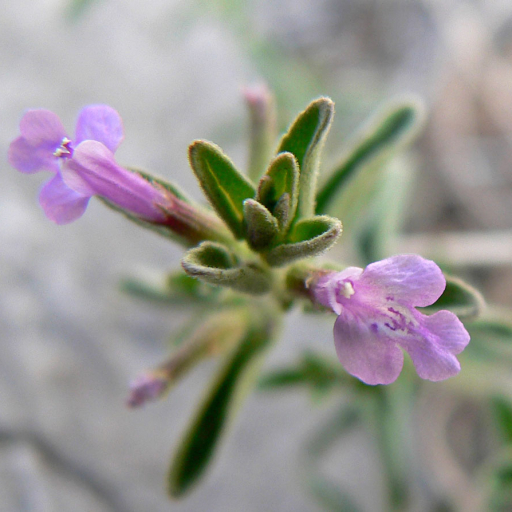
Plant Overview
Often called Drummond's False Pennyroyal or simply Lemon Mint, this petite aromatic herb is a hidden gem of the North American Southwest. It is beloved by hikers for the refreshing, citrusy scent it releases when crushed underfoot. While it may look like a delicate wildflower, it is a tough member of the Mint family that has survived in rocky, arid landscapes for centuries.
🔍 How to Identify
- 🌿 Square Stems: True to its mint family heritage, the stems are distinctly four-sided and often covered in tiny, fine hairs.
- 🌸 Tubular Blooms: The flowers are small, pale purple to lavender, and emerge from the leaf axils in delicate clusters throughout the spring and summer.
- 🍃 Aromatic Foliage: The leaves are narrow, grayish-green, and linear; the most defining feature is the intense lemon-mint fragrance they omit when bruised.
🏡 In Your Garden
- ☀️ Drought Champion: This plant thrives in "neglect." It prefers rocky or sandy soils and hates having "wet feet," making it perfect for xeriscaping or rock gardens.
- 🐝 Pollinator Magnet: While humans love the smell, bees and butterflies are the primary fans of the nectar-rich, tubular flowers.
- 🦌 Natural Deterrent: Because of its high essential oil content, deer and rabbits typically find the taste offensive and will steer clear of it and surrounding plants.
⚠️ Safety & Toxicity
- 🌿 Mildly Toxic in Concentration: While the leaves have been used historically in teas, the essential oil contains pulegone, which can be toxic to the liver in high doses.
- 🐾 Pet Caution: Concentrated extracts or large ingestions can be harmful to dogs and cats. It is best enjoyed as an ornamental or a light aromatic garden addition rather than a culinary staple.
- 🤰 Safety Note: Historically, pennyroyal species were used as abortifacients; therefore, it should be strictly avoided by pregnant individuals and pets.
✨ Fun Fact
The intense scent of Hedeoma drummondii acts as a natural pesticide. In folklore and early pioneer days, the dried leaves were often stuffed into mattresses or rubbed on clothing to ward off fleas, gnats, and mosquitoes!

Detailed Care Instructions
To grow Hedeoma Drummondii, also known as Drummond's false pennyroyal, follow these steps:
- Location: Choose a suitable location that receives full sun to partial shade. These plants can tolerate a wide range of soil conditions but prefer well-draining soil.
- Planting: Hedeoma Drummondii can be grown from seeds or transplanting young plants. If planting from seeds, sow them directly into the soil in early spring or late fall, as they require a cold period for germination. If transplanting, wait until the danger of frost has passed and space the plants about 6-12 inches apart.
- Watering: Keep the soil consistently moist but not waterlogged. Water deeply when the top inch of soil feels dry. Avoid overwatering, as this plant is sensitive to excessive moisture.
- Fertilization: Hedeoma Drummondii doesn't require much fertilizer. If the soil is poor, you can apply a balanced, slow-release fertilizer at the beginning of the growing season.
- Pruning: To encourage bushier growth, pinch back the stems by cutting about one-third of the plant's height after flowering. This will promote branching and a fuller appearance.
- Mulching: Apply a layer of mulch around the plant to help retain soil moisture and suppress weed growth.
- Pests and diseases: Hedeoma Drummondii is generally not prone to severe pest or disease issues. However, keep an eye out for common garden pests like aphids, spider mites, or mealybugs. Treat any infestations promptly with organic insecticides or soapy water.
- Winter care: In colder regions, this plant may not be fully hardy. Consider covering it with a layer of mulch or moving potted plants indoors during winter to protect them from frost and freezing temperatures.
- Propagation: Additionally, you can propagate Hedeoma Drummondii by taking stem cuttings in late spring or early summer. Place the cuttings in a well-draining potting mix and keep them in a warm, bright location until they root.
By following these steps and providing proper care, you can successfully grow Hedeoma Drummondii plants.

Place in a bright room that is sun drenched almost all day. Or directly in a south-facing window.

Watering methods for this specific plant will vary depending on its location and the soil quality. Generally, it is best to water this plant when the soil feels dry to the touch. Overwatering can cause root rot, so it is important not to let the plant sit in water. It is also recommended to use a well-draining soil mix and water the plant deeply but infrequently rather than frequent shallow watering. It is important to avoid getting water on the foliage, as this can promote fungal growth. Allow excess water to drain away to avoid root rot. Watering frequency also depends on environmental factors such as humidity, temperature, and light conditions. Consistency is key when it comes to watering this plant, so aim to water it at the same time and amount each time.
To fertilize this plant, use a balanced fertilizer with equal parts nitrogen, phosphorus, and potassium (such as a 10-10-10 or 20-20-20). Apply the fertilizer once a month during the growing season (spring and summer) and reduce to every 6-8 weeks in the fall and winter. Water the plant thoroughly before and after fertilizing to avoid burning the roots. Avoid over-fertilizing as this can cause foliage burn and damage.
The Hedeoma Drummondii plant prefers well-draining soil with good moisture retention to support its growth. The soil should be slightly acidic, with a pH level between 6.0 to 6.8. A loamy soil type is best suited for this plant as it provides the right balance of drainage and moisture retention. It is recommended to mix in organic matter into the soil, such as compost or leaf litter, to improve soil structure and nutrient availability. Avoid using heavy clay soils that retain too much moisture, as well as sandy soils that drain too quickly. A balanced fertilizer can also be added to the soil during planting or as a top dressing to provide additional nutrients to the plant.
Propagation of this plant can be done through a number of different methods, including seed propagation, stem cuttings, and division. To propagate the plant using stem cuttings, select a stem that is approximately 4 inches long and has two or three leaves on it. Cut the stem just below a node, then remove the leaves from the lower half of the stem. Dip the cut end of the stem into rooting hormone, then plant it in a well-draining soil mix. Keep the soil moist and provide indirect light until the plant has established roots. Division can be done by separating the plant's root ball into smaller sections, each with its own stem and leaves. Plant these divisions in pots or in the ground, and keep the soil moist until the new plants establish strong roots. When propagating the plant from seeds, sow the seeds in trays or pots filled with well-draining soil mix. Keep the soil moist and provide bright, indirect light. Once the seeds have germinated, transplant the seedlings into larger pots or into the ground.








