Plant Overview
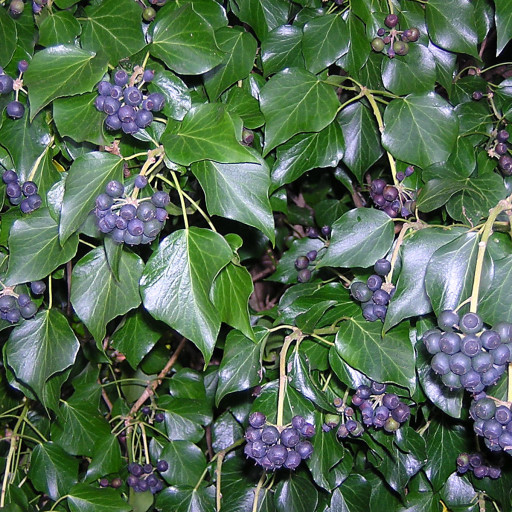
Known as the Irish Ivy or Atlantic Ivy, this vigorous evergreen is the larger, faster-growing cousin of the classic English Ivy. It is a master of adaptation, capable of carpeting a dark forest floor or scaling a three-story building with its relentless "sticky feet." Often used to create lush "living walls," it provides a deep green, romantic aesthetic to any garden landscape.
🔍 How to Identify
- 🍃 The Leaves: Large, leathery, and dark green with distinct, pale-yellowish veins. Juvenile leaves are traditionally lobed (usually 5 points), while adult leaves on flowering stems become more heart-shaped or oval.
- 🧬 The Growth Habit: It uses thousands of tiny aerial rootlets to cling to surfaces. Unlike some vines that twine, this ivy "glues" itself to bricks, stones, and bark.
- 🌼 Late Blooms: In late autumn, mature plants produce globular clusters of yellow-green flowers that look like tiny pom-poms, eventually turning into dark purple-black berries.
🏡 In Your Garden
- 🧱 The Insulation Effect: Contrary to the myth that it destroys walls, Irish Ivy can actually act as a thermal shield, keeping buildings cooler in summer and drier in winter—provided the masonry is modern and crack-free.
- ✂️ Vigorous Spirit: This plant follows the "sleep, creep, leap" rule. It spends the first year settling in, but by year three, it will "leap" across the garden. Regular pruning is essential to prevent it from suffocating smaller shrubs or climbing too high into tree canopies.
⚠️ Safety & Toxicity
- 🚫 Status: Toxic to humans and pets.
- 🐾 Details: All parts of the plant, especially the berries and leaves, contain saponins. If ingested, they cause stomach pain, vomiting, and labored breathing.
- 🧤 Skin Irritation: The sap can cause "Ivy Dermatitis" (blistering or itchy rashes). It is highly recommended to wear gloves and long sleeves when pruning or handling large amounts of the plant.
✨ Fun Fact
Irish Ivy is a biodiversity hero! Because it flowers in late autumn and fruits in late winter, it provides a vital food source for bees and birds during the months when almost everything else in the garden is dormant or dead.

Detailed Care Instructions
| Soil Ph | 6.0 To 7.8 |
| Humidity | Normal |
| Toxicity | Poisonous |
| Soil Type | Rich Soil With Plenty Of Organic Material |
| Difficulty | Medium |
| Plant Type | Perennial Woody Evergreen Vine |
| Hibernation | Cold Period |
| Mature Size | Up To 65-100 Ft. |
| Native Area | Northern Europe And Western Asia |
| Temperature | 10°C - 21°C |
| Sun Exposure | Filtered Sun Or Partial Shade |
| Hardiness Zones | 4-8 |
To grow Hedera Hibernica (also known as Irish Ivy), follow these steps:
- Choose a location: Select a spot in your garden that receives partial to full shade. Hedera Hibernica prefers moist, well-draining soil.
- Prepare the soil: Clear the area of any weeds or other vegetation. Loosen the soil and mix in organic matter, such as compost, to improve drainage and fertility.
- Planting: Dig a hole that is slightly larger than the root ball of your Hedera Hibernica plant. Place the plant in the hole, ensuring the top of the root ball is level with the soil surface. Backfill the hole with soil, gently firming it around the plant.
- Mulching: Apply a layer of organic mulch around the plant to help retain moisture and suppress weed growth. Keep the mulch a few inches away from the plant's stem to prevent rot.
- Watering: Water the plant thoroughly after planting. Afterward, water regularly, especially during dry periods, to keep the soil consistently moist. Avoid overwatering, as excessive moisture can lead to root rot.
- Pruning: Prune Hedera Hibernica to maintain its desired shape and control its growth. You can trim back any unruly or damaged growth, but be cautious not to remove too much, as it could harm the plant.
- Fertilizing: Feed the plant with a balanced, slow-release fertilizer in early spring and again in midsummer to promote healthy growth. Follow the manufacturer's instructions for dosage.
- Support: If you plan to grow Hedera Hibernica vertically, provide a trellis, fence, or other support structure for the plant to climb.
- Pests and diseases: Monitor the plant for common pests like aphids or spider mites. Treat any infestations promptly. Hedera Hibernica is generally resistant to diseases but keep an eye out for signs of root rot or leaf spot.
- Winter care: Irish Ivy is hardy but provide some winter protection if you live in a colder climate. Mulch around the base of the plant to insulate the roots, and consider covering it with burlap during severe weather.
By following these steps, you can successfully grow Hedera Hibernica and enjoy its beautiful foliage in your garden.

Place in a window with dappled sun or a spot in the middle of a room. Or directly in a window facing west or east.

To water this plant, make sure that the soil is dry to the touch before watering. Use room temperature water and slowly pour it around the base of the plant, allowing it to soak into the soil. Avoid getting water on the leaves as this can lead to mold growth. Wait until the soil has dried out again before watering. Overwatering can cause root rot and damage to the plant.
To fertilize this plant, you should use a balanced, water-soluble fertilizer that is specifically formulated for indoor plants. Mix the fertilizer according to the instructions on the packaging and apply it to the soil once per month during the growing season. Be sure to water the plant thoroughly before and after applying the fertilizer to help it absorb the nutrients. Avoid over-fertilizing, as this can lead to leaf burn and other issues.
When choosing soil for the Hedera Hibernica plant, it is important to consider its growing conditions and requirements. The soil should be well-draining, as waterlogged soil can lead to root rot and other fungal diseases. The ideal pH for the soil should be slightly acidic, between 5.5 and 6.5. A nutrient-rich, loamy soil, with a good amount of organic matter such as compost or leaf mold mixed in is best. This will ensure that the plant has access to the nutrients it needs to grow healthy and strong. It is important to avoid using heavy, clay soils, as they can become compacted and limit the plant's ability to grow. Finally, it is recommended to top-dress the soil with a layer of mulch or bark chips to help retain moisture and suppress weeds.
To propagate this plant, you will need to take stem cuttings during the spring or summer months. Select a healthy stem that has several leaves and is about 4-6 inches long. Cut the stem just below a leaf node using a sharp, clean pair of scissors or pruning shears.
Remove the lower leaves from the stem, leaving only 2-3 leaves at the top. Dip the cut end of the stem in rooting hormone powder or liquid to encourage root growth.
Plant the stem cutting in a small pot filled with well-draining soil, burying the cut end so that the remaining leaves are above the soil line. Water the cutting thoroughly and place it in a bright, but shaded area.
Keep the soil moist but not waterlogged, and avoid exposing the cutting to direct sunlight or extreme temperatures. After a few weeks, you should start to see new growth, which is a sign that roots have formed.
Once the cutting has established roots, you can transfer it to a larger pot or plant it in the ground. It will continue to grow and spread over time, creating a lush, green ground cover.
Common pests of the atlantic ivy include Spider mites, fungus gnats, thrips. Make a habit of checking your atlantic ivy frequently for pests so that any infestations can be caught and managed early.








