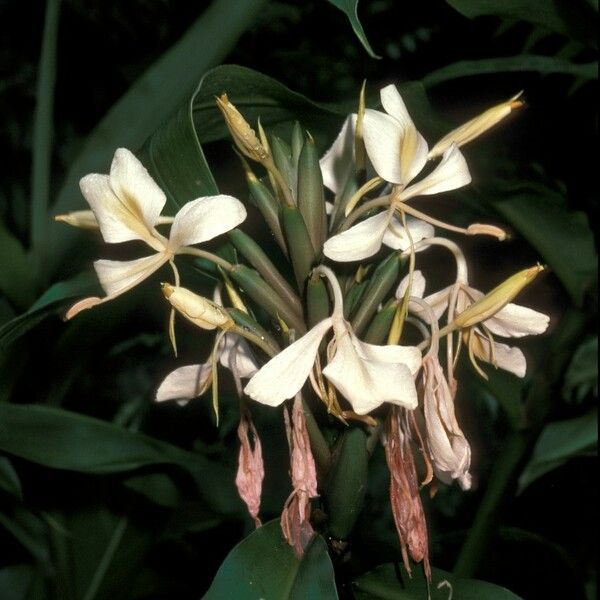
Plant Overview
Often called the Yellow Ginger Lily or Cream Garland Lily, this Himalayan beauty is a sensory masterpiece for any tropical-style garden. It is beloved for its "butterfly-like" blossoms that release a heavy, honeysuckle-like fragrance that intensifies as the sun goes down. In many cultures, these flowers are woven into leis or used to perfume homes, acting as a natural, living aromatherapy stick.
🔍 How to Identify
- 🌿 The Foliage: It features large, lance-shaped leaves that can reach up to 2 feet long, growing in a distinctive alternating pattern along sturdy, cane-like stems.
- 🌼 The Blooms: The flowers are a soft, buttery yellow or cream color, emerging from a dense green cone at the top of the stalk.
- 🍦 The Center: Look for long, elegant stamens that protrude from the center of the petals, giving the flower a delicate, wispy appearance.
🏡 In Your Garden
- 💧 Thirsty Roots: Unlike desert plants, this ginger loves "wet feet" and thrives in boggy or consistently moist soil near ponds or water features.
- 🛡️ Rhizome Resilience: It grows from thick underground rhizomes; if you live in a colder climate, you can dig these up in autumn and store them in a cool, dry place to replant in the spring.
- 🌬️ Wind Protection: Because the canes are tall and the leaves are broad, they can act like sails and catch the wind, so plant them in a sheltered spot to prevent them from snapping.
⚠️ Safety & Toxicity
- 🟢 Status: Generally non-toxic to humans and common livestock.
- 🐾 Pet Caution: While not nearly as dangerous as "true lilies" (which are deadly to cats), ingesting the rhizomes or large amounts of foliage can cause mild digestive upset in dogs or cats.
- 🧤 Skin Sensitivity: The sap is generally harmless, but those with sensitive skin may experience mild irritation when dividing the rhizomes.
✨ Fun Fact
The genus name Hedychium is derived from the Greek words hedys (sweet) and chion (snow), a poetic reference to the snow-white, fragrant flowers of the closely related White Ginger Lily!

Detailed Care Instructions
To grow Hedychium flavum, also known as yellow ginger lily, follow these steps:
- Climate and Soil Requirements:
- Hedychium flavum thrives in warm, tropical climates. It prefers temperatures above 60°F (15°C) and requires a minimum of 6 hours of direct sunlight daily.
- The plant requires well-draining soil with a pH level between 6 and 7.5. If your soil is heavy clay, amend it with organic matter like compost to improve drainage.
- Hedychium flavum thrives in warm, tropical climates. It prefers temperatures above 60°F (15°C) and requires a minimum of 6 hours of direct sunlight daily.
- Propagation:
- Hedychium flavum can be propagated through rhizome division or from seeds. Rhizome division is the preferred method.
- In early spring, divide the rhizomes of an established plant. Make sure that each division has at least one healthy shoot and a portion of the rhizome.
- If using seeds, sow them in a seed tray or pot filled with a well-draining seed-starting mix. Cover lightly with soil and keep the soil consistently moist.
- Hedychium flavum can be propagated through rhizome division or from seeds. Rhizome division is the preferred method.
- Planting:
- Dig a hole in the prepared soil that is deep enough to accommodate the rhizome or root ball.
- Place the rhizome or root ball into the hole, making sure the top of the rhizome is level with the soil surface.
- Backfill the hole and firm the soil gently around the plant, ensuring there are no air pockets.
- Dig a hole in the prepared soil that is deep enough to accommodate the rhizome or root ball.
- Watering and Fertilizing:
- Keep the soil evenly moist but not waterlogged. Yellow ginger lilies require regular watering, especially during hot and dry periods.
- As for fertilization, apply a balanced slow-release fertilizer in early spring, following the package instructions. Additionally, you can use organic fertilizers like compost or well-rotted manure once a year.
- Keep the soil evenly moist but not waterlogged. Yellow ginger lilies require regular watering, especially during hot and dry periods.
- Mulching and Weed Control:
- Apply a layer of organic mulch around the plant to help retain moisture, suppress weeds, and regulate soil temperature. Keep the mulch a few inches away from the stems to prevent rotting.
- Apply a layer of organic mulch around the plant to help retain moisture, suppress weeds, and regulate soil temperature. Keep the mulch a few inches away from the stems to prevent rotting.
- Maintenance:
- Remove any dead or damaged leaves and spent flowers regularly to keep the plant looking tidy.
- Provide support to the tall flower stalks to prevent them from falling over in strong winds.
- Remove any dead or damaged leaves and spent flowers regularly to keep the plant looking tidy.
- Winter Care:
- Hedychium flavum is not cold-hardy and may require protection in areas with freezing temperatures.
- In colder climates, cut back the foliage to 6-8 inches above the ground in late fall before the first frost. Apply a layer of mulch over the base of the plant to insulate it during winter.
By following these guidelines, you should be able to successfully grow and enjoy your Hedychium flavum plant.
- Hedychium flavum is not cold-hardy and may require protection in areas with freezing temperatures.
To properly water Hedychium Flavum, it is important to consider the specific needs of this plant. Here are some general guidelines to follow:
- Assess its water requirements: Hedychium Flavum prefers consistently moist soil but not waterlogged conditions. It is essential to monitor the moisture level of the soil to avoid over or under-watering.
- Use well-draining soil: Ensure that the plant is potted in a well-draining soil mix to prevent waterlogged conditions. This allows excess water to drain away more efficiently.
- Watering frequency: Water the Hedychium Flavum plant whenever the top inch of the soil feels slightly dry. Stick your finger into the soil to check its moisture level.
- Water quantity: When watering, apply enough water to moisten the entire root ball. Thoroughly watering until the water drains out of the pot's drainage holes is a good practice.
- Watering method: Pour water onto the soil around the base of the plant rather than directly on the foliage. This helps prevent water from pooling and potentially causing damage to the plant.
- Avoid overwatering: It is crucial not to water Hedychium Flavum excessively, as this can lead to root rot and other issues. Ensure that the soil has adequate time to dry out slightly between waterings.
- Outdoor considerations: In outdoor settings, factors such as rain patterns, temperature, and humidity may affect watering frequency. Adjust the watering schedule accordingly, accounting for these external conditions.
- Observe the plant: Keep a close eye on the plant's overall appearance and health. Wilting or yellowing leaves may indicate over or underwatering. Adjust the watering routine accordingly to meet the plant's specific needs.
Remember, these guidelines provide general recommendations for watering Hedychium Flavum. It's always best to observe the plant, adapt to its specific requirements, and modify the watering routine as needed.
To fertilize Hedychium Flavum, follow these instructions:
- Choose a balanced, slow-release fertilizer formulated for flowering plants.
- Apply the fertilizer in the early spring or as new growth appears.
- Dilute the fertilizer according to the package instructions or use it at full strength if recommended.
- Before applying the fertilizer, water the soil thoroughly to ensure it is moist.
- Scatter the fertilizer evenly around the base of the plant, avoiding direct contact with the leaves or stem.
- Gently work the fertilizer into the top layer of soil using a garden fork or rake, being careful not to damage the plant's roots.
- Water the area again after fertilizing to help distribute the nutrients.
- Repeat the fertilization process every 4-6 weeks during the growing season, following the package instructions for frequency and amount.
- Monitor the plant for any signs of overfertilization or nutrient deficiencies, such as yellowing leaves or stunted growth.
- Adjust the fertilization schedule or type of fertilizer if necessary based on the plant's response and the specific needs of your growing environment.
Hedychium Flavum is a tropical plant that is native to Southeast Asia. When selecting soil for this plant, it is important to replicate its natural habitat to promote healthy growth.
For Hedychium Flavum, a well-draining soil is essential to prevent waterlogging and root rot. This can be achieved by using a combination of organic matter and inorganic materials.
A suitable soil mix could consist of equal parts of peat moss, perlite, and coarse sand. Peat moss provides moisture retention and improves the soil's structure, while perlite and coarse sand aid in drainage and prevent compaction.
Adding some organic matter, such as compost or well-rotted manure, can also benefit Hedychium Flavum by providing nutrients and promoting soil fertility. This can be mixed into the soil before planting or used as a top dressing.
It is important to keep the soil consistently moist but not waterlogged, as excessive watering can lead to root rot. Regularly checking the moisture content of the soil and adjusting watering accordingly is recommended.
In summary, Hedychium Flavum thrives in a well-draining soil that replicates its natural habitat. A mixture of equal parts peat moss, perlite, and coarse sand, along with added organic matter, can provide the ideal growing medium for this tropical plant.
To propagate Hedychium Flavum plants, you can follow these steps:
- Choose a healthy parent plant: Select a mature parent plant that is disease-free and has strong growth. This will ensure better chances of success in propagating.
- Prepare the potting medium: Hedychium Flavum prefers a rich, moist, and well-draining potting mix. Prepare a mixture of equal parts of peat moss, perlite, and organic compost. This will create an ideal environment for root development.
- Divide the rhizomes: Carefully dig around the base of the parent plant to expose its rhizomes. Rhizomes are horizontal underground stems from which new shoots emerge. Gently separate the rhizomes using a clean cutting tool, ensuring that each division has a few healthy shoots attached.
- Plant the divisions: Fill small pots with the prepared potting mix. Make small holes in the soil and place each rhizome division with the shoots facing upwards. Cover the rhizomes with the potting mix, leaving the shoots exposed.
- Provide appropriate care: Place the pots in a warm, partially shaded area to promote faster rooting. Maintain a consistent level of soil moisture by watering the pots regularly, but avoid overwatering as this can cause rotting. Provide good airflow around the plants to prevent fungal diseases.
- Monitor and maintain: Check the pots regularly for new growth and ensure that the potting mix remains moist. After a few weeks, you may notice new shoots emerging from the rhizome divisions. Once the new plants have established a strong root system and have grown to a reasonable size, they can be transplanted into larger containers or directly into the garden.
Remember to label the newly propagated plants to keep track of their identity and monitor their growth progress. With proper care and attention, you can successfully propagate Hedychium Flavum plants and enjoy their beautiful blooms.








