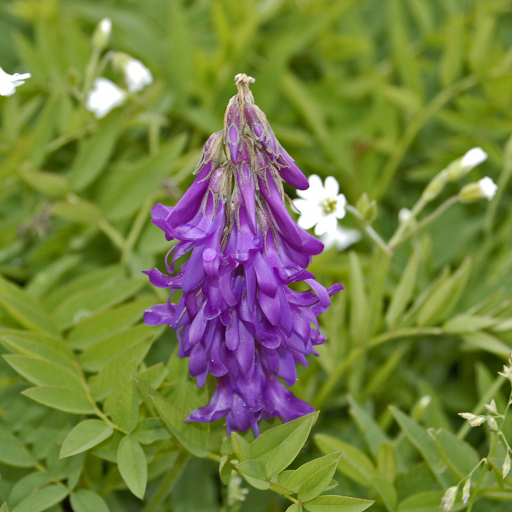
Plant Overview
Known as the "Alpine Sweetvetch," this resilient mountain dweller is a star of high-altitude meadows. Often found clinging to the rocky slopes of the Alps or the windswept Arctic tundra, its vibrant purple spikes look like clusters of tiny, delicate banners waving in the breeze. It is a symbol of endurance, thriving where other plants would wither under the cold.
🔍 How to Identify
- 🌸 The Flowers: Features striking reddish-purple or deep pink pea-shaped blooms. Unlike many of its cousins, these flowers tend to "nod" or hang gracefully downward in dense, one-sided clusters.
- 🌿 Pinnate Foliage: The leaves consist of multiple pairs of small, oval leaflets arranged along a central stem, ending in a single leaflet at the very tip, typical of the legume family.
- 📏 Growth Habit: A sturdy perennial that grows in clumps. It usually stays low to the ground (about 10–30 cm) to protect itself from harsh mountain winds.
🏡 In Your Garden
- ⛰️ Alpine Specialist: This plant thrives in "lean" conditions. It prefers rocky, alkaline, and well-draining soil. In a home garden, it is the perfect candidate for a rock garden or a xeriscaped (low-water) border.
- 🧬 Soil Improver: As a member of the Fabaceae family, it has a symbiotic relationship with soil bacteria to "fix" nitrogen. It essentially creates its own fertilizer, enriching the soil for the plants around it.
- 🚫 Taproot Sensitivity: It develops a long, deep taproot to find water and anchor itself. This makes it incredibly drought-tolerant but also means it hates being moved. Once planted, it is best to leave it undisturbed.
⚠️ Safety & Toxicity
- ✅ General Status: Hedysarum hedysaroides is generally considered non-toxic and is a vital food source for mountain wildlife like marmots and chamois.
- 🐾 Pet Safety: There are no documented toxic effects for cats or dogs. However, like any legume, if a pet consumes a large amount of the foliage, they might experience minor bloating or digestive gas.
✨ Fun Fact
The name Hedysarum comes from the Greek words hedys (sweet) and aroma (fragrance). While the scent is subtle to human noses, it is an irresistible beacon for high-altitude bumblebees, who are its primary pollinators!

Detailed Care Instructions
| Humidity | High |
| Lighting | Full Sun |
| Difficulty | Easy |
| Hibernation | Cold Period |
| Hardiness Zones | 4 - 8 |
To grow Hedysarum hedysaroides, also known as Sweetvetch or Shrubby Sweetscent, you can follow these steps:
- Seed selection: Obtain high-quality seeds from a reputable source or collect them from mature plants if available.
- Preparing the soil: Choose a well-draining soil with a pH of 6 to 7. Amend the soil with organic matter like compost or well-rotted manure to improve fertility and drainage.
- Planting time: Sow the seeds in late winter or early spring, around the last frost date for your region.
- Seed treatment: Some gardeners recommend soaking the seeds in water for 24 hours to help with germination. This step may improve your chances of successful seedling establishment.
- Seed sowing: Scatter the seeds over the prepared soil surface or use a seed spreader to ensure even distribution. Lightly press the seeds into the soil but do not cover them with too much soil, as they need light to germinate.
- Watering: Keep the soil evenly moist but not waterlogged during the germination period. Using a mist sprayer or a gentle watering technique will prevent the seeds from being disturbed.
- Germination: Depending on the conditions, germination can take several weeks or longer. Keep the soil temperature consistently around 70°F (21°C) for faster and more uniform germination.
- Transplanting: Once the seedlings have grown a few inches tall and developed a few leaves, you can transplant them to their permanent location in the garden or larger containers.
- Location: Choose a sunny spot for your Hedysarum hedysaroides, as it generally requires full sun for healthy growth. Avoid planting near large trees or other plants that may shade the Sweetvetch.
- Watering and care: Established plants generally have low water requirements, but regular watering is necessary during dry spells until they become established. Mulching around the plants can help conserve moisture and suppress weed growth.
- Pruning: Prune the shrub in late winter or early spring to remove any dead or damaged branches and to maintain a compact shape.
- Fertilizing: Hedysarum hedysaroides generally does not require much fertilization. However, a light application of a balanced organic fertilizer in early spring can provide a nutrient boost.
- Pests and diseases: Sweetvetch is generally resistant to most pests and diseases. However, keep an eye out for common garden pests and take appropriate measures if necessary.
By following these steps and providing adequate care, you can successfully grow Hedysarum hedysaroides in your garden.

Place in a window with dappled sun or a spot in the middle of a room. Or directly in a window facing west or east.

Hedysarum hedysaroides is a perennial plant that requires regular watering for optimal growth. The best way to water this plant is to ensure that the soil is consistently moist but not waterlogged. One way to achieve this is to water deeply once or twice a week, making sure that the water penetrates the soil to a depth of at least six inches. It is important to avoid overwatering, as this can lead to root rot and other fungal diseases. Additionally, the plant should be watered in the early morning or late evening to prevent evaporation during the hottest parts of the day. Finally, it is recommended to mulch around the base of the plant to help retain moisture and prevent the soil from drying out too quickly.
To fertilize this plant, you should apply a balanced fertilizer in early spring and mid-summer. Be sure to follow the instructions on the fertilizer packaging for the proper amount to use based on the size of your plant. Avoid fertilizing too late in the growing season to prevent stimulating new growth that may not fully mature before winter. Additionally, supplementing with organic matter, such as compost or well-rotted manure, in the soil around the plant will provide additional nutrients.
Hedysarum hedysaroides is a plant that requires well-draining soil. The ideal soil for this plant should be a light, sandy soil that is rich in organic matter. A soil pH of between 4.5 and 6.5 is best for this plant. The soil should be moist but not waterlogged, as the plant prefers to grow in well-drained soil that is not too wet. Adding compost or other organic matter to the soil can help to improve its texture and fertility, which will benefit the plant. It's also important to ensure that the soil is free of weeds and other pests that can compete with the plant for nutrients and water. By providing the right soil conditions, you can help your Hedysarum hedysaroides plant thrive and produce healthy, attractive foliage and flowers.
To propagate this plant, collect mature seeds from the plant in the fall or early winter. Soak the seeds in water for 24 hours before sowing them in a well-draining soil mixture. Cover the seeds lightly with soil and keep them moist but not waterlogged. Place the pot in a bright but indirect light and maintain a consistent temperature between 60-70°F. Seedlings should emerge in 2-3 weeks. Once the seedlings are established with 2-3 sets of true leaves, they can be transplanted into individual pots or directly into the garden. Alternatively, the plant can also be propagated through softwood cuttings taken in the summer. Select a healthy shoot and cut off the top 10cm. Remove the lower leaves and dip the cutting into rooting hormone powder. Place the cutting in a pot filled with a well-draining soil mix and keep it moist and in a semi-shaded area until roots develop. The plant can then be transplanted into its permanent location.








