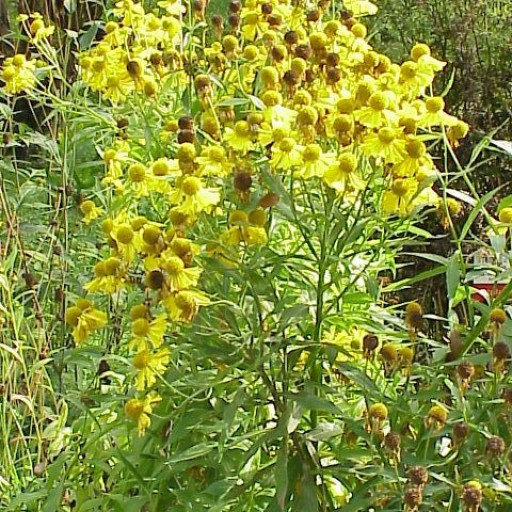
Plant Overview
Often called Sneezeweed or Helen’s Flower, this vibrant perennial is the golden crown of the late-summer garden. Despite its sneeze-inducing name, it isn't actually a common cause of hay fever; the name stems from an old practice of using its dried leaves to make snuff. Legend has it that these flowers first sprang from the ground where the tears of Helen of Troy fell, giving them a touch of ancient mystery to match their bright, sun-like appearance.
🔍 How to Identify
- 🌼 The "Skirt" Petals: The most distinct feature is the ray flowers (petals) that fan out like a ruffled skirt. Each yellow petal is wedge-shaped and tipped with three distinct teeth or lobes.
- 🏀 The Prominent Center: Unlike a flat daisy, Helenium has a pronounced, ball-shaped central disk that starts out yellowish-green and turns golden-brown as it matures.
- 🌿 Winged Stems: If you run your fingers down the tall, sturdy stems, you will notice "wings"—longitudinal ridges of leaf tissue that run down the length of the stalk.
🏡 In Your Garden
- 💧 Thirst for Moisture: Unlike many sun-loving daisies that handle drought, Sneezeweed is a "swamp sunflower" at heart. It thrives in soil that stays consistently moist and will wilt dramatically if left to dry out during a heatwave.
- ✂️ The "Chelsea Chop": These plants can grow quite tall and may become "leggy" or flop over. Savvy gardeners prune them back by half in early summer to encourage a bushier shape and more prolific blooms later in the season.
- 🦋 Pollinator Party: This is a high-value plant for late-season bees and butterflies. Because it blooms when many other flowers are fading, it serves as a critical "refueling station" for migrating Monarchs.
⚠️ Safety & Toxicity
- 🐾 Toxic to Mammals: All parts of the plant contain sesquiterpene lactones, which are toxic if ingested. It is particularly dangerous to livestock (horses, cows, sheep) and should be kept away from curious pets.
- 🚫 Skin Sensitivity: Some people experience "Sneezeweed dermatitis"—a mild skin rash or irritation—after handling the leaves or stems. It is a good idea to wear gardening gloves when pruning or dividing the plant.
✨ Fun Fact
The name "Sneezeweed" was earned because Indigenous North Americans and early settlers used the dried, powdered flower heads as a medicinal snuff. It was believed that a vigorous sneezing fit would expel "evil spirits" and clear the head of a cold or congestion!

Detailed Care Instructions
To grow Helenium autumnale (also known as sneezeweed), follow these steps:
- Choose a suitable location: Helenium autumnale thrives in full sun to partial shade. Select a spot in your garden that receives at least 6 hours of direct sunlight each day. The soil should be fertile and well-draining.
- Prepare the soil: Before planting, ensure the soil is loose and well-draining. Remove any weeds or rocks from the area. Add organic matter like compost or well-rotted manure to improve soil fertility and drainage.
- Planting: Helenium autumnale can be propagated from both seeds and divisions. If starting from seeds, sow them outdoors in early spring after the last frost. Scatter the seeds on the prepared soil and lightly cover them with a thin layer of soil. Water gently and keep the soil moist until germination occurs.
Alternatively, you can divide an established Helenium autumnale plant in early spring or fall. Dig up the plant, carefully separate the clumps, and replant them in the prepared soil.
- Watering: Water the newly planted Helenium autumnale regularly to establish a strong root system. Provide enough water to keep the soil consistently moist but not waterlogged. Once established, they are relatively drought-tolerant but appreciate moderate watering during dry spells.
- Mulching: Apply a layer of organic mulch, such as bark chips or straw, around the plant to conserve soil moisture and suppress weed growth. Keep the mulch away from the base of the plant to prevent rot.
- Fertilizing: Helenium autumnale generally does not require heavy feeding. However, you may apply a balanced, slow-release fertilizer in early spring to promote healthy growth. Follow the package instructions for proper dosage.
- Pruning: Deadheading or removing the spent flowers will encourage continuous blooming. Cut back the plants to about half their height after the flowering season to promote bushy growth and prevent them from becoming too leggy.
- Pests and diseases: Helenium autumnale is generally resistant to pests and diseases. However, keep an eye out for common garden pests such as aphids and spider mites. Treat any infestations early with insecticidal soap or neem oil.
By following these steps, you can successfully grow and enjoy Helenium autumnale plants in your garden.

Place in a bright room that is sun drenched almost all day. Or directly in a south-facing window.

To water this plant, it is important to ensure that the soil is well-draining. Use a watering can or garden hose to gently water around the base of the plant, avoiding getting water directly on the leaves. Water deeply once or twice a week, depending on weather conditions, and decrease watering frequency during periods of heavy rainfall. It is important to allow the soil to dry out slightly between watering to prevent over-watering and root rot.
For best results, fertilize this plant in the early spring before new growth appears. Use a balanced, slow-release fertilizer with equal amounts of nitrogen, phosphorus, and potassium. Follow the package instructions for application rates based on the plant's size and age. Water the plant thoroughly after fertilizing to help distribute the nutrients throughout the soil. Avoid fertilizing late in the season, as this can encourage tender new growth that is susceptible to frost damage.
The ideal soil for this plant should be well-draining and slightly moist, with a pH range of 5.5 to 7.0. It prefers a fertile soil that is rich in organic matter, such as compost or aged manure. Avoid soils that are too heavy or compacted, as they can lead to root rot. Mix in some sand or perlite to improve drainage if necessary. Additionally, the plant prefers full sun to partial shade, so choose a location that gets at least six hours of direct sunlight per day.
To propagate this plant, prepare a gardening site by loosening the soil to a depth of at least 8 inches. Use a sharp, sterile knife to divide the clump of plants in early spring or late summer when the plant is dormant. Remove the plant from the ground, carefully divide the roots and replant each section in an individual hole. Water the newly planted plants generously and keep the soil moist for the first few weeks. In addition, pinch back the growing tips of young plants regularly to encourage branching and promote a full and bushy plant. Keep the plant in full to partial sun and in well-draining soil for optimal growth.








