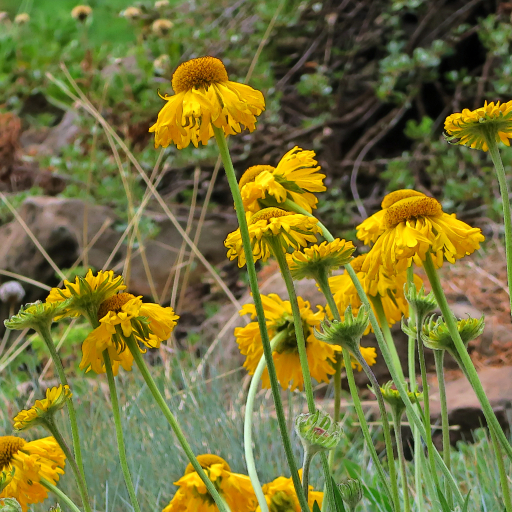
Plant Overview
Meet the Bolander’s Sneezeweed, a coastal California native that looks like a cheerful "sunny-side-up" egg with a chocolate-colored center. Despite its somewhat unappealing name, it doesn't actually cause hay fever; the name comes from an old tradition of using the dried leaves to make snuff. In the garden, it acts as a late-summer firework, providing bright pops of yellow when other flowers begin to fade.
🔍 How to Identify
- 🌼 The "Bobble-Head" Disk: The most striking feature is the large, spherical central disk that ranges from a yellowish-green to a deep, velvety chocolate brown.
- 🦷 Notched Petals: The bright yellow ray flowers (petals) are wedge-shaped and end in three distinct "teeth" or lobes, giving them a slightly ragged, charming appearance.
- 🍃 Winged Stems: If you look closely at the stem, the leaves actually run down the sides, creating a "winged" or flattened effect along the stalk.
🏡 In Your Garden
- 💧 Wet Feet Welcome: Unlike many garden flowers that fear root rot, Bolander’s Sneezeweed thrives in soggy, heavy soils. It is the perfect candidate for a rain garden or the edge of a pond where other plants might struggle.
- 🦋 Pollinator Landing Pad: Because of its sturdy, flat central disk, it acts as a perfect landing strip for butterflies and heavy bumblebees, making it a high-traffic hub for local wildlife.
⚠️ Safety & Toxicity
- 🚫 Toxic if Ingested: While beautiful, this plant contains helenalin, a compound that is toxic to humans and animals if eaten in significant quantities.
- 🐾 Pet & Livestock Warning: It is particularly known for being irritating to the digestive tracts of horses and dogs. It is best planted in areas where curious pets or livestock won't be tempted to graze on the foliage.
✨ Fun Fact
The genus name Helenium is steeped in Greek mythology. It is said that these flowers first sprouted from the earth on the very spots where the tears of Helen of Troy fell to the ground.

Detailed Care Instructions

Place in a bright room that is sun drenched almost all day. Or directly in a south-facing window.

Some plants require more regular watering than others, which should be done every few days. It's critical to maintain the soil moist all of the time. The water requirements of the same plant placed in pots with varying sizes will differ. Because the water in the smaller pot evaporates faster than the water in the larger pot, it will require more watering. Regardless of pot size, the surface should constantly be maintained moist.








