Plant Overview
Known as the Shortleaf Sneezeweed, this sun-loving perennial is a hidden gem native to the damp meadows and pine barrens of the Southeastern United States. Despite its name, it isn't a major cause of hay fever; the "sneezeweed" moniker actually comes from a quirky historical tradition involving its dried leaves. It is a resilient, cheerful wildflower that brings a bright burst of gold to soggy areas where other plants might struggle to survive.
🔍 How to Identify
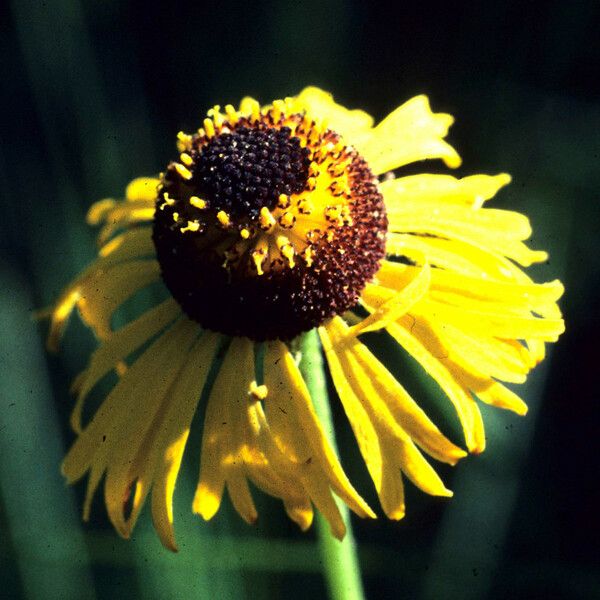
- 🌼 The "Pinwheel" Bloom: The flower features a prominent, spherical golden-brown center (the disc) surrounded by yellow petals that reflex or droop backward, resembling a ruffled skirt.
- 🍃 Compact Foliage: As the name brevifolium suggests, the leaves are notably shorter and narrower than those of its cousins, often clasping the stem tightly.
- 🌿 Winged Stems: A unique botanical trait to look for is the "wings" along the stem—thin, leafy ridges that run vertically, giving the stalk a textured, squared-off appearance.
🏡 In Your Garden
- 💧 The "Wet Feet" Specialist: This plant is an ideal candidate for rain gardens or boggy low spots. It naturally thrives in acidic, moist-to-wet soils and will remain vibrant even during periods of heavy summer rain.
- ☀️ Sun and Support: To prevent the stems from becoming "leggy" or flopping over, plant it in full sun. While it is shorter than other Helenium species, it appreciates being tucked among sturdy grasses that can provide a bit of natural structural support.
⚠️ Safety & Toxicity
- 🐾 Toxic to Animals: Shortleaf Sneezeweed contains sesquiterpene lactones, which are toxic if ingested. It is generally avoided by deer, but it can be harmful to horses, cattle, and curious pets.
- 🧤 Skin Irritation: Some individuals may experience mild skin irritation or a rash (contact dermatitis) when handling the leaves or sap. It is best to wear gardening gloves when pruning or transplanting.
✨ Fun Fact
The name "Sneezeweed" dates back to a time when the dried leaves of this plant were ground into a fine dust to create snuff. This snuff was used in folk medicine to induce violent sneezing, which was believed to expel "evil spirits" and clear the sinuses during a heavy cold!

Detailed Care Instructions

Place in a bright room that is sun drenched almost all day. Or directly in a south-facing window.

Some plants require more regular watering than others, which should be done every few days. It's critical to maintain the soil moist all of the time. The water requirements of the same plant placed in pots with varying sizes will differ. Because the water in the smaller pot evaporates faster than the water in the larger pot, it will require more watering. Regardless of pot size, the surface should constantly be maintained moist.








