Plant Overview
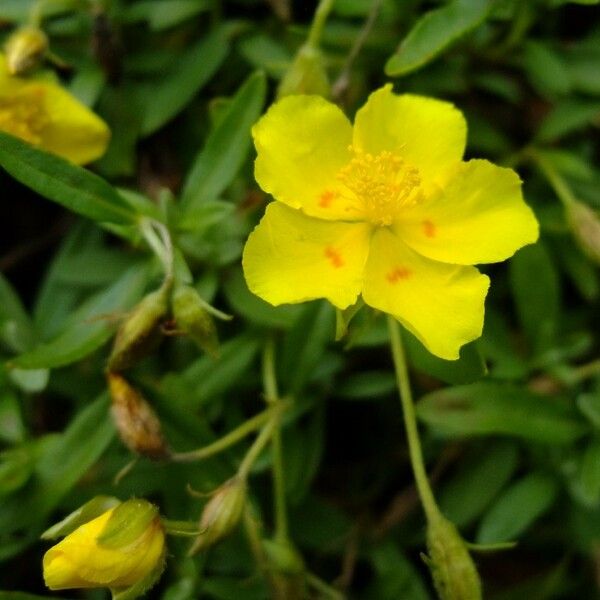
Known as the Crescent Sun Rose, this charming alpine native hails from the rocky slopes of the Maritime Alps between Italy and France. It is a resilient, woody-based perennial that forms a tidy, low-growing cushion of silver-grey foliage, topped with blooms that look like tiny splashes of captured sunshine.
🔍 How to Identify
- ☀️ The Flowers: Small, bright yellow blossoms with five petals. Look closely at the center; each petal features a distinct orange or deep yellow "crescent" mark at the base, giving the plant its name (lunulatum means moon-shaped).
- 🥈 The Foliage: Tiny, oval-shaped leaves that are a soft grey-green. They are covered in fine, silky hairs that help the plant retain moisture and reflect intense mountain sunlight.
- Compact Habit:** It grows as a dense, mounding shrublet, rarely getting taller than 6 inches, making it look like a miniature flowering carpet.
🏡 In Your Garden
- 🏜️ The "Dry Feet" Rule: Because it originates from limestone crevices, this plant is a master of drought. It will thrive in a rock garden or a "crevice garden" where water drains away instantly. If its roots sit in soggy soil for even a few days, it may succumb to root rot.
- ✂️ Post-Bloom Haircut: Once the main flush of yellow flowers fades in early summer, give the plant a light trim. This prevents the center from becoming "woody" and bare, encouraging a flush of fresh, silver leaves for the rest of the season.
- 🌞 Sun Sensitivity: The flowers are "heliotropic," meaning they are highly sensitive to light. They will open wide on sunny mornings but may tuck themselves away if the afternoon gets too cloudy or dark.
⚠️ Safety & Toxicity
- 🛡️ Safe Status: Helianthemum lunulatum is generally considered non-toxic to humans, dogs, and cats.
- 🧸 Kid-Friendly: Unlike some rock garden plants that have thorns or irritating sap, the Crescent Sun Rose is soft to the touch and perfectly safe for planting along walkways or in sensory gardens.
✨ Fun Fact
The genus name Helianthemum literally translates from Greek as "Sun Flower." While many plants follow the sun, these little roses are so dedicated to the light that in ancient folklore, they were said to only bloom when the sun was "happy."

Detailed Care Instructions

Place in a bright room that is sun drenched almost all day. Or directly in a south-facing window.

Some plants require more regular watering than others, which should be done every few days. It's critical to maintain the soil moist all of the time. The water requirements of the same plant placed in pots with varying sizes will differ. Because the water in the smaller pot evaporates faster than the water in the larger pot, it will require more watering. Regardless of pot size, the surface should constantly be maintained moist.








