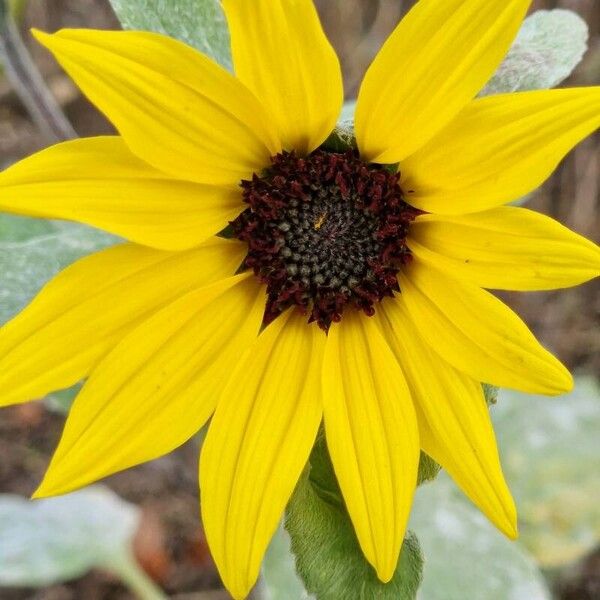
Plant Overview
Often called the Silverleaf Sunflower or Woolly Sunflower, this striking Texas native looks like a classic sunflower dipped in moonlight. Its soft, velvety foliage stands out in a sea of green, offering a shimmering, architectural look to any landscape. Beyond its beauty, it is a champion of the wild, acting as a high-rise cafeteria for local birds and a neon sign for thirsty pollinators.
🔍 How to Identify
- 🥈 The Foliage: Unlike the rough, green leaves of common sunflowers, these are covered in dense, silky white hairs, giving the entire plant a distinct silvery-gray or "ghostly" appearance.
- 🌻 The Bloom: Features classic bright yellow ray petals surrounding a deep brownish-purple central disk. The flowers are typically smaller (2-4 inches) than giant commercial varieties but appear in greater numbers.
- 📏 Growth Habit: This is a tall, branching annual that can reach heights of 6 feet or more. Its stems are just as fuzzy and silver as the leaves, making it look soft to the touch.
🏡 In Your Garden
- 🏜️ Drought Champion: Because of those silver hairs, this plant is exceptionally good at reflecting heat and trapping moisture. It thrives in hot, dry spots where other plants might wilt, making it perfect for "low-water" or xeriscape gardens.
- 🏖️ Soil Preference: It is a specialist for sandy or well-drained soils. If your garden has heavy clay, be sure to amend it; this sunflower hates "wet feet" and may suffer from root rot if the water sits too long.
- 🦋 Wildlife Magnet: It is a high-value plant for biodiversity. Expect to see a flurry of activity from native bees and butterflies, followed by finches and grosbeaks who will eagerly feast on the seeds in the autumn.
⚠️ Safety & Toxicity
- ✅ Status: Generally non-toxic and safe for humans and pets.
- 🖐️ Skin Irritation: While not poisonous, the "woolly" hairs on the leaves and stems can cause mild skin irritation or itchiness for some people with sensitive skin. It is best to wear gloves if you are pruning or clearing large amounts of the plant.
✨ Fun Fact
The silver "wool" on the leaves isn't just for looks—it’s a sophisticated survival tool. These tiny hairs create a boundary layer of air that reduces evaporation and reflects intense UV rays, allowing the plant to stay cool even in the punishing Texas heat!

Detailed Care Instructions

Place in a bright room that is sun drenched almost all day. Or directly in a south-facing window.

The presence of a dry surface layer of soil does not indicate that the plant requires water. Instead, stick your finger 1-2" (3-5 cm) deep in the soil to feel dampness or moisture content. If the soil seems dry, it's time to water your greens. If the soil is still moist, however, it is better not to water your plant and instead wait a day or two. Overwatering or waterlogging raises the risk of root rot. So if the soil takes longer than a week to dry, check the light conditions because it's likely that the plant isn't getting enough light. It's fine if the upper layer of soil is dry between waterings, but the deeper soil layer should always have some moisture.







