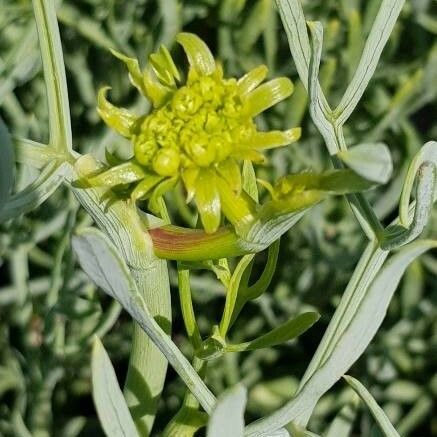
Plant Overview
Often called the Texas Blueweed, Helianthus ciliaris is a tough-as-nails perennial that defies the typical bright green aesthetic of the sunflower family. Native to the arid regions of the Southwestern United States and Mexico, this plant is a master of survival, trading towering heights for a sprawling, shimmering blue-gray presence. While it carries the "sunflower" name, it behaves more like a resilient groundcover that refuses to back down from heat or poor soil.
🔍 How to Identify
- 🍃 Glaucous Foliage: The most striking feature is the "bloom" on the leaves—a waxy, bluish-gray coating that gives the plant a dusty, metallic appearance compared to the bright green of its cousins.
- 🌻 Compact Blooms: The flower heads are relatively small (about 1–2 inches wide) with bright yellow ray florets surrounding a deep reddish-brown or purple central disk.
- 📏 Low Stature: Unlike the giant sunflowers that tower over fences, this species usually stays between 1 to 2 feet tall, spreading horizontally rather than vertically.
🏡 In Your Garden
- 🚜 The "Forever" Root: This plant is famous (or infamous) for its deep, creeping rhizomes. Because it spreads through an underground network, it is extremely difficult to remove once established; even a tiny fragment of root left in the soil can regenerate into a full plant.
- ☀️ Arid Specialist: It thrives in heavy clay, alkaline, and even salty soils where other plants struggle. It is the ultimate "set it and forget it" plant for xeriscaping, as it requires almost no supplemental water once it finds its footing.
⚠️ Safety & Toxicity
- 🐾 Livestock Warning: While not typically dangerous to humans or household pets in small amounts, it is considered a "noxious weed" in many agricultural areas. It can accumulate nitrates in certain soil conditions, which can be toxic to cattle and horses if consumed in large quantities.
- 🌿 Nuisance Status: Because of its aggressive spreading habit, it can quickly overtake a garden bed or pasture, outcompeting more delicate native species or crops.
✨ Fun Fact
- 🧪 Salt Tolerance: Helianthus ciliaris is remarkably salt-tolerant. While most plants shrivel in saline environments, this sunflower has evolved to thrive in "gyp" soils (rich in gypsum), making it a rare beauty in harsh, mineral-heavy desert flats.

Detailed Care Instructions
To grow Helianthus ciliaris (also known as the Texas bluebonnet), you can follow these steps:
- Select a planting location: Helianthus ciliaris prefers full sun and well-drained soil. Choose a location that receives at least 6-8 hours of direct sunlight per day.
- Prepare the soil: Ensure the soil is loose, well-drained, and rich in organic matter. You can amend the soil by mixing in compost or organic matter to improve its fertility and drainage.
- Sow the seeds: Texas bluebonnet seeds are usually sown in the fall for spring blooming. Scatter the seeds lightly on the soil surface and gently press them into the soil without covering them. Aim for a seed density of about 10-20 seeds per square foot.
- Watering: After sowing the seeds, water the area lightly to settle the soil and activate germination. After that, provide regular water during dry periods to assist with establishment.
- Mulch: Apply a thin layer of organic mulch, such as straw, over the seeded area. This helps retain soil moisture, suppresses weed growth, and protects the emerging seedlings.
- Maintenance: Once the seedlings emerge, thin them to about 6-12 inches apart when they have developed their first set of true leaves. This allows room for each plant to grow and prevents overcrowding.
- Fertilizing: Helianthus ciliaris typically does not require additional fertilizer if the soil is already enriched with organic matter. However, you can apply a balanced, slow-release fertilizer according to package instructions if you notice poor growth or pale leaves.
- Pruning and deadheading: Deadhead spent flowers to encourage continuous blooming and prevent seed production. Additionally, cutting the plants back to about half their height after blooming can promote bushier growth.
- Pest and disease control: Helianthus ciliaris is generally resistant to pests and diseases. However, keeping the area clean, maintaining good airflow around the plants, and promptly removing any affected foliage can help prevent issues.
- Enjoy the blooms: Helianthus ciliaris will produce bright yellow flowers in the spring. Simply enjoy their beauty and allow some flowers to set seed if you wish for natural reseeding in the future.
Remember to consult local gardening resources, including your regional agricultural extension office, for specific advice based on your location and climate.

Place in a bright room that is sun drenched almost all day. Or directly in a south-facing window.

To water this particular plant, it is important to observe its soil moisture level and adjust watering accordingly. One should aim to keep the soil evenly moist, but not waterlogged, as overwatering can lead to root rot. The frequency of watering will depend on factors such as the plant's environment, size, and container size. It is also important to water at the base of the plant, avoiding the foliage, to prevent fungal diseases. In addition to regular watering, providing a layer of mulch around the base of the plant can help to retain moisture.
- Choose a well-draining soil and mix in organic matter, such as compost or manure.
- Plant seeds or seedlings in a sunny location, with at least six hours of direct sunlight per day.
- Water regularly, allowing the soil to dry out slightly between waterings.
- Apply a balanced fertilizer every two to four weeks during the growing season, following package instructions for dosage and application method.
- For best results, use a fertilizer high in nitrogen to promote leaf and stem growth.
- Avoid over-fertilizing, as this can lead to excessive foliage at the expense of flowers and seeds.
- Monitor for signs of nutrient deficiencies, such as yellowing leaves or stunted growth, and adjust fertilization accordingly.
- After flowering, allow the plant to produce seeds for future growth or cut back to encourage new growth and branching.
The Helianthus Ciliaris plant requires a specific type of soil to thrive. The soil should be well-draining and have a pH level between 6.0 and 7.5. It needs to be rich in organic matter and have a good balance of nutrients, including nitrogen, phosphorus, and potassium. The soil texture should be sandy loam, which allows for good water retention and drainage. It is important to avoid using heavy, clay soils as they can retain too much moisture and cause root rot. Additionally, the soil needs to be free of weeds and other competing plants to give the Helianthus Ciliaris plant the best chance for growth and development.
To propagate this plant, you will need to select a healthy parent plant with good foliage and sturdy stems. Choose a stem that is at least 4 inches long and contains multiple nodes or leaves. Using a sharp, sterilized blade, make a clean cut just below the lowest node or leaf.
Remove the lower leaves, leaving only 1-2 upper leaves on the stem. The stem can then be dipped in rooting hormone powder to help stimulate root growth. Place the stem in a small container filled with a well-draining potting mix or a mix of sand and perlite, ensuring that the node or leaf where the stem was cut is submerged in the soil.
Cover the container with a plastic bag or dome to create a humid environment and place in a bright, indirect light location. Keep the soil moist but not waterlogged and check for root growth periodically. Once roots have formed, gradually acclimate the plant to direct sunlight and transplant into a larger container or outdoors in a prepared garden bed.








