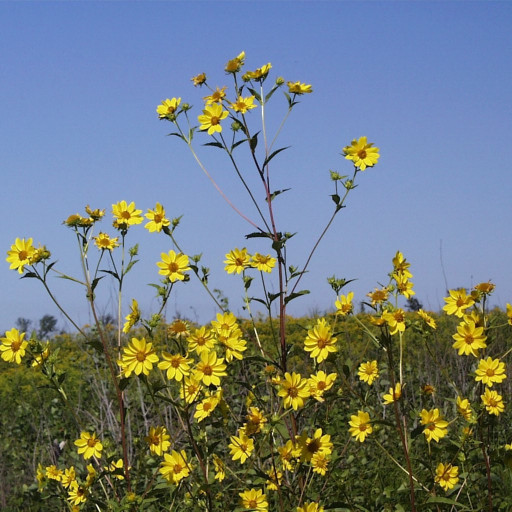
Plant Overview
Known as the "Giant Sunflower," this towering perennial is the skyscraper of the prairie. Native to the damp meadows and thickets of North America, it doesn’t just grow tall; it dominates the landscape with multiple glowing yellow blossoms that seem to follow the sun’s journey across the sky. Unlike the common annual sunflower, this giant returns every spring, growing more impressive with each passing year.
🔍 How to Identify
- 🌻 Floral Clusters: Instead of one massive flower head, it produces numerous smaller blossoms (about 2–3 inches wide) with bright yellow petals and a central disk that turns from yellow to brown.
- 🏗️ Stately Stems: The stems are remarkably tall, often reaching 10 to 13 feet. They are typically stiff, hairy, and frequently take on a deep reddish or purplish hue.
- 🌿 Lance-Shaped Leaves: The leaves are long, narrow, and taper to a point. They have a rough, sandpaper-like texture and are usually arranged alternately along the upper stem.
🏡 In Your Garden
- 🦋 Pollinator Paradise: This plant is a cornerstone for local ecosystems. It provides a massive amount of nectar for bees and butterflies during the late summer, while its seeds become a high-energy feast for songbirds in the fall.
- 🌊 Moisture Lover: While most sunflowers prefer dry fields, the Giant Sunflower is a "wet-footed" beauty. it thrives in moist, heavy soils and is a perfect choice for those low-lying areas of the garden that stay damp after a rain.
- 🧱 Natural Privacy: Due to its immense height and colonial growth habit, it functions as a living "green wall." However, because it spreads via underground rhizomes, it needs plenty of space to roam without crowding out smaller neighbors.
⚠️ Safety & Toxicity
- ✅ Generally Non-Toxic: Helianthus giganteus is not known to be toxic to humans, dogs, cats, or horses.
- 🧤 Abrasive Texture: The stiff, bristly hairs on the stems and leaves can cause mild skin irritation or "mechanical dermatitis" for some gardeners. It is best to wear long sleeves and gloves when pruning or harvesting the flowers.
✨ Fun Fact
The thick, tuberous roots of the Giant Sunflower are actually edible! While not as famous as its cousin, the Jerusalem Artichoke (Sunchoke), indigenous peoples traditionally harvested these roots to be eaten raw or boiled as a nutritious starch.

Detailed Care Instructions
| Lighting | Full Sun |
| Hardiness Zones | Min 4A |
To grow Helianthus Giganteus, also known as giant sunflower, follow these steps:
- Choose the right planting location: Helianthus Giganteus prefers full sun and well-draining soil. Select a spot in your garden that receives at least 6-8 hours of direct sunlight per day.
- Prepare the soil: Loosen the soil to a depth of 12-18 inches and remove any weeds or debris. Incorporate organic matter, such as compost or well-rotted manure, to improve soil fertility and drainage.
- Sow the seeds: Plant the seeds directly into the soil in late spring or early summer, after the last frost has passed. Space the seeds about 2-3 feet apart, as these sunflowers can grow quite large.
- Provide water: Water the seeds immediately after planting and keep the soil consistently moist but not waterlogged until germination occurs. Once the plants are established, they are somewhat drought-tolerant, but regular watering is still necessary, especially during dry spells.
- Provide support: Helianthus Giganteus can grow up to 10-12 feet tall, so it's essential to provide support for the plants. Install stakes or a trellis near the seedlings and tie them loosely to the support structure as they grow.
- Control weeds: Regularly check for and remove any weeds that may compete with the sunflower plants for nutrients and water.
- Fertilize if necessary: If your soil is lacking in nutrients, you can apply a balanced slow-release fertilizer according to the package instructions. However, Helianthus Giganteus can usually grow well without additional fertilization.
- Monitor for pests: Keep an eye out for common sunflower pests such as aphids, caterpillars, or snails. If necessary, use organic pest control methods to eliminate them.
- Harvest the seeds: As the season progresses, the sunflower heads will develop and mature. Harvest the seeds when the petals have dried and fallen off, and the back of the flower head turns brown. Cut the sunflower head off and hang it upside down in a dry, well-ventilated place. Once the seeds are fully dry, rub or thresh them to remove them from the head.
By following these steps, you can successfully grow Helianthus Giganteus and enjoy its impressive height and beautiful sunflower blooms.

Place in a bright room that is sun drenched almost all day. Or directly in a south-facing window.

To water this plant, it is important to provide it with an appropriate amount of moisture. Ensure that the soil is consistently damp, but not waterlogged. The plant should be watered regularly, especially during periods of hot and dry weather.
One effective way to water this plant is to use a drip irrigation system or a soaker hose. This will help to distribute the water evenly and avoid waterlogging the soil or damaging the plant’s roots.
Another method is to hand-water the plant, using a watering can or a hose with a gentle spray nozzle. Be sure to water the soil at the base of the plant, rather than spraying the foliage. Watering the foliage directly can lead to fungal diseases and damage the plant.
It is also important to water this plant in the morning or evening, rather than during the heat of the day. This will reduce water loss through evaporation and help the plant to absorb the moisture more effectively.
Overall, it is important to provide this plant with consistent, appropriate moisture to ensure its healthy growth and development.
To fertilize the Helianthus Giganteus plant, use a balanced, slow-release fertilizer in early spring just before new growth begins. Apply the fertilizer according to the manufacturer's instructions, taking care not to over-fertilize. Water the plant thoroughly after fertilizing to ensure that the nutrients are absorbed properly. Repeat the fertilizing process every 4-6 weeks throughout the growing season. Avoid fertilizing in late summer or fall as this can encourage new growth that will not have time to harden off before winter.
Helianthus Giganteus plants thrive well in soil that is loose, fertile, and well-draining. The ideal soil pH for these plants ranges from neutral to slightly acidic. It is recommended to use a soil mixture that is rich in organic matter, such as compost or well-rotted manure, as it provides essential nutrients and helps retain moisture. A sandy loam soil is also suitable for Helianthus Giganteus plants, as it allows for good drainage while retaining enough moisture for healthy growth. However, heavy clay soil should be avoided as it may cause waterlogging and root rot. Adding perlite or coarse sand to the soil mix can improve drainage, while adding peat moss or vermiculite can enhance moisture retention. Overall, soil that is loose, fertile, and well-draining is essential for the healthy growth and thriving of Helianthus Giganteus plants.
There are several ways to propagate this plant. One method is through seed propagation. It is best to harvest seeds from the plant in the fall when the flower heads have dried out and can be easily removed. The seeds can then be stored in a cool, dry place until spring. In the spring, the seeds can be planted in well-draining soil and kept moist until they germinate.
Another method of propagation is through root division. This should be done in the spring when the plant is just starting to emerge from dormancy. Carefully dig up the plant and gently pull apart the roots into smaller sections. Replant the divisions in soil and keep moist until they establish themselves.
Lastly, the plant can be propagated through stem cuttings. Cut about 6 inches of stem from the plant, making sure to include at least one node. Dip the cut end in rooting hormone and plant in well-draining soil. Keep the soil moist and the cutting in a warm, humid area until it begins to root and establish itself.
Common pests of the giant sunflower include Spider mites, thrips, whiteflies. Make a habit of checking your giant sunflower frequently for pests so that any infestations can be caught and managed early.








