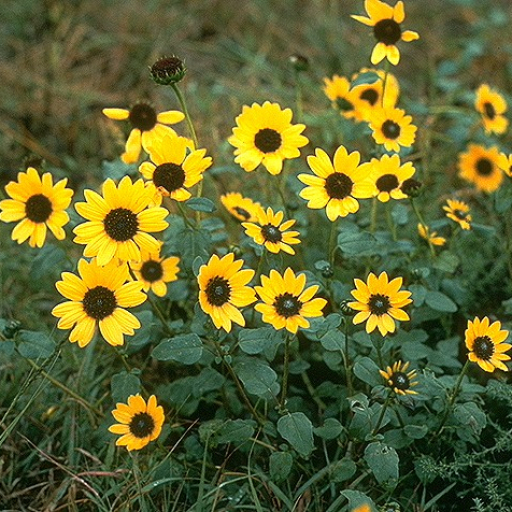
Plant Overview
Known as the "Plains Sunflower" or "Lesser Sunflower," this resilient North American native paints the Great Plains in vibrant shades of gold. Unlike its massive, heavy-headed garden cousins, the Prairie Sunflower is a more delicate, branching wildling that thrives in sandy dunes and along sun-drenched roadsides. It is a symbol of endurance, famously thriving in harsh, dry conditions where other plants might wither.
🔍 How to Identify
- 🌻 Flower Heads: Bright yellow ray florets surround a compact, dark reddish-purple to chocolate-brown center disk. The disk is typically smaller and more "domed" than the common sunflower.
- 🍃 Leaf Structure: Features bluish-green, lance-shaped leaves that are held on notably long stalks (petioles). The leaf surfaces have a rough, sandpaper-like texture.
- 📏 Growth Habit: It typically reaches 2 to 4 feet in height, sporting a slender, multi-branched silhouette rather than a single thick stalk.
🏡 In Your Garden
- 🏜️ The Sand Specialist: This plant is a specialist for "difficult" soil. It prefers sandy or poor, well-drained earth and will actually struggle in heavy, over-fertilized garden beds.
- 🐝 Pollinator Paradise: It provides a vital late-summer nectar source for native bees and butterflies. Because it is a wild species, its nectar is often more accessible than many highly-bred ornamental varieties.
- 🐦 Natural Birdfeeder: If you leave the dried flower heads standing in the fall, you will be rewarded with visits from goldfinches and sparrows who prize the small, oil-rich seeds.
⚠️ Safety & Toxicity
- ✅ Safe Status: This sunflower is considered non-toxic to humans, dogs, cats, and horses. It is a very safe choice for family-friendly landscapes.
- 🧤 Mechanical Irritation: The stems and leaves are covered in stiff, bristly hairs. While not chemically toxic, these hairs can cause a "scratchy" sensation or mild skin redness for those with sensitive skin. Wearing gloves during pruning is recommended.
✨ Fun Fact
The Prairie Sunflower is a biological "cleaner." It is often used in phytoremediation projects because it has the amazing ability to absorb heavy metals like lead and arsenic from contaminated soil without harming itself!

Detailed Care Instructions
To grow Helianthus Petiolaris, also known as prairie sunflower, you can follow these steps:
- Choose a suitable location: Helianthus Petiolaris requires full sun to thrive. Select a spot in your garden with direct sunlight for at least 6-8 hours a day.
- Prepare the soil: The plant prefers well-drained soil with a slightly acidic to neutral pH (around 6.0-7.5). Loosen the soil and remove any weeds or debris from the planting area.
- Sow the seeds: Helianthus Petiolaris can be grown from seeds. Sow the seeds directly into the soil in early spring, after the last frost date. Space the seeds about 18-24 inches apart, and plant them about 1 inch deep.
- Watering: Keep the soil consistently moist but not waterlogged. Water regularly, especially during dry spells or if you're experiencing a drought. Avoid overwatering as it can lead to root rot.
- Mulching: Apply a layer of organic mulch, such as straw or wood chips, around the base of the plants. Mulching helps conserve moisture, suppress weeds, and regulate soil temperature.
- Fertilization: Helianthus Petiolaris can grow well without much fertilization, especially if your soil is already nutrient-rich. However, you can apply a balanced slow-release fertilizer in early spring to give the plants a nutrient boost.
- Provide support (optional): Consider staking or providing supports for the plants, especially if they grow tall and need extra support against strong winds or heavy rain.
- Pruning: Deadhead the flowers after they fade to encourage more blooms and prevent the plant from self-seeding excessively. Cut back the plant to the ground after it has finished flowering for the season.
- Pest and disease control: Helianthus Petiolaris is relatively pest and disease resistant. However, keep an eye out for any common garden pests, such as aphids or caterpillars, and treat accordingly if necessary.
- Harvesting (optional): If you're growing Helianthus Petiolaris for its seeds, allow the flower heads to dry on the plant. Once the seeds are mature and brown, you can collect them by shaking the flower heads or carefully cutting them and removing the seeds manually.
Following these steps should help you successfully grow Helianthus Petiolaris in your garden. Enjoy the vibrant flowers and the ecological benefits it provides to pollinators!

Place in a bright room that is sun drenched almost all day. Or directly in a south-facing window.

To water this plant, first, it is important to consider the soil moisture level. Use a moisture meter or check the soil by sticking your finger a few inches deep into the soil. If the soil feels dry, it needs watering.
When watering, make sure to use room temperature or lukewarm water, as cold water can shock the roots. Slowly pour water over the soil until it runs out of the bottom drainage holes.
Avoid getting water on the leaves, as this can lead to fungal growth and disease. It is also important not to overwater, as the plant prefers well-draining soil and can be susceptible to root rot if left in standing water.
Check the soil moisture regularly and adjust watering frequency as necessary based on the environmental conditions and the plant's individual needs.
To provide proper nutrients for this plant, use a balanced fertilizer with equal amounts of nitrogen, phosphorus, and potassium. Apply the fertilizer once a month during the growing season, starting in early spring and ending in early fall. Follow the label instructions for the specific fertilizer you are using and do not over-fertilize, as this can cause damage to the plant. Water the plant thoroughly after fertilizing to help distribute the nutrients evenly throughout the soil.
The ideal soil for Helianthus Petiolaris plant is a well-drained soil that is slightly acidic, with a pH ranging between 6.5 and 7.5. The soil should be rich in organic matter and nutrients, with a good balance of sand, silt, and clay particles. It should be deep enough to allow for adequate root growth and water retention, but also porous to facilitate air circulation and prevent waterlogging. The plant prefers a soil that is moist but not waterlogged, and it can tolerate drought conditions once established. Overall, the soil should be nutrient-rich, well-aerated, and free from pests and diseases.
To propagate this plant, you will need to collect its mature seeds in the fall after the flower heads have dried out. The seeds can then be stored in a dry, cool place until the spring.
In the spring, prepare a seedling tray with moist soil and gently plant the seeds about 1/4 inch deep. Keep the soil evenly moist and place the tray in a warm, sunny location.
Once the seedlings have grown to a height of 2-3 inches and have developed several sets of leaves, they can be transplanted into larger pots or directly into the garden. Make sure to choose a sunny location with well-draining soil.
Water the plants regularly, but take care not to overwater as this can lead to rot and disease. Plant supports may be necessary as the plants grow tall and top-heavy.
The plants will continue to produce flowers and seeds, allowing you to repeat the propagation process in future years.








