Plant Overview
Known as the "Giant of the Summer" and the "Golden Flower of the Sun," Helianthus species are the ultimate symbols of optimism and energy. Native to North America, these radiant giants have traveled from ancient indigenous fields to the world’s most famous paintings by Van Gogh. Whether grown for their tasty seeds or their towering heights, sunflowers are the cheerful sentinels of any warm-weather landscape.
🔍 How to Identify
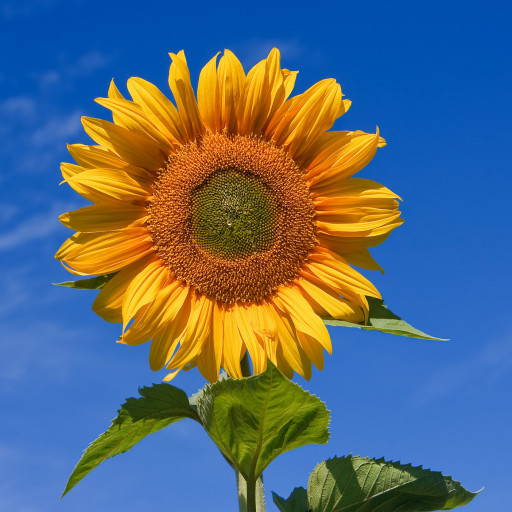
- 🌻 The Flower Head: What looks like one flower is actually a "pseudanthium" made of hundreds of tiny individual flowers. The outer "petals" are ray florets, while the dark center consists of disc florets where seeds develop.
- 🌿 Texture and Stems: The stems are famously sturdy and covered in coarse, bristly hairs. This rough texture helps support the massive weight of the blooms and deters some crawling insects.
- 🍃 Large Foliage: The leaves are typically broad, heart-shaped (ovate), and arranged alternately along the stem. Like the stems, they feel sandpapery to the touch.
🏡 In Your Garden
- 🍴 Heavy Feeders: Sunflowers are extremely "hungry" plants. They require nutrient-rich soil to reach their full height and will often deplete the soil of minerals, so it’s wise to rotate their planting spot each year.
- ⚓ The Deep Taproot: These plants develop a long, central taproot that anchors them against the wind. Because of this, they hate being moved once established—it is always best to sow the seeds directly into their permanent home.
- 🌬️ Wind Protection: While they love open spaces, the giant varieties can become top-heavy. Planting them against a fence or providing a sturdy stake will prevent them from snapping during summer thunderstorms.
⚠️ Safety & Toxicity
- ✅ Pet and Child Friendly: Helianthus is generally considered non-toxic to humans, dogs, cats, and horses. They are one of the safest choices for a family-friendly garden.
- 🧤 Skin Sensitivity: While not poisonous, the stiff, prickly hairs on the stems and leaves can cause mild skin irritation (contact dermatitis) for people with sensitive skin. Wearing gloves during a harvest is a good idea.
✨ Fun Fact
Young sunflowers exhibit "heliotropism"—the flower heads actually track the sun from east to west throughout the day! However, once the plant matures and the stem becomes woody, the flowers usually lock into a permanent eastward-facing position to stay warm and attract more pollinators in the early morning.

Detailed Care Instructions
To successfully grow a Helianthus (Sunflower) plant, follow these steps:
- Choose the right variety: There are various types of sunflowers available, such as dwarf, giant, or multi-branched. Consider your space and preferences when selecting the variety.
- Select a suitable location: Sunflowers thrive in full sun and need at least 6-8 hours of direct sunlight each day. Choose a spot in your garden that receives ample sunlight and has well-draining soil.
- Prepare the soil: Sunflowers grow well in a moderately fertile soil with good drainage. Add organic matter like compost or well-rotted manure to improve soil quality. Sunflowers prefer a soil pH between 6.0 and 7.5.
- Sow the seeds: Sunflower seeds can be directly sown into the garden bed once the danger of frost has passed. Plant the seeds about 1 inch deep and space them 6-12 inches apart, depending on the variety. Water the bed gently after sowing to settle the soil.
- Water properly: While sunflowers are generally drought-tolerant, regular watering is essential during their initial growth phase. Water deeply at the base of the plant, keeping the soil moist but not waterlogged. Reduce watering once the plants are established.
- Provide support: Depending on the variety, some sunflowers can grow quite tall and may require support. Place a stake or dowel near the seedling and loosely tie it as it grows to provide stability.
- Control pests and diseases: Monitor your sunflowers regularly for pests like aphids, slugs, or snails. Use appropriate methods such as organic sprays or natural predators to control the pests. Preventive measures like proper spacing and crop rotation can help minimize disease risks.
- Fertilize if needed: Sunflowers generally do not require much fertilization if the soil is healthy. However, if your soil is lacking in nutrients, you can use a slow-release fertilizer at the time of planting and a balanced fertilizer once the plants are 6-8 inches tall.
- Monitor and harvest: Keep an eye on your sunflowers as they grow. Remove any weeds that may compete with the plants for nutrients and water. As the flower heads mature, monitor them closely for the optimal time to harvest seeds or simply enjoy the blooming in your garden.
By following these steps, you can successfully grow Helianthus plants and enjoy their beautiful blooms and bright sunflower heads.

Place in a bright room that is sun drenched almost all day. Or directly in a south-facing window.

Helianthus is a type of plant that requires proper watering to thrive well. The best way to water this plant is to provide it with a deep and thorough watering once a week, rather than frequent shallow watering. This will encourage the roots to grow deeper and establish a strong foundation.
Before watering, check the soil moisture level by sticking your finger about an inch into the soil. If it feels dry, it's time to water the plant. When watering, avoid getting the foliage wet as this can lead to fungal diseases. Instead, water at the base of the plant, allowing the water to penetrate the soil and reach the roots.
To prevent waterlogging, ensure that the soil has adequate drainage. If the container or soil is not draining properly, adjust accordingly to prevent water from building up around the plant's roots. Alternatively, water in the early morning or late evening when the sun is not too hot, as this will allow the water to penetrate the soil before it evaporates.
Overall, proper watering is crucial for the health of the Helianthus plant. By following these guidelines, you can ensure that your plant receives the right amount of water to thrive.
- Determine the appropriate time to fertilize: It is best to fertilize Helianthus during the growing season, typically from spring to early fall.
- Choose the right fertilizer: Use a balanced fertilizer with equal amounts of nitrogen, phosphorous, and potassium. A slow-release fertilizer is also recommended.
- Calculate the appropriate amount of fertilizer: To avoid over-fertilizing and harming the plant, measure out the recommended amount of fertilizer based on the size of the plant and its growth rate.
- Apply the fertilizer: Distribute the fertilizer evenly around the base of the plant, taking care not to let it come into contact with the stem or leaves.
- Water the plant: After applying the fertilizer, water the plant thoroughly to help dissolve the fertilizer and transport it to the roots.
- Monitor the plant's growth: If the plant shows signs of stress or discoloration, reduce the amount of fertilizer applied or adjust the frequency of fertilization.
- Avoid fertilizing during dormant periods: Helianthus may not require fertilization during the winter months when the plant is not actively growing.
The Helianthus plant prefers to be grown in well-draining soil that is rich in organic matter. It should be grown in a soil that has a neutral to slightly acidic pH range. The soil should also be able to retain moisture as the Helianthus plant prefers moist conditions. One should avoid growing Helianthus plants in heavy clay soils or soil that is prone to waterlogging as this can lead to root rot. Adding compost or other organic matter to the soil can improve its structure and nutrient content. Additionally, adding a slow-release fertilizer to the soil can provide the Helianthus plant with the nutrients it needs to thrive.
Helianthus plants can be propagated using both stem cuttings and seeds. For stem cutting propagation, select a healthy stem from the plant and cut it at a 45-degree angle. Remove the lower leaves from the stem and dip the end in rooting hormone powder. Plant the cutting in a sterile potting mix and keep the soil moist and the plant in indirect light until roots develop.
For seed propagation, collect the ripe seeds and plant them in well-draining soil at a depth of 1/4 inch. Keep the soil moist and the seeds in indirect light until they germinate. Thin the seedlings out as necessary, ensuring they have adequate space to grow.
Both propagation methods require patience and attention to detail, but with proper care, Helianthus plants can be successfully propagated and grown in a new location.







