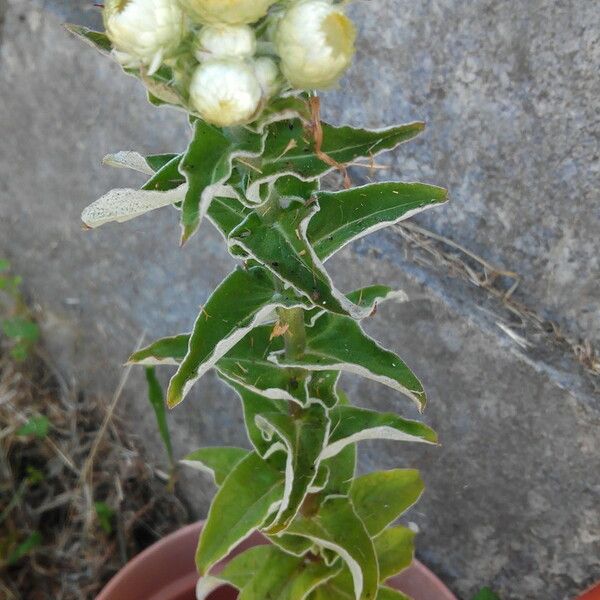
Plant Overview
Often referred to as the Stinking Strawflower or Stinking Everlasting, this South African native is a bit of a botanical contradiction. While it boasts radiant, sunshine-yellow blooms that can last for years when dried, it is infamous for a pungent, musky aroma that earned it the Latin name foetidum (meaning "foul-smelling"). Despite its scent, it is a beloved pioneer plant in Cape gardens, often used in traditional medicine and prized by florists for its "everlasting" quality.
🔍 How to Identify
- 🌼 The Flowers: Look for clusters of papery, bright yellow flower heads that feel dry to the touch even when fresh. They resemble small, golden buttons and do not wilt like traditional petals.
- 🌿 The Foliage: The leaves are long, heart-shaped at the base where they clasp the stem, and covered in fine, silvery-white hairs that give the plant a shimmering, frosted appearance.
- 👃 The Scent: If you brush against the leaves or stems, you will notice a distinct, heavy odor often compared to old sweat or strong musk—a key diagnostic feature!
🏡 In Your Garden
- ☀️ Sun-Loving Pioneer: This plant thrives in "disturbed" soil and full sun, making it the perfect candidate for a new garden bed or a rocky slope where other plants might struggle. It’s a fast grower that fills gaps quickly.
- 🦋 Pollinator Magnet: While humans might turn up their noses at the smell, local butterflies and bees find the nectar-rich yellow discs irresistible, making it a great addition to a wildlife-focused garden.
⚠️ Safety & Toxicity
- ✅ Generally Safe: Helichrysum foetidum is not known to be toxic to humans or common household pets. In fact, it has a long history of use in traditional African medicine for treating ailments like coughs and skin irritations.
- 🧴 Skin Sensitivity: While not poisonous, the tiny hairs on the stems and leaves can occasionally cause mild mechanical irritation to sensitive skin if handled frequently without gloves.
✨ Fun Fact
The name "Everlasting" isn't just a poetic flourish; because the flower bracts are dry and papery rather than fleshy, they retain their brilliant yellow color and shape for years after being cut, making them a staple in Victorian-era "immortelle" wreaths.

Detailed Care Instructions
To grow Helichrysum foetidum, also known as stinking everlasting or curry plant, follow these steps:
- Choose the right location: Helichrysum foetidum thrives in full sun and well-draining soil. Select a spot in your garden that receives at least 6-8 hours of direct sunlight every day and has loose soil.
- Prepare the soil: Loosen the soil in the selected area and incorporate organic matter like compost or well-rotted manure to improve drainage and fertility. Remove any weeds or grass from the planting site.
- Start from seeds or cuttings: You can either start the plant from seeds or purchase young plants from a local nursery. If using seeds, sow them in small pots or trays filled with seed-starting mix. Keep the soil consistently moist until the seeds germinate, usually within 1-2 weeks. If using cuttings, take 4-6 inch stem cuttings from an established plant, dip the ends in rooting hormone, and plant them in well-draining soil. Keep the soil moist until roots develop.
- Transplant or thin seedlings: Once the seedlings have grown a few inches tall, thin them out if you have sown them densely. For germinated seeds or rooted cuttings, transplant them into individual pots or directly into the prepared garden bed, spacing them about 8-12 inches apart.
- Watering: Water the newly planted seedlings or cuttings thoroughly and then allow the soil to dry out slightly between watering. Helichrysum foetidum prefers slightly dry conditions and is somewhat drought-tolerant, so be careful not to overwater.
- Fertilizing: Apply a balanced organic fertilizer or compost once or twice a month during the growing season to promote healthy growth. Avoid using excessive amounts of fertilizer, as this can result in leggy growth and reduced flavor.
- Pruning: Regularly pinch or trim the growing tips of the plant to encourage bushier growth. Pruning also helps to maintain a compact shape.
- Harvesting: You can begin harvesting the leaves and stems of the plant as soon as it reaches a height of about 6-8 inches. Harvesting earlier rather than later helps promote the healthy growth of the plant.
With proper care and maintenance, your Helichrysum foetidum plant should grow well and provide you with aromatic and flavorful leaves to use in cooking.

Place in a bright room that is sun drenched almost all day. Or directly in a south-facing window.

When caring for this plant, it is important to provide it with adequate water. The soil should be kept consistently moist, but not waterlogged. Allow the top layer of soil to dry out slightly before watering again, and provide enough water to thoroughly saturate the root ball. Be sure to drain excess water from the saucer or container to prevent waterlogging. Additionally, avoid getting water on the foliage, as the leaves are sensitive to excess moisture and may become damaged or diseased.
- Choose a well-draining soil mix that is rich in nutrients.
- When planting, mix a slow-release fertilizer into the hole to provide ongoing nutrition.
- Water the plant deeply once a week, allowing the soil to become moderately dry between watering.
- Apply a balanced liquid fertilizer every 4-6 weeks during the growing season.
- Alternatively, you can use a dry organic fertilizer once a month instead of liquid fertilizer.
- Avoid over-fertilization, as this can lead to salt buildup and damage the roots.
- Stop fertilizing in the late fall and winter months when the plant is dormant.
Helichrysum Foetidum plant prefers well-draining soil that is rich in organic matter. The soil should be slightly acidic with a pH range of 5.5 to 7.0. It is recommended to use a porous soil mix that allows air circulation and prevents waterlogging. The soil should also retain moisture well, but not stay soggy. Adding sand or perlite to the soil mix can help improve drainage. Additionally, regular fertilization with a balanced fertilizer can aid in the healthy growth of the plant.
To propagate Helichrysum Foetidum, you will need to take a stem cutting from a healthy adult plant. Use a sharp, clean knife or scissors to cut a stem that is about 4-6 inches long. Remove the lower leaves, leaving only a few leaves at the top. Dip the cut end of the stem in rooting hormone powder, tapping off any excess.
Prepare a pot with well-draining potting soil and make a small hole in the center. Insert the stem cutting into the hole and firm the soil around it. Water the cutting until the soil is moist but not waterlogged.
Place the pot in a warm, bright location where it will receive indirect sunlight for most of the day. Mist the cutting with water once a day to keep the humidity high around the plant.
In about 2-3 weeks, you should start to see new growth on the cutting. This means that roots have developed and the plant is beginning to establish itself. Once the plant has become established, you can transplant it into a larger pot or plant it directly in your garden.








