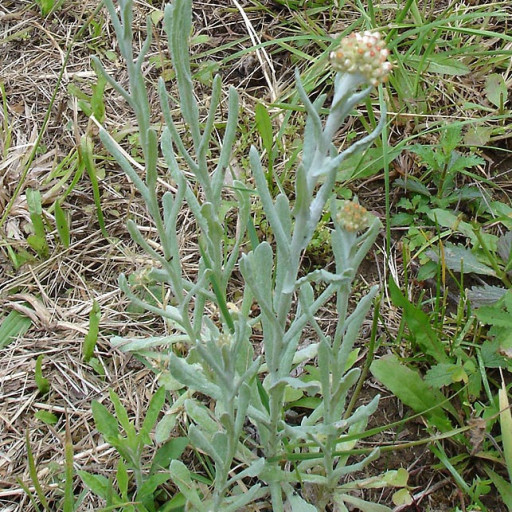
Plant Overview
Often called the Jersey Cudweed or Weedy Everlasting, this silver-tufted herb is a resilient traveler found across the globe. Its most striking feature is its soft, felt-like texture, which makes it look as though it has been dusted in fine silver powder. It belongs to the "Everlasting" family because its papery flower heads retain their sunny color and shape long after the plant has dried.
🔍 How to Identify
- 🍃 Foliage: Linear, lance-shaped leaves that are completely covered in dense, white-woolly hairs, giving the entire plant a shimmering grey-green or silver appearance.
- 🌼 Flower Heads: Tiny, straw-colored to pale yellow button-like flowers that lack traditional petals; they grow in tight, leafless clusters at the very top of the stems.
- 🌱 Texture: The stems and leaves have a distinctively soft, velvety feel due to the thick "tomentum" (plant hair) that protects it from the sun.
🏡 In Your Garden
- 🏜️ The Sun Seeker: This plant is a specialist in "disturbed ground." In your garden, it will thrive in the sandy, poor-quality soil where other plants might wither, provided it gets plenty of direct sunlight.
- 💧 Built-in Umbrella: Those silver hairs aren't just for looks—they act as a biological cooling system, reflecting heat and trapping moisture. This makes the Jersey Cudweed an excellent candidate for rock gardens or xeriscaping.
⚠️ Safety & Toxicity
- ✅ Status: Generally considered non-toxic to humans, cats, and dogs.
- 🧤 Skin Care: While not poisonous, the dense woolly hairs can occasionally act as a mild mechanical irritant for people with very sensitive skin or respiratory allergies if handled in large quantities.
- 🍽️ Foraging Note: While some Helichrysum species are used in traditional teas, always ensure a positive ID from a local expert before any form of consumption.
✨ Fun Fact
The name Helichrysum is derived from the Greek words helios (sun) and chrysos (gold). In ancient times, these "everlasting" flowers were often woven into wreaths to be placed on statues of the gods because they would never "wilt" or lose their golden luster.

Detailed Care Instructions
To grow Helichrysum luteoalbum (Strawflower), follow these steps:
- Choose the right location: Strawflowers prefer full sun to partial shade. Select a spot in your garden that receives at least 6-8 hours of direct sunlight per day.
- Prepare the soil: The soil should be well-draining and rich in organic matter. Amend the soil with compost or well-rotted manure to improve its fertility. Ensure the pH level of the soil is around 6.0-7.0.
- Sow the seeds or transplant: You can start the seeds indoors about 6-8 weeks before the last frost date or sow them directly in the garden once the soil has warmed up. If transplanting, set the seedlings about 12-18 inches apart to allow adequate space for growth.
- Watering: Keep the soil moist but not waterlogged. Water the plants deeply once a week, and adjust the frequency based on the weather conditions. Avoid overhead watering, as wet foliage can lead to fungal diseases.
- Mulching: Apply a layer of organic mulch around the plants to help retain moisture, suppress weed growth, and regulate soil temperature.
- Fertilization: Apply a balanced, slow-release fertilizer or incorporate granular fertilizer into the soil at the time of planting. Repeat the application every 4-6 weeks during the growing season.
- Pruning: Regularly pinch back the growing tips of the plant to encourage bushier growth. This will result in more blooms. Additionally, deadhead the spent flowers to promote continuous blooming.
- Pest and disease control: Monitor the plants for pests like aphids, snails, and slugs. Apply appropriate organic pest control methods if necessary. Helichrysum luteoalbum is generally resistant to most diseases.
- Support: If needed, provide some support to prevent the plants from toppling over during heavy rains or strong winds. Insert stakes or install a trellis system near the plants.
- Harvesting: When the flowers are in full bloom and the petals are dry, they are ready to be cut for drying or crafting purposes. Cut the flowers with a sharp, clean pair of shears just above a leaf node.
Remember to research specific regional information regarding planting seasons and climate conditions for the best success in growing Helichrysum luteoalbum in your area.

Place in a bright room that is sun drenched almost all day. Or directly in a south-facing window.

Helichrysum Luteoalbum is a type of plant that requires a specific method of watering to ensure it thrives. To water this plant, it is important to use a watering can or hose with a nozzle that disperses water gently. Start by checking the soil moisture level by inserting a finger into the soil. If the top inch of soil feels dry to the touch, it is time to water the plant.
When watering, pour water around the base of the plant, making sure to avoid getting water on the leaves or flowers. Water the plant thoroughly until you see water start to flow out of the drainage holes at the bottom of the pot. Allow the soil to drain for a few minutes before returning the plant to its saucer.
It is important not to overwater this plant, as it prefers well-draining soil. Wait for the top inch of soil to dry out before watering again. In winter, reduce the frequency of watering as the plant goes into dormancy. With proper watering, your Helichrysum Luteoalbum will grow healthy and strong.
For best results, fertilize this plant every two weeks during the growing season with a balanced, all-purpose fertilizer. Be sure to dilute the fertilizer according to the package instructions, as over-fertilizing can lead to burning and damage to the plant. Apply the fertilizer directly to the soil around the base of the plant, taking care not to get any on the leaves or stems. Water the plant immediately after fertilizing to help distribute the nutrients evenly throughout the soil. In the winter months, reduce fertilizing to once a month or stop altogether, as the plant will be dormant.
The best type of soil to use for this plant is a well-draining, sandy soil that is slightly acidic to neutral in pH. This will help to prevent soil compacting and ensure proper drainage for the plant's root system. It is also important to avoid using soil that is too rich in nutrients, as this can cause excessive growth and reduce the plant's overall health. Instead, choose a soil that is of moderate fertility and supplemented with organic matter, such as compost or aged manure. This will provide the necessary nutrients for the plant without causing an imbalance or risking over-fertilization. Overall, the key to success with this plant is to provide a well-draining and balanced soil that is able to support healthy growth and development over time.
To propagate this plant, select a healthy stem from the parent plant. Make sure the stem has several nodes and is at least 4 inches long. Cut the stem with a clean, sharp knife or pruning shears just below a node. Remove any leaves from the bottom 2 inches of the stem. Dip the cut end of the stem in rooting hormone powder.
Prepare a potting mix of equal parts perlite and peat moss. Water the mixture until it is moist but not saturated. Make a hole in the potting mix with a pencil and insert the stem cutting at least 2 inches deep. Firm the soil around the stem and water until moist.
Cover the pot with a clear plastic bag and place it in a warm, bright location out of direct sunlight. Keep the soil moist and make sure there is good air circulation around the cutting.
After two to four weeks, check for root development by gently tugging on the stem. If there is resistance, the cutting has rooted. Remove the plastic bag and move the plant to a location with bright, indirect light.
After a few more weeks, the plant can be transplanted to a larger container or directly into the garden.








