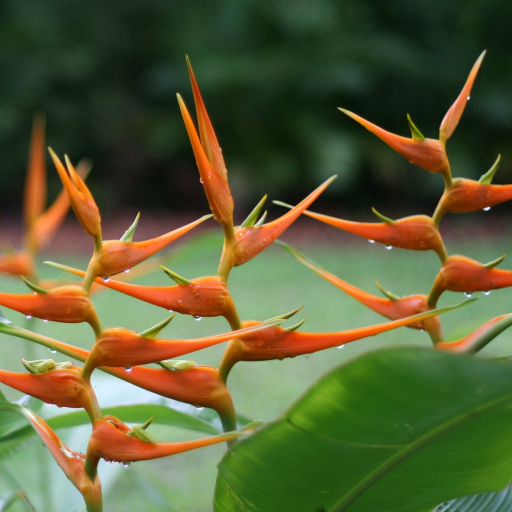
Plant Overview
Often called the Wild Plantain or Caribbean Heliconia, this striking tropical giant is the undisputed royalty of the West Indies. With its upright, boat-shaped bracts that look like hand-painted porcelain, it transforms any space into a lush, prehistoric jungle. It is a favorite in high-end floral arrangements because its blooms are incredibly sturdy and long-lasting, often staying vibrant for weeks after being cut.
🔍 How to Identify
- 🛶 The Bracts: Unlike some Heliconias that hang down, Heliconia caribaea features stiffly erect, cup-like structures called "bracts." These are typically fiery red, golden yellow, or a sunset-orange, often with a subtle green rim.
- 🍃 Banana-like Foliage: The leaves are massive, paddle-shaped, and can grow up to 5 feet long. They have a distinct midrib and a leathery texture that helps them withstand tropical rainstorms.
- 📏 Stately Stature: This is a large-scale plant, often reaching 10 to 15 feet in height. It grows in dense, upright clumps from underground rhizomes, creating a thick wall of green.
🏡 In Your Garden
- 🍴 Heavy Feeders: Because these plants produce so much massive foliage and thick waxy blooms, they are "hungry." They require rich, organic soil and frequent fertilization to keep their colors vivid and their growth vigorous.
- 💧 Humidity is Key: While they love sunlight, their leaves will "shred" or brown at the edges if the air is too dry. They thrive best when grouped with other plants to create a humid microclimate or when planted near water features.
- 🌬️ Wind Protection: Despite their sturdy appearance, those giant leaves act like sails. Planting them in a spot protected from heavy winds prevents the foliage from tearing and looking tattered.
⚠️ Safety & Toxicity
- ✅ Status: Generally non-toxic and safe for garden enthusiasts.
- 🐾 Pet Safety: While not considered poisonous, the fibrous leaves can cause mild stomach upset or choking hazards if chewed by curious dogs or cats. The sap is sticky but rarely causes skin irritation for most people.
✨ Fun Fact
In their native Caribbean habitat, these plants have a "private partnership" with hummingbirds. The bracts are specifically designed to hold small pools of rainwater, which not only provides a drink for the birds but also creates a tiny aquatic ecosystem for specialized insects!

Detailed Care Instructions
To grow Heliconia Caribaea plant, you can follow these steps:
- Choose a suitable location: Heliconia Caribaea prefers warm and tropical climates, so choose a location that receives full sun or partial shade. It also thrives in well-draining soil.
- Prepare the soil: Ensure the soil is fertile and well-draining. You can improve the soil quality by adding compost or organic matter.
- Planting: Dig a hole that is slightly larger than the root ball of the plant. Place the plant in the hole, ensuring that it is at the same depth as it was in the pot. Fill the hole with soil and gently tamp it down to remove any air pockets.
- Watering: Provide regular watering to keep the soil consistently moist, especially during the growing season. Ensure the plant does not sit in standing water to avoid root rot.
- Mulching: Apply a layer of organic mulch around the base of the plant to help retain moisture, suppress weeds, and provide insulation.
- Fertilizing: Heliconia Caribaea benefits from regular fertilization. Use a balanced fertilizer or a slow-release fertilizer specifically formulated for tropical plants. Follow the instructions on the fertilizer package for application rates and frequency.
- Pruning: Remove any dead or damaged leaves to maintain the plant's appearance and overall health. If desired, you can also prune the plant to control its size and shape.
- Protection from cold: If you live in an area with colder winters, protect your Heliconia Caribaea plant from frost or freezing temperatures. You can use frost blankets or move the plant indoors during winter months.
- Pests and diseases: Monitor the plant regularly for pests like aphids, mealybugs, or spider mites. Treat infestations immediately using suitable insecticides or organic pest control methods. Watch out for any signs of diseases like leaf spot or fungal infections, and take necessary actions to treat them.
- Propagation: You can propagate Heliconia Caribaea through division. Divide the plant during the dormant season by carefully separating the rhizomes and replanting them in separate pots or areas of the garden.
By following these steps, you should be able to successfully grow and care for Heliconia Caribaea plant.

Place in a window with dappled sun or a spot in the middle of a room. Or directly in a window facing west or east.

Heliconia Caribaea is a tropical plant that requires frequent watering to grow and thrive. The best way to water this plant is to ensure that the soil remains moist, but not waterlogged. It is important to avoid letting the soil dry out completely between watering sessions. One way to achieve this is to water the plant deeply once or twice a week, depending on the humidity and temperature of the environment. When watering, be careful not to pour water directly onto the plant's stalk or leaves, as this can cause damage. Instead, aim to water the soil around the plant's base. It is also a good idea to add a layer of organic mulch around the base of the plant to help retain moisture in the soil. With the proper watering, Heliconia Caribaea can grow up to five feet tall and produce beautifully vibrant flowers.
- Choose a balanced fertilizer with equal amounts of nitrogen, phosphorus, and potassium.
- Dilute the fertilizer to half strength according to the manufacturer's instructions.
- Apply the fertilizer to the soil around the base of the plant.
- Water the plant immediately after fertilizing to help the nutrients penetrate the soil.
- Repeat the fertilizer application every 2-3 months during the plant's growing season (spring and summer).
- Monitor the plant for signs of over-fertilization, such as burnt leaves or stunted growth.
- Adjust the frequency and strength of fertilization as needed based on the plant's response.
The ideal soil for Heliconia Caribaea plant is a rich, well-draining soil that is slightly acidic in nature. The soil should be able to retain moisture well without becoming waterlogged. It is recommended to mix in some organic matter such as peat moss or compost to improve soil structure and fertility. The plant prefers a soil that is high in nutrients like nitrogen, potassium, and phosphorus. It should be kept slightly moist, but not waterlogged. The soil pH level should be between 5.5 to 6.5 for optimal growth. It is also important to avoid using heavy clay soils as they can easily become waterlogged, leading to root rot and other issues.
Heliconia Caribaea plant can be propagated through division of the rhizomes. The rhizomes should be dug up and cleaned, removing any dead or damaged parts. The rhizome should then be divided into sections that have a healthy shoot and roots. Each section should be potted in a well-draining soil mix and kept in a warm, humid environment. It is important to keep the soil moist but not waterlogged, as too much moisture can lead to rot. Once new growth emerges from the divisions, the plants can be gradually acclimatized to a brighter light and lower humidity.








