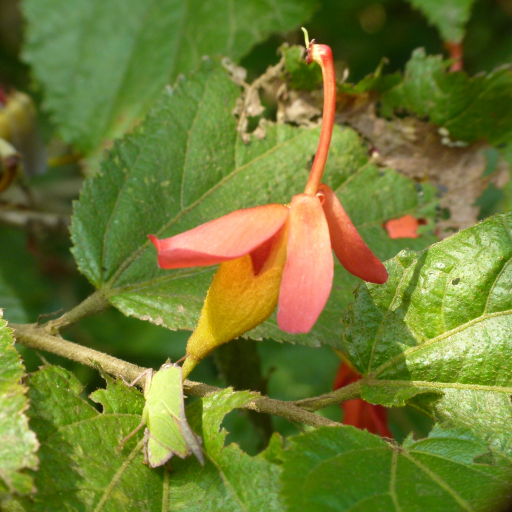
Plant Overview
Known as the East Indian Screw Tree or "Marorphali," this plant looks like a collection of hardware store supplies hanging from a branch. It is a hardy tropical shrub that has fascinated travelers and herbalists for centuries, primarily due to its bizarre, rope-like fruit that appears to have been mechanically twisted.
🔍 How to Identify
- 🌀 The Fruit: The most iconic feature—five slender, woody follicles spirally twisted together to form a "screw" about 2 inches long. They turn from green to a dark, earthy brown when dried.
- 🌺 The Flowers: Asymmetrical, brick-red or orange blossoms with long, protruding stamens. Interestingly, the petals change color to a leaden-grey or pale blue as they age.
- 🍃 The Foliage: Broad, oval-shaped leaves with a rough, sandpapery texture. The edges are finely jagged (serrated), and the underside is covered in soft, velvety hairs.
🏡 In Your Garden
- ☀️ Sun & Space: This is a sun-loving tropical native. It thrives in full light and is remarkably drought-tolerant once established, often found naturally in dry, deciduous forests.
- 🐦 Pollinator Magnet: The unique, curved shape of the flowers is perfectly evolved for sunbirds. Their long beaks fit into the flower to reach nectar, making this a great choice for a wildlife-friendly garden.
- 🌱 Soil Context: It isn't picky about nutrients but hates "wet feet." Ensure your soil is well-draining, as it prefers rocky or sandy textures over heavy clay.
⚠️ Safety & Toxicity
- ✅ Status: Generally safe to handle and non-toxic to the touch.
- 🐕 Physical Hazard: While not chemically poisonous, the dried "screws" are very hard and woody. They can be a choking hazard for pets or small children who might find the odd shape tempting to chew on.
- 💊 Medicinal Caution: Although it is widely used in traditional Ayurvedic medicine for digestive issues, you should never ingest parts of the plant for self-treatment without professional guidance.
✨ Fun Fact
- 📜 The Doctrine of Signatures: Ancient herbalists believed that a plant’s physical appearance hinted at its medicinal use. Because the fruit of Helicteres isora looks like twisted intestines, it was historically used as a remedy for "twisted" stomach aches and intestinal cramps!

Detailed Care Instructions
To grow the Helicteres Isora plant, also known as the Indian Screw Tree, you can follow these steps:
- Obtain seeds: Collect the seeds from a mature Helicteres Isora plant or purchase them from a reputable nursery or online supplier.
- Soil preparation: Prepare a well-draining soil mix with organic matter. The soil should be fertile and slightly acidic, with a pH range of 5.5 to 6.5.
- Germination: Soak the seeds in water for 24 hours to help with germination. After soaking, plant the seeds in small pots or seed trays, covered with a thin layer of soil.
- Light and temperature: Place the pots or seed trays in a well-lit area with indirect sunlight. The ideal temperature for germination is around 20 to 25 degrees Celsius (68 to 77 degrees Fahrenheit). Maintain a consistent temperature throughout the process.
- Watering: Keep the soil moist but not saturated. Water the pots regularly, ensuring the soil doesn't dry out completely. Avoid overwatering, as it can lead to root rot.
- Transplanting: When the seedlings have developed a few true leaves and are about 6 to 8 inches tall, you can transplant them into larger pots or directly into the ground. Ensure that the plants have enough space to grow, with a distance of at least 3 to 4 feet between each plant.
- Sunlight and care: Place the transplanted plants in a sunny location where they can receive at least 6 to 8 hours of sunlight daily. Water the plants regularly, especially during dry periods, and provide occasional fertilization with a balanced organic fertilizer.
- Pruning: Prune the plant selectively to encourage bushier growth and to remove dead or diseased branches. Pruning is best done during the dormant season, typically in late winter or early spring.
- Pest and disease control: Monitor the plants regularly for pests such as aphids, mealybugs, or spider mites. If necessary, treat them using organic pest control methods or insecticidal soaps. Proper sanitation and good air circulation can help prevent disease issues.
- Patience: Helicteres Isora plants can take several years to reach maturity and produce flowers and fruit. Be patient and continue providing proper care to your plants.
Remember to check your local climate and growing conditions before starting to grow the Helicteres Isora plant, as it may require specific conditions for successful growth.

Place in a bright room that is sun drenched almost all day. Or directly in a south-facing window.

Helicteres Isora plant requires a moderate amount of water to grow and thrive. It is best to water the plant once the top layer of soil appears dry and water the plant thoroughly until it drains out of the bottom of the pot.
It is important not to overwater the plant as it can lead to root rot. It is better to underwater than to overwater.
During the winter months, reduce the watering frequency to allow the plant to enter a dormant state.
It is also recommended to use room temperature water to water the plant and avoid using water with high levels of chlorine and fluoride.
To fertilize the Helicteres Isora plant, follow these instructions:
- Choose a balanced fertilizer with equal amounts of nitrogen, phosphorus, and potassium (N-P-K ratio of 10-10-10 or 20-20-20) specifically formulated for flowering plants.
- Dilute the fertilizer according to the manufacturer's instructions. Typically, you'll mix about 1 teaspoon of fertilizer per gallon of water.
- Apply the diluted fertilizer around the base of the plant, ensuring it is evenly distributed in the soil.
- Avoid applying fertilizer directly on the leaves or stems as it may cause burning or damage.
- Water the plant thoroughly after fertilizing to help the nutrients penetrate the soil and reach the plant's roots.
- Repeat the fertilization process every 4-6 weeks during the active growing season, which is usually spring through early fall.
- During the dormant period, reduce or stop fertilization as the plant requires less nutrients.
Remember to always read and follow the instructions provided by the fertilizer manufacturer and adjust the dosage if needed based on the specific nutrient requirements of your Helicteres Isora plant.
The ideal soil for the Helicteres Isora plant is a well-draining soil that is rich in nutrients. It should be slightly acidic with a pH level between 6.0 and 6.5. The soil should be loamy with a good mix of sand and clay to promote moisture retention and drainage. It is beneficial to add organic matter to the soil such as compost or aged manure to improve soil structure and fertility. The plant prefers a soil that is consistently moist, but not waterlogged. It is recommended to use a slow-release fertilizer to provide nutrients throughout the growing season. Additionally, mulching the soil around the plant can help retain moisture and regulate temperature.
Propagation of Helicteres Isora can be done through multiple methods such as seed propagation, stem cuttings, and air layering.
- Seed propagation: Collect mature seeds from the plant and remove the outer covering. Soak the seeds in water for 24 hours and then plant them in well-draining soil. Cover the seeds lightly with soil and keep them moist. Germination will take place in about 2-3 weeks.
- Stem cuttings: Take stem cuttings of about 6-8 inches in length from healthy plants. Remove the leaves from the lower half of the cutting and dip the cut end in rooting hormone. Plant the cutting in well-draining soil and keep it moist. Rooting will take place in about 3-4 weeks.
- Air layering: Choose a healthy stem and make a small cut in its bark. Apply rooting hormone on the cut area and wrap it with moist sphagnum moss. Cover the moss with plastic wrap and secure it with a rubber band. Keep the moss moist and roots will appear in about 4-6 weeks. Once the roots have developed, cut the rooted stem from the mother plant and plant it in well-draining soil.
All these methods require a suitable growing environment with moderate watering and adequate sunlight for successful propagation of Helicteres Isora.








