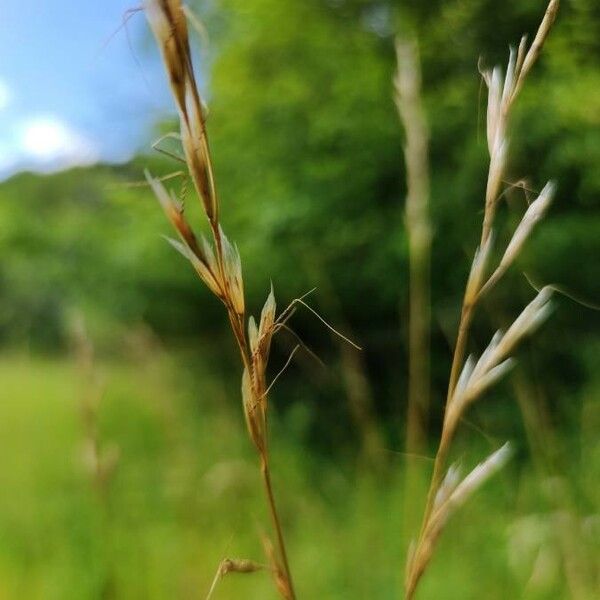
Plant Overview
Often called Meadow Oat-grass, this perennial bunchgrass is the understated architect of wild, sun-drenched meadows across Europe and Asia. With its stiff, fountain-like habit and striking blue-grey foliage, it brings a touch of structural elegance to dry, rocky landscapes. It is a resilient survivor, often found standing tall in thin, chalky soils where more delicate grasses might wither.
🔍 How to Identify
- 🌾 The Foliage: Look for densely tufted, stiff leaves that are often folded or flat. They possess a distinct "glaucous" (waxy) coating that gives the plant a cool, silvery-blue or grey-green hue.
- 🌾 The Flowers: It produces large, loose panicles that resemble cultivated oats, though they are much more slender. These upright clusters sway gracefully in the breeze during early summer.
- 🌾 Growth Habit: Unlike many aggressive grasses, it grows in neat, tight clumps (tussocks). It stays in its designated spot rather than creeping across the lawn with underground runners.
🏡 In Your Garden
- 🌱 Soil Nuance: This plant is a "calcicole," meaning it is a lover of lime. It performs best in alkaline or neutral soils; if your garden is naturally acidic, Meadow Oat-grass may struggle to establish itself.
- ✂️ Low Maintenance: Because of its deep root system, it is exceptionally drought-tolerant once established. It hates being moved or divided frequently, so choose its forever home carefully to avoid transplant shock.
⚠️ Safety & Toxicity
- ✅ Status: Non-toxic and generally safe.
- 🐾 Details: Meadow Oat-grass is considered safe for pets and children. In its natural habitat, it is a common forage grass for livestock like sheep and cattle, providing a nutritious snack without any known irritants.
✨ Fun Fact
Meadow Oat-grass is a vital "nursery" for the Marbled White butterfly (Melanargia galathea). The caterpillars of this beautiful butterfly feed almost exclusively on the leaves of various meadow grasses, making this plant an essential pillar of the local ecosystem.

Detailed Care Instructions








