Plant Overview
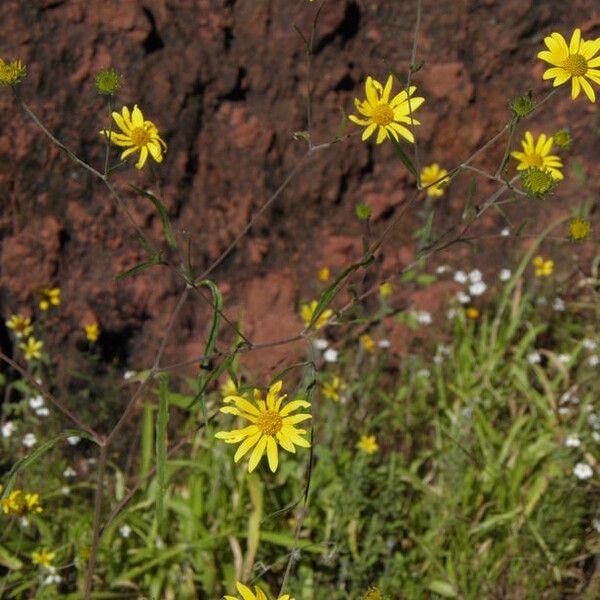
Known as the Longleaf False Goldeneye, this golden wildflower is a late-summer star of the North American Southwest. It often blankets dry roadsides and meadows in a sea of yellow, earning it the reputation of a hardy, sun-loving pioneer. While it looks like a miniature sunflower, its slender, delicate foliage gives it an elegant, airy presence that mimics a golden mist when planted in groups.
🔍 How to Identify
- 🌼 The Blooms: Numerous bright yellow "daisy-like" flowers featuring 10-14 ray petals surrounding a slightly darker, mounded yellow central disc.
- 🌿 The Foliage: Distinguished by its name "longifolia," meaning long leaves; the foliage is remarkably narrow and linear, often looking like thick blades of grass or pine needles.
- 📏 Growth Habit: A branching annual that typically reaches 1 to 3 feet in height, creating a bushy, golden-topped silhouette.
🏡 In Your Garden
- 🏜️ The Ultimate Survivor: This plant is a specialist in "tough love." It thrives in poor, rocky, or sandy soils where more pampered garden flowers would wilt. It is a perfect candidate for xeriscaping or low-maintenance rock gardens.
- 🦋 A Late-Season Feast: Because it reaches peak bloom in late summer and autumn, it serves as a critical nectar station for migrating butterflies and bees preparing for winter.
- 🌱 Self-Sowing Nature: As an annual, it lives for only one season, but it is an expert at dropping seeds. If you leave the spent flower heads alone, you will likely see a new carpet of gold return the following year without any extra work.
⚠️ Safety & Toxicity
- ✅ Non-Toxic Status: Heliomeris longifolia is generally considered safe and non-toxic for humans, dogs, and cats.
- 🦌 Wildlife Friendly: It is frequently grazed by deer and livestock in its native habitat without ill effects, though its slightly resinous texture often makes it a secondary choice compared to tastier grasses.
✨ Fun Fact
The name Heliomeris is derived from the Greek words helios (sun) and meris (part). This translates literally to "Part of the Sun," a poetic nod to how the fields of these flowers look like fallen rays of sunlight caught in the meadow.

Detailed Care Instructions

Water-loving plants flourish in wet or sloppy soil and near ponds. The extensive root system enables these plants to absorb plenty of water. The surface of the soil should be kept moist at all times. Place your pot in a container filled with water to guarantee that plants get enough water. If the ground becomes dry, it is recommended that you water it well. Plants in smaller pots will need to be watered more frequently. Water the soil in which the plant is standing thoroughly using a watering can.








