Plant Overview
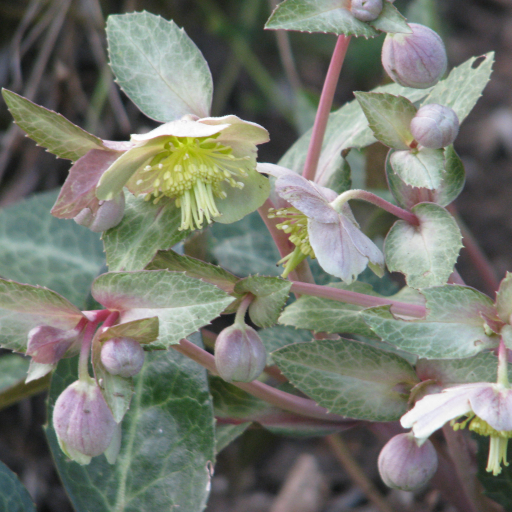
Known as the Majorcan Hellebore, this Mediterranean native is the "cool cousin" of the common Christmas Rose. While other winter plants look dormant and drab, this beauty shows off metallic, silver-veined leaves that look as though they’ve been hand-painted. It is a hardy survivor from the rocky cliffs of the Balearic Islands, bringing a touch of island elegance to the coldest months of the year.
🔍 How to Identify
- 🍃 The Foliage: It features unique, three-lobed leathery leaves. The surface is a deep hunter green, but it’s the striking network of silvery-white veins that makes it stand out in a garden.
- 🎨 Reverse Coloring: If you flip a leaf over, you’ll find a beautiful, contrasting dusty purple or maroon underside, a trait rarely seen in other hellebore species.
- 🌸 The Blooms: It produces clusters of cup-shaped, nodding flowers. Unlike the bright whites of its relatives, these blooms are a sophisticated blend of pistachio green with subtle brushes of rose-pink or purple.
🏡 In Your Garden
- ☀️ Sun Seeker: Unlike many hellebores that hide in deep shade, the Majorcan Hellebore enjoys a bit more sunlight. It thrives in "bright dappled shade" or even mild morning sun, which helps intensify the marbling on the leaves.
- 💧 Dry Feet: Coming from rocky Mediterranean slopes, it demands excellent drainage. It will "pout" and potentially rot if forced to sit in heavy, waterlogged clay during the winter.
- 🛡️ Wind Protection: While it is cold-tolerant, its stems are slightly more succulent than the common Lenten Rose. Planting it near a wall or under a canopy protects it from biting northern winds that can "burn" the foliage.
⚠️ Safety & Toxicity
- 🚫 Toxic Status: Highly Toxic. All parts of the plant contain protoanemonin and ranunculosides, which are dangerous if consumed.
- 🐾 Pets & Kids: Ingestion can cause severe drooling, abdominal pain, and lethargy in cats, dogs, and horses. It is best planted in areas where curious toddlers or pets won't be tempted to nibble.
- 🧤 Skin Sensitivity: The sap can cause mild skin irritation or "Hellebore dermatitis." Always wear gloves when pruning or dividing this plant to avoid a tingly or itchy rash.
✨ Fun Fact
🧬 The Hybrid Parent: Helleborus lividus is a celebrity in the plant-breeding world. It is a primary ancestor of the famous garden hybrid Helleborus × sternii. Breeders use this specific species to pass down those gorgeous, marbled leaf patterns to hardier garden varieties that can survive in much colder climates.

Detailed Care Instructions
To grow Helleborus Lividus plants, follow these steps:
- Obtaining seeds or plants: Helleborus Lividus plants can be grown from seeds or purchased as potted plants. You can find seeds or plant starts at local nurseries, garden centers, or online seed suppliers.
- Selecting an appropriate location: Helleborus Lividus plants prefer partially shaded areas with moist, well-draining soil. Choose a spot in your garden that provides dappled sunlight or an area where the plant is protected from intense afternoon sun.
- Preparing the soil: Prepare the planting area by loosening the soil and adding organic matter like compost or well-rotted manure to improve drainage and fertility. Helleborus Lividus plants prefer neutral to slightly alkaline soil, so adjust the pH if needed.
- Planting seeds or starts: If starting with seeds, sow them in well-prepared soil, gently pressing them onto the surface. Keep the soil consistently moist (but not overly wet) until they germinate. If using potted plants, dig a hole slightly larger than the root ball and place the plant in the hole, making sure the top of the root ball is level with the ground. Gently backfill the hole with soil and firm it around the plant.
- Watering and mulching: Water the plants immediately after planting and keep the soil moist but not waterlogged. Helleborus Lividus plants appreciate regular watering, especially during dry spells. Apply a layer of organic mulch around the base of the plant to help retain moisture and regulate soil temperatures.
- Maintenance: Remove any spent flowers and dead foliage regularly to keep the plant tidy and prevent disease. In early spring, once the danger of hard frosts has passed, fertilize the plant with a balanced, slow-release fertilizer to encourage healthy growth.
- Protection: Protect the plants from extreme temperatures and strong winds. In cold regions, provide a layer of mulch around the base to help insulate the roots during winter.
- Propagation: Helleborus Lividus plants can be propagated by division. Dig up an established plant and carefully separate the clumps, each with its own set of roots. Replant the divided sections immediately into prepared soil, ensuring they receive sufficient water.
By following these steps, you can successfully grow Helleborus Lividus plants and enjoy their unique, beautiful flowers in your garden.

Place in a window with dappled sun or a spot in the middle of a room. Or directly in a window facing west or east.

To water this plant, it is recommended to check the soil moisture level using a moisture meter or by sticking a finger into the soil up to the second knuckle. Only water when the top inch of soil feels dry to the touch. When watering, make sure to water evenly around the base of the plant, taking care not to get water on the leaves or flowers. Use a watering can or hose with a gentle spray attachment to avoid disturbing the roots. Avoid overwatering or allowing the plant to sit in standing water. It is best to water in the morning or early afternoon to allow excess moisture to evaporate before cooler temperatures set in at night.
- Choose a well-draining soil mix that is rich in organic matter.
- Wear gloves and protective clothing when handling fertilizers.
- Use a balanced, water-soluble fertilizer with equal amounts of nitrogen, phosphorus, and potassium.
- Apply the fertilizer at a rate of 1 teaspoon per gallon of water.
- Water the plant thoroughly before application.
- Apply the fertilizer to the soil around the plant, avoiding direct contact with the leaves or stem.
- Repeat fertilization every 4-6 weeks during the growing season.
- Discontinue fertilization in late summer to allow the plant to prepare for dormancy.
- Water the plant regularly to keep the soil moist but not soggy.
- Monitor the plant for any signs of over-fertilization, such as yellowing leaves or stunted growth, and adjust the fertilization accordingly.
When planting Helleborus Lividus, it is important to use a soil that is well-draining and rich in organic matter. The soil should have a pH of slightly acidic to neutral. A good mix for this plant would consist of one-third garden soil, one-third compost, and one-third coarse sand or perlite for drainage. The soil should be kept slightly moist but not waterlogged, and the plant should be fertilized with a balanced, slow-release fertilizer in the spring. It is also important to avoid planting Helleborus Lividus in areas with heavy foot traffic or where the plant may be disturbed, as it is sensitive to disturbance.
To propagate this plant, you will need to take stem cuttings in the spring. Choose a healthy stem that is about 4 inches long and has at least two leaves on it. Make a clean cut with sharp scissors or pruning shears right below a leaf node, where the leaf meets the stem.
Remove any leaves from the lower inch or so of the stem, leaving just the top two leaves intact. Dip the cut end of the stem in rooting hormone powder to encourage root growth.
Plant the cutting in moist potting soil in a small pot. Cover the pot with a plastic bag to create a humid environment for the cutting. Place the pot in a bright, indirect light location.
Keep the soil moist and check the cutting every few days for signs of new growth. Once the cutting has established roots and new leaves, it can be moved to a larger pot or planted outside in the garden.
Common pests of the livid hellebore include Aphids, larvae, snails. Make a habit of checking your livid hellebore frequently for pests so that any infestations can be caught and managed early.








