Plant Overview
Often called the "Crepe Ginger," Hellenia speciosa is the architect of the tropical garden. Unlike traditional gingers that hide their beauty underground, this plant is famous for its dramatic, spiraling stems that look like a winding staircase for forest spirits. Originally from the humid forests of Southeast Asia, it is a favorite for those wanting a "jungle vibe" combined with some of the most delicate-looking flowers in the botanical world.
🔍 How to Identify
- 🌀 Spiral Stems: The most striking feature is the way the lush, dark green leaves wind around the cane-like stems in a perfect, geometric spiral pattern.
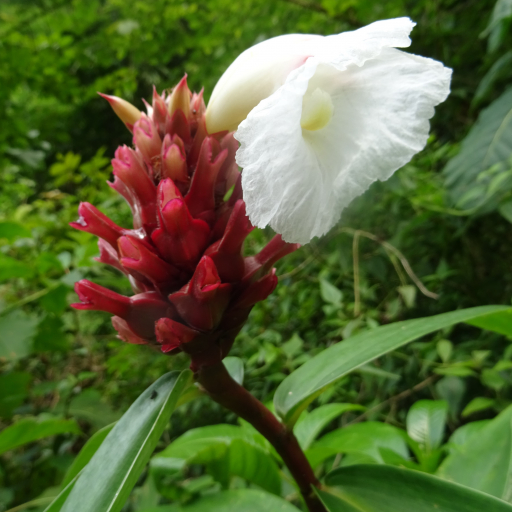
- ☁️ Crepe Petals: The snowy-white flowers have a distinct, crinkled texture that looks exactly like delicate tissue or crepe paper, emerging one by one from the top of the plant.
- 🍓 Red Bracts: The white flowers sit within a bright, waxy, deep-red cone (the bract). Even after the flowers fade, these red cones remain vibrant for weeks, providing a secondary splash of color.
🏡 In Your Garden
- 🥤 Thirsty Roots: Because of its large, tropical foliage, this plant transpires water quickly. It loves consistent moisture and high humidity, but it "hates wet feet"—ensure the soil is rich in organic matter but drains quickly to avoid root rot.
- ⛱️ Filtered Light: While it needs light to produce those iconic red cones, harsh, direct afternoon sun can "bleach" or scorch the leaves. It performs best in a spot that mimics a forest floor, receiving dappled or "filtered" sunlight throughout the day.
⚠️ Safety & Toxicity
- 🟢 Generally Safe: Hellenia speciosa is not considered highly toxic to humans or common household pets. It is often used in traditional medicine in its native range.
- 🐶 Digestive Caution: While not "poisonous" in the traditional sense, the rhizomes (roots) contain various saponins. If a curious dog or cat decides to dig up and eat a significant portion of the root, they may experience mild stomach upset or drooling.
✨ Fun Fact
In various parts of Southeast Asia, the rhizomes of the Crepe Ginger are used as a traditional treatment for fevers and skin rashes. Additionally, the plant is sometimes used in natural hair care rituals; the juice from the stems is believed to help keep hair dark and healthy!

Detailed Care Instructions
To grow Hellenia Speciosa plant, also referred to as the "golden lotus," follow these steps:
- Choose the right location: Hellenia Speciosa requires bright, indirect light, so find a spot with filtered sunlight or partial shade. Avoid direct sunlight, as it can burn the leaves.
- Select an appropriate container: Use a well-draining pot with drainage holes to prevent waterlogging, as overly moist soil can harm the plant.
- Soil and planting: Use a well-draining, slightly acidic soil mix. Plant the Hellenia Speciosa in the pot, ensuring the crown (where the stems meet the roots) is level with the soil surface. Gently press the soil around the roots to secure the plant.
- Watering: Water the plant regularly, keeping the soil consistently moist but not waterlogged. Monitor the moisture levels by checking the top layer of the soil; if it feels slightly dry, it's time to water. Avoid letting the soil completely dry out or become too soggy.
- Humidity: Hellenia Speciosa plants prefer high humidity. Create a humid environment by misting the leaves regularly or placing a tray filled with water near the plant. Pebble trays can also be used by filling a tray with water and placing pebbles on top, then setting the plant on the pebbles. This allows evaporation to increase humidity around the plant.
- Temperature: Maintain a warm environment for Hellenia Speciosa, with temperatures between 65-85°F (18-29°C). Avoid exposing the plant to cold drafts or extreme temperature fluctuations.
- Fertilizer: Feed the plant with a balanced, water-soluble fertilizer once a month during the growing season (spring/summer). Dilute the fertilizer to half the recommended strength. Avoid fertilizing during winter when the plant is dormant.
- Pruning: Trim any dead, dying, or yellowing leaves to promote healthier growth. Additionally, pinch back the tips of the stems to encourage bushier growth.
- Propagation: Hellenia Speciosa can be propagated through stem cuttings. Take a cutting with at least two nodes, remove the lower leaves, and place the cutting in a moist potting mix. Keep the soil moist until roots form.
- Repotting: As the plant grows, it may need to be repotted into a larger pot. This is typically required every 1-2 years. Choose a pot that is one size larger and use fresh potting soil.
By following these steps, you should be able to successfully grow and care for your Hellenia Speciosa plant.

Place in a bright room that is sun drenched almost all day. Or directly in a south-facing window.

The plant should be watered regularly, keeping the soil moist but not waterlogged. It is important to avoid letting the soil dry out completely, as this can harm the plant. The frequency of watering will depend on the environment and the size of the pot. It is recommended to check if the top inch of soil is dry before watering again. The water should be poured slowly near the base of the plant to allow it to absorb the water thoroughly. Avoid pouring water on the leaves or flowers, as this can cause damage or encourage fungal growth. The water should be room temperature or slightly warmer, as cold water can shock the roots. If the plant is in a pot, it is essential to ensure that it has good drainage to prevent the soil from becoming waterlogged.
To fertilize the Hellenia Speciosa plant, you will need a balanced, water-soluble fertilizer specially formulated for flowering plants. Follow these instructions:
- Dilute the fertilizer according to the manufacturer's instructions. Generally, a dilution of 1 tablespoon per gallon of water is recommended.
- Apply the fertilizer solution to the soil around the base of the plant. Avoid direct contact with the leaves or stems.
- Water the plant thoroughly after fertilizing to aid in the absorption of nutrients.
- Repeat the fertilization process every 2-4 weeks during the growing season, which typically spans from spring to early autumn.
- During the dormant period (winter), reduce or suspend fertilization. The plant requires less nutrients during this time.
- Monitor the plant's response to fertilization. If you notice excessive foliage growth without many flowers, reduce the frequency or concentration of fertilization.
Remember, it is crucial to read and follow the specific instructions provided by the fertilizer manufacturer, as different products may have varying usage guidelines.
Hellenia Speciosa is a tropical plant that requires well-draining soil that is rich in nutrients. The soil should be loamy and slightly acidic, with a pH level between 5.5 and 6.5. It is recommended to mix the soil with perlite or sand to improve drainage and aeration. The plant also prefers moist soil, but be careful not to overwater as it can lead to root rot. A slow-release fertilizer can also be added to the soil to provide the plant with additional nutrients.
- Select a healthy Hellenia Speciosa plant to propagate. Look for a plant with no signs of disease or damage.
- Prepare a clean and sharp knife or garden scissors for cutting. Ensure the tools are sterilized to prevent the spread of any potential diseases.
- Identify a suitable stem for cutting. Look for a healthy, mature stem that is at least 6 inches long. The stem should be firm and non-flowering.
- Make a clean cut just below a leaf node on the selected stem. A leaf node is the point where a leaf is attached to the stem. This is where new roots will develop.
- Remove any leaves from the lower part of the stem, leaving only a few leaves at the top to maintain photosynthesis.
- If desired, dip the cut end of the stem in a rooting hormone. This can help promote root growth and increase the chances of successful propagation. Ensure to follow the manufacturer's instructions for the rooting hormone.
- Prepare a well-draining potting mixture for planting. This can be a blend of peat moss, perlite, and vermiculite or any suitable soil mix.
- Make a small hole in the potting mixture with your finger or a pencil.
- Insert the cut end of the stem into the hole, ensuring that at least one or two leaf nodes are buried in the potting mixture.
- Gently firm the potting mixture around the stem to hold it in place. Avoid packing the soil too tightly as it may hinder root growth.
- Water the newly planted cutting thoroughly, ensuring that the potting mixture is evenly moist. Avoid overwatering, as it may lead to rotting.
- Place the potted cutting in a warm and bright location, but out of direct sunlight. A temperature between 70-80 degrees Fahrenheit is ideal for rooting.
- Mist the cutting regularly to maintain humidity, as high humidity encourages root development. You can cover the cutting with a plastic bag or use a humidity dome to create a greenhouse-like environment.
- Monitor the cutting regularly for any signs of growth. Within a few weeks to a couple of months, you should start to see new leaves emerging, indicating successful root development.
- Once the cutting has established a strong root system, you can gradually acclimate it to brighter light conditions and decrease humidity levels.
- After a few more weeks, the propagated Hellenia Speciosa plant should be ready for transplanting into a larger pot or directly into the garden, depending on your preference.
Remember to provide proper care, including regular watering, adequate light, and an appropriate fertilization regime, to ensure the continued growth and health of the newly propagated Hellenia Speciosa plant.








