Plant Overview
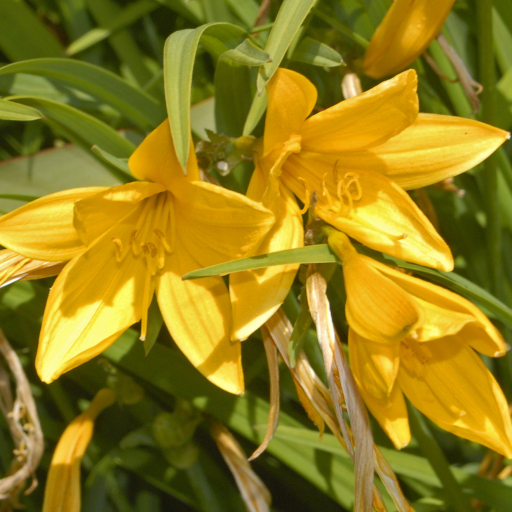
Often called the Citron Daylily or "Golden Needle," Hemerocallis citrina is a nocturnal beauty with a secret life. While most daylilies bask in the midday sun, this elegant species waits for the twilight to unfurl its luminous, lemon-scented blossoms. Native to East Asia, it has been cherished for centuries not just for its ethereal evening glow, but also as a staple in traditional gourmet cooking.
🔍 How to Identify
- 🌙 The Night Bloom: Look for flowers that begin to open in the late afternoon and reach full glory after dark. By the next morning's heat, the individual bloom will begin to wither.
- 🌼 Trumpet Shape: The flowers are a striking, pale lemon-yellow. They are notably more slender and elongated than the common orange "ditch lily," featuring six delicate petals that curve outward.
- 🌿 Fountain Foliage: Even when not in bloom, the plant forms a lush, arching mound of bright green, strap-like leaves that look like a dense ornamental grass.
🏡 In Your Garden
- 🌕 Moonlight Gardens: This is the ultimate "moonlight garden" plant. Because of its pale color and intense citrus fragrance, it is best planted near patios, walkways, or bedroom windows where its evening perfume can be fully appreciated.
- 🌱 Tough as Nails: Citron Daylilies are incredibly hardy and adapt to most soil types. They possess thick, tuberous roots that store energy and water, allowing them to survive periods of neglect or drought once they are established.
- ✂️ Low Maintenance: While it isn't picky, it appreciates a good "deadheading" (removing spent blooms). This keeps the plant looking tidy and prevents it from wasting energy on seed production.
⚠️ Safety & Toxicity
- 🐱 Fatal for Felines: Like all members of the Hemerocallis genus, this plant is extremely toxic to cats. Ingesting even a small amount of the leaf or pollen can lead to rapid kidney failure. Keep it far out of reach of outdoor cats.
- 🍽️ Human Edibility: Interestingly, the dried flower buds are a famous ingredient in Chinese cuisine known as "Golden Needles." While edible for humans, always ensure the plant hasn't been treated with chemical pesticides before considering a taste.
- 🐶 Dog Safety: It is generally considered non-toxic to dogs, though eating large amounts of any plant material can cause mild stomach upset.
✨ Fun Fact
- 🥢 A Soup Staple: If you’ve ever enjoyed a traditional bowl of Hot and Sour Soup or Moo Shu Pork, you’ve likely eaten this plant! The dried, unrefined buds of Hemerocallis citrina are prized for their unique, slightly musky flavor and "crunchy-soft" texture.

Detailed Care Instructions
To grow Hemerocallis Citrina (daylily) plants successfully, follow these steps:
- Location and soil preparation:
- Select a sunny or partially shaded location. Daylilies prefer full sun but can tolerate some shade.
- Ensure that the soil is well-draining and rich in organic matter. Loosen the soil and remove any weeds or grass from the planting area.
- Select a sunny or partially shaded location. Daylilies prefer full sun but can tolerate some shade.
- Planting:
- Dig a hole about twice as wide and deep as the plant's root ball.
- Place the daylily plant in the hole, spreading out its roots.
- Backfill the hole with soil, gently firming it around the plant.
- Leave enough space between each plant, around 18-24 inches, to promote good air circulation.
- Dig a hole about twice as wide and deep as the plant's root ball.
- Watering:
- Water the newly planted daylilies thoroughly.
- Afterward, water the plants regularly, providing about an inch of water per week during dry spells or when there is insufficient rainfall.
- Water the newly planted daylilies thoroughly.
- Mulching and weed control:
- Apply a layer of organic mulch, such as shredded bark or compost, around the plants. Mulching helps to retain moisture, regulate soil temperature, and suppress weed growth.
- Regularly monitor and remove any weeds that emerge near the plants to prevent competition for nutrients.
- Apply a layer of organic mulch, such as shredded bark or compost, around the plants. Mulching helps to retain moisture, regulate soil temperature, and suppress weed growth.
- Fertilization:
- Daylilies generally do not require excessive fertilization. However, you can feed them with a balanced slow-release granular fertilizer in early spring and again during midsummer.
- Daylilies generally do not require excessive fertilization. However, you can feed them with a balanced slow-release granular fertilizer in early spring and again during midsummer.
- Maintenance:
- Deadhead spent flowers by removing the stalks down to the base of the plant. This helps redirect energy into producing new blooms instead of seed production.
- Remove any discolored or damaged leaves to maintain plant health and appearance.
- Divide the daylilies every few years to prevent overcrowding. The best time to divide them is in early spring or late summer.
By following these steps, you can create optimal growing conditions for Hemerocallis Citrina, promoting healthy growth and beautiful blooms.
- Deadhead spent flowers by removing the stalks down to the base of the plant. This helps redirect energy into producing new blooms instead of seed production.

Place in a bright room that is sun drenched almost all day. Or directly in a south-facing window.

To water this particular plant, you should first ensure that it is planted in soil that is well-draining and moisture-retentive. This will help to prevent waterlogging and root rot.
When it comes to watering, it is crucial to strike a balance between giving the plant enough moisture to thrive, while also avoiding overwatering. One way to achieve this is to keep an eye on the soil's moisture level by sticking your finger about an inch into the soil. If the soil is dry at this depth, then it is time to water.
When watering, aim to give the soil a thorough soaking, evenly distributing water around the plant's root system. It is best to water in the morning or evening when the sun is not at its strongest, as this will reduce evaporation and help the plant to absorb the water more effectively.
However, be cautious not to water too frequently. This can lead to waterlogged roots and cause the plant to deteriorate. Many species of this plant prefer to be kept on the drier side and only require an occasional deep watering.
Overall, the key to successfully watering this plant is to keep the soil's moisture level consistent, without letting it become too dry or too wet.
To fertilize your plant, you should first make sure the soil is moist. Then, mix a slow-release fertilizer with water and pour it around the base of the plant. Be careful not to get any on the leaves or flowers. Repeat this process every six weeks during the growing season. It is also a good idea to add compost or mulch to the soil around the plant to provide extra nutrients.
Hemerocallis Citrina plant requires a well-draining soil that is rich in organic matter. A soil with a pH range of 6 to 7 is ideal. It is recommended to use a soil mix that is composed of equal parts of sand, loam, and organic matter, such as peat moss or compost. The soil should be loose and aerated to promote healthy root growth and prevent soil compaction. Avoid using heavy clay soils as they can retain too much moisture and restrict the growth of the plant. Amend the soil with a slow-release fertilizer to provide adequate nutrients throughout the growing season.
To propagate this plant, you will need to obtain a healthy parent plant from which to take cuttings. Once you have chosen the parent plant, carefully cut off a healthy stem or leaf near its base, making sure to leave enough stem or leaf tissue for the cutting to root. Dip the cut end of the stem or leaf into rooting hormone to encourage root growth, and then place the cutting into a container filled with well-draining soil. Water the cutting lightly, and cover the container with a plastic bag to create a humid environment. Place the container in a bright, indirect location and keep the soil moist until the cutting begins to sprout roots. Once the cutting has rooted, you can transplant it into a larger container or into the ground, and care for it as you would any other Hemerocallis Citrina plant.








