Plant Overview
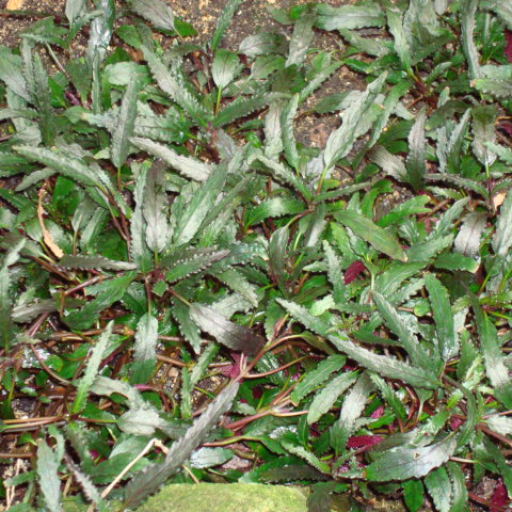
Known as the "Dragon’s Tongue," this striking tropical beauty brings a touch of the exotic to any indoor collection. Native to the humid regions of Southeast Asia, its narrow, crinkled leaves resemble the scales of a mythical creature, shifting between deep charcoal greens and royal purples. It is a top choice for terrarium enthusiasts who want a low-growing plant with high-impact color.
🔍 How to Identify
- 🍃 Leaf Shape: The foliage is long, slender, and lance-shaped with distinctively wavy, "toothed" margins that give it its "tongue" nickname.
- 🎨 Color Palette: The upper surface is a dark, metallic olive green or gray, while the undersides reveal a vibrant, surprising flash of deep magenta or burgundy.
- 🌸 Bloom Style: Under the right conditions, it produces tiny, delicate, white trumpet-shaped flowers that provide a stark contrast against the dark, moody leaves.
🏡 In Your Garden
- 💧 Humidity & Hydration: This plant is a humidity-lover. It thrives in terrariums, humidified rooms, or even "dish gardens." If the air is too dry, those beautiful wavy edges will quickly turn brown and crispy.
- ☀️ Lustrous Light: To maintain its deep purple pigments, it needs bright, indirect light. If kept in too much shade, the plant will lose its "dragon" colors and fade to a dull green.
- 🌱 Growth Habit: It is a creeping perennial, meaning it likes to spread horizontally. It makes an excellent groundcover in tropical conservatories or a "spiller" in a mixed indoor container.
⚠️ Safety & Toxicity
- 🐾 Pet-Friendly Status: Great news for pet parents! The Dragon's Tongue is generally considered non-toxic to cats and dogs.
- 👶 Gentle Nature: It is safe for households with children, as it lacks thorns, sharp edges, or irritating saps that are common in other tropical species.
✨ Fun Fact
Despite often being sold in pet stores as an "aquarium plant," the Dragon's Tongue is actually semi-aquatic. While it loves having "wet feet" and can survive short floods, it will eventually rot if kept fully submerged forever. It is much happier living in a swampy terrarium than at the bottom of a fish tank!

Detailed Care Instructions
To grow Hemigraphis Repanda plant, also known as Red flame Ivy, you can follow these steps:
- Choose a suitable location: Hemigraphis Repanda prefers indirect or filtered sunlight, so choose a spot that receives bright but indirect light. Avoid direct sunlight, as it can scorch the leaves.
- Prepare the pot: Select a pot with drainage holes to ensure proper drainage. Use a well-draining potting mix consisting of equal parts peat moss, perlite, and vermiculite. This plant prefers slightly acidic soil.
- Planting: Place the plant in the center of the pot, making sure the roots are spread out. Fill the pot with the potting mix around the roots, leaving some space at the top for watering. Gently firm the soil around the plant.
- Watering: Keep the soil consistently moist but not waterlogged. Water the plant when the top inch of soil feels dry. Avoid overwatering, as it can lead to root rot. It is better to underwater slightly than to overwater.
- Humidity: Hemigraphis Repanda thrives in high humidity. You can mist the plant regularly or place a tray filled with water near it to increase humidity levels. Avoid placing the plant near drafts or heating vents, as it can cause dryness and affect the plant's health.
- Temperature and environment: This plant prefers temperatures between 60-80°F (15-27°C). Keep it in a warm and comfortable environment, away from extreme cold or heat.
- Fertilizer: Use a balanced liquid fertilizer diluted to half strength once a month during the growing season (spring and summer). Reduce or stop fertilizing during the winter months when growth slows down.
- Pruning: Regularly trim or pinch back any leggy or overgrown stems to promote bushier growth.
- Propagation: Hemigraphis Repanda can be propagated through stem cuttings. Take 3-4 inch cuttings from healthy stems, remove the lower leaves, and place them in a glass of water or directly into moist potting mix. Keep the cuttings in a warm and humid environment until new roots develop.
- Monitor for pests: Watch out for common houseplant pests such as aphids, mealybugs, or spider mites. If you notice any infestation, treat it promptly using an appropriate organic or chemical pesticide.
By following these care tips, you can successfully grow Hemigraphis Repanda plant and enjoy its beautiful foliage in your indoor or outdoor space.
Hemigraphis Repanda plant requires regular watering to keep the soil moist, but not waterlogged. Watering should be done once or twice a week, depending on the climate and humidity. Before watering, check that the top inch of the soil is dry to the touch. Use a watering can or a hose to water the plant thoroughly, ensuring that the water reaches the roots. Avoid getting water on the leaves, which can cause fungal diseases. Allow any excess water to drain out of the bottom of the pot to prevent root rot. In the winter months, it is important to reduce watering, as the plant is in its resting period.
In order to fertilize your Hemigraphis Repanda plant, it is important to use a high-quality, balanced fertilizer that contains all of the necessary nutrients. Begin by mixing the fertilizer with water according to the manufacturer's instructions, and then carefully pour the solution around the base of the plant. Be sure to avoid getting any fertilizer on the leaves, as this can cause burning and damage to the plant. Additionally, it is important to only fertilize Hemigraphis Repanda plants during their active growing season, which typically occurs during the spring and summer months. Finally, be sure to monitor the plant closely and adjust your fertilizing routine as necessary in order to achieve the best possible results.
To grow Hemigraphis Repanda plant, it is recommended to use a well-draining and fertile soil mixture. The pH level of the soil should be slightly acidic to neutral, ranging from 6.0 to 7.0. The soil should be moist but not waterlogged, as Hemigraphis Repanda prefers slightly moist conditions. The best soil mixture for this plant can be made by combining peat moss, perlite, and a small amount of sand or gravel to improve drainage. Avoid using heavy soils or soils that tend to hold water for longer periods as they can lead to root rot and plant death. It is also important to add organic matter to the soil mixture to provide the plant with essential nutrients and to improve its overall health and growth.
Hemigraphis Repanda is a popular plant hailing from South East Asia, often propagated through cuttings. To successfully propagate the plant, take a healthy stem cutting with leaves and roots (if possible). Cut below a node, ensuring the cutting is at least 5-7cm in length.
The cutting should be planted in fresh, moist soil with good drainage. Make sure to keep the soil evenly moist but not waterlogged. The plant should be kept in a warm, bright location but out of direct sunlight until roots have formed.
After about 4-6 weeks, new growth should appear from the cutting. At this point, the plant can be transplanted into a larger pot with fresh soil and fertilized regularly. With proper care, the Hemigraphis Repanda can grow into a lush, vibrant plant that adds a beautiful touch to any indoor space.








