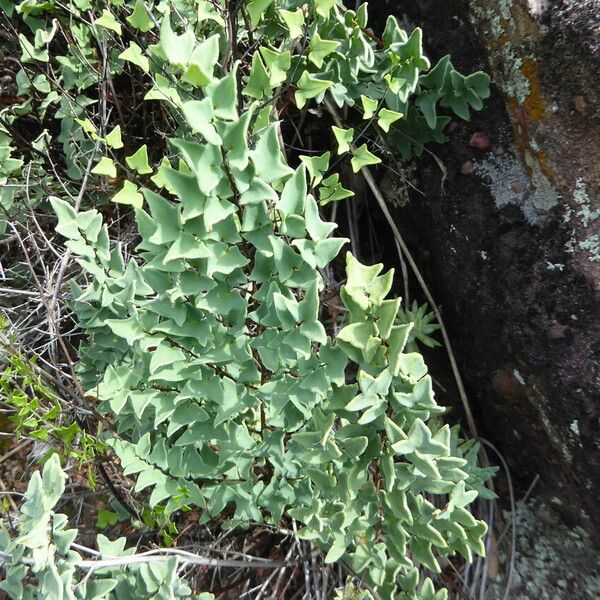
Plant Overview
Commonly known as the Silverback Fern or the Silver Fern, Hemionitis calomelanos (often categorized under Pityrogramma) is a tropical beauty famous for its "hidden" metallic shimmer. While it appears as a lush, deep green fern from above, a quick flip of its fronds reveals a striking coat of silvery-white waxy powder. It is a pioneer species in the wild, often the first to colonize volcanic slopes or disturbed roadsides, earning it a reputation for being tougher than your average delicate fern.
🔍 How to Identify
- 🥈 The Silver Underside: The most diagnostic feature is the dense, flour-like white or silver powder (called farina) covering the underside of the mature fronds.
- 🖋️ Dark Stems: The fronds are supported by thin, wiry stems that are a polished ebony or deep burgundy-black, providing a sharp visual contrast to the foliage.
- 📐 Triangular Fronds: The leaves grow in a distinct lance-shaped or triangular pattern, with deeply divided leaflets that give the plant a delicate, lacy texture.
🏡 In Your Garden
- ☀️ Sunscreen Secret: That silver powder isn't just for looks; it acts as a natural "sunscreen." This allows the Silverback Fern to handle brighter indirect light than many of its shade-loving relatives, though it still shrivels in harsh, direct midday sun.
- 💧 Drainage is Vital: Unlike marsh-dwelling ferns, this species often grows in rocky crevices in the wild. It hates "wet feet," so ensure you use a gritty, well-draining potting mix to prevent root rot.
- 🌬️ Humidity Lover: While it can tolerate slightly drier air than a Maidenhair fern, it thrives in high humidity. Placing it in a bathroom or near a humidifier will keep those silver fronds from turning crispy at the edges.
⚠️ Safety & Toxicity
- 🟢 Status: Non-toxic and generally safe.
- 🐾 Details: This fern is considered non-toxic to cats, dogs, and horses. However, the fine waxy powder on the underside can occasionally cause mild skin irritation for people with highly sensitive skin if handled excessively.
✨ Fun Fact
In some cultures, the Silverback Fern is known as the "Gold and Silver Fern" because certain varieties produce a bright yellow powder instead of white. This powder is so loosely attached that you can actually "stamp" a temporary silver fern tattoo onto your skin by pressing a frond firmly against your arm!

Detailed Care Instructions
Growing Hemionitis calomelanos, also known as the "Heart Fern," can be quite rewarding and aesthetically pleasing due to its unique heart-shaped leaves. Here’s a detailed guide on how to care for and grow this plant:
1. Light Requirements:
- Indirect Light: Heart Fern thrives in bright, indirect light. Direct sunlight can scorch its delicate leaves. A spot near a north or east-facing window is ideal.
- Low Light: This fern can tolerate lower light conditions better than many other plants, making it suitable for spots with less natural light.
2. Soil:
- Well-Draining Potting Mix: Use a well-draining potting mix that retains some moisture without becoming waterlogged. A mix designed for ferns or houseplants with added perlite or orchid bark for aeration works well.
3. Watering:
- Consistent Moisture: Keep the soil consistently moist, but not soggy. Water when the top inch of soil starts to dry out. Overwatering can lead to root rot, while underwatering can cause the leaves to wilt.
- Humidity: This fern loves high humidity. If your home is dry, especially during winter, consider using a humidity tray, humidifier, or place the plant in a bathroom or kitchen where humidity tends to be higher.
4. Temperature:
- Moderate Temperatures: Heart Fern prefers temperatures between 60-75°F (15-24°C). Avoid placing it near cold drafts or heat sources, which can cause stress to the plant.
5. Fertilizing:
- Balanced Fertilizer: Feed your fern with a balanced, water-soluble fertilizer diluted to half strength every 4-6 weeks during the growing season (spring and summer). Reduce feeding during the fall and winter when the plant’s growth slows.
6. Repotting:
- As Needed: Repot the fern every 1-2 years or when it becomes root-bound. Choose a pot that is one size larger to accommodate growth, and ensure it has drainage holes.
7. Propagation:
- Spores: Ferns are traditionally propagated through spores, although this can be a challenging and slow process for beginners.
- Division: For easier propagation, you can divide the plant during repotting. Separate sections of the root ball, ensuring each division has at least a few fronds and roots.
8. Pests and Problems:
- Pests: Heart Ferns are relatively pest-free but can occasionally attract aphids, spider mites, or scale insects. Check regularly and treat with insecticidal soap or neem oil if you notice any pests.
- Disease: Overwatering can lead to fungal diseases and root rot. Ensure proper watering practices and good airflow around the plant.
9. General Care Tips:
- Regular Cleaning: Dust the leaves gently with a damp cloth to keep them clean and enhance photosynthesis.
- Pruning: Remove any yellow or damaged fronds to encourage healthy new growth.
By providing the right care and environment, Hemionitis calomelanos can be a charming and low-maintenance addition to your indoor plant collection. With patience and attention, your Heart Fern can thrive and bring joy to your space for years to come.

Place in a window with dappled sun or a spot in the middle of a room. Or directly in a window facing west or east.

Hemionitis calomelanos is an attractive fern that requires a careful watering regimen to thrive. Here are the detailed steps to water this plant effectively:
1. Water Quality:
- Use distilled water, rainwater, or filtered water as Hemionitis calomelanos can be sensitive to the chemicals found in tap water, such as chlorine and fluoride.
2. Watering Frequency:
- This fern prefers consistently moist soil, but it should not be waterlogged. Watering frequency can vary based on environmental conditions. In general, plan to check the soil every 2-3 days.
- During the active growing season (spring and summer), it may require more frequent watering.
- In the dormant season (fall and winter), reduce the frequency but ensure the soil never completely dries out.
3. Checking Soil Moisture:
- Stick your finger about an inch into the soil to test for moisture. If the top inch feels dry, it’s time to water.
- You could also use a moisture meter for more precision.
4. Watering Method:
- Water the plant thoroughly until you see water draining from the bottom of the pot. This ensures that the soil is evenly moist.
- Avoid letting the plant sit in excess water by emptying the drip tray if necessary.
5. Humidity:
- Hemionitis calomelanos appreciates high humidity levels. If you are in a dry environment, consider misting the plant regularly or using a humidity tray filled with water and pebbles.
- A humidifier can also be a good investment if you have multiple humidity-loving plants.
6. Signs of Overwatering/Underwatering:
- Overwatering can lead to root rot, indicated by yellowing or wilting leaves and a foul smell from the soil.
- Underwatering will result in crisp, browning leaf edges.
7. Water Temperature:
- Use room temperature water to avoid shocking the plant’s roots.
By following these guidelines, you can help ensure that Hemionitis calomelanos remains healthy and vibrant.
Hemionitis calomelanos plants benefit from regular fertilization, but it's important to avoid over-fertilizing as this can damage the plant. Here's a simple guideline for fertilizing:
- Type of Fertilizer: Use a balanced, water-soluble fertilizer such as a 20-20-20 formula. Alternatively, you can use a fertilizer specifically formulated for ferns.
- Frequency: Apply the fertilizer every 4-6 weeks during the growing season, which typically spans from spring through early autumn. During the dormant period in winter, you can reduce feeding to every 8-10 weeks or stop entirely, depending on the plant's condition.
- Concentration: Dilute the fertilizer to half the recommended strength stated on the product label. Ferns, including Hemionitis calomelanos, can be sensitive to strong fertilizers, so it's better to err on the side of caution.
- Application: Water the plant thoroughly before applying the fertilizer solution. This helps prevent root burn and ensures even distribution of nutrients. Pour the diluted fertilizer evenly around the base of the plant, avoiding direct contact with the fronds.
- Soil and pH Considerations: Make sure the growing medium is well-draining and rich in organic matter. Hemionitis calomelanos prefers a slightly acidic to neutral pH level (around 6.0 to 7.0). Periodically check the soil's pH and adjust if necessary using soil amendments.
Following these guidelines will help ensure your Hemionitis calomelanos receives the proper nutrients to thrive.
Hemionitis calomelanos prefers a specific type of soil that caters to its natural growing conditions. Ideally, the soil should be well-draining yet capable of retaining some moisture to mimic the plant’s native habitat, often found in tropical and subtropical regions.
A suitable soil mixture can be achieved by combining equal parts of orchid bark, peat moss, and perlite or coarse sand. This combination ensures adequate aeration and proper drainage while maintaining moisture levels. Additionally, incorporating some organic matter, such as leaf mold or well-decomposed compost, can provide essential nutrients and further improve the soil structure.
It is crucial to avoid heavy, clayey soils that retain too much water, as this can lead to root rot. Instead, aim for a light, airy mix that allows the roots to breathe. The pH of the soil should be slightly acidic to neutral, ideally in the range of 5.5 to 7.0. Regularly checking the moisture level and ensuring the soil does not become waterlogged will help keep the plant healthy and thriving.
Propagating Hemionitis calomelanos can be a fascinating process, as it primarily relies on spore-based reproduction, similar to other fern species. Here's a detailed guide to help you propagate this plant:
Materials Needed:
- Healthy Hemionitis calomelanos plant: Ensure that your parent plant is healthy and has mature, fertile fronds with sori (spore-producing structures) on the undersides.
- Clean tray or container: A shallow plastic or glass tray is ideal.
- Sterile medium: Use a fine, sterile substrate like a mixture of peat moss and sand or a fine grade of sphagnum moss.
- Plastic cover or clear plastic bag: To maintain high humidity.
- Water sprayer: For misting the substrate.
- Sharp knife or scissors: To cut the fertile fronds.
Propagation Steps:
- Collect Spores:
- Wait until the sori are mature and appear brown or dark in color - an indication that the spores are ready.
- Using a sterile knife or scissors, cut off the fronds with the mature sori.
- Place the cut fronds on a piece of paper or in an envelope and let them dry for a few days. As they dry, the spores will be released and can be collected. They resemble fine dust.
- Wait until the sori are mature and appear brown or dark in color - an indication that the spores are ready.
- Prepare the Tray:
- Fill the shallow tray or container with the sterile medium. Ensure that the substrate is evenly spread and leveled.
- Moisten the substrate with distilled or rainwater, but ensure it is not waterlogged. It should be damp to the touch.
- Fill the shallow tray or container with the sterile medium. Ensure that the substrate is evenly spread and leveled.
- Sow the Spores:
- Gently sprinkle the collected spores evenly over the damp substrate. Due to their small size, try to distribute them as uniformly as possible to avoid overcrowding.
- Do not cover the spores with more substrate; they need light exposure for germination.
- Gently sprinkle the collected spores evenly over the damp substrate. Due to their small size, try to distribute them as uniformly as possible to avoid overcrowding.
- Create a Humid Environment:
- Cover the tray with a clear plastic lid or place it inside a large, clear plastic bag. This helps maintain high humidity, which is crucial for spore germination.
- Place the covered tray in an area with bright, indirect light. Avoid direct sunlight as it can overheat and dry out the spores.
- Cover the tray with a clear plastic lid or place it inside a large, clear plastic bag. This helps maintain high humidity, which is crucial for spore germination.
- Monitor and Maintain:
- Check the setup regularly to ensure the substrate remains damp. Mist the surface if it appears to be drying out.
- Keep the setup in a warm environment with temperatures around 70-75°F (21-24°C).
- Check the setup regularly to ensure the substrate remains damp. Mist the surface if it appears to be drying out.
- Germination and Growth:
- Germination can take several weeks to a few months. Initially, you'll see a green, moss-like covering on the substrate – this is the prothallus, a gametophyte stage that produces sex cells.
- As the prothalli mature, young sporophytes will begin to appear. These will grow into recognizable fern fronds.
- Germination can take several weeks to a few months. Initially, you'll see a green, moss-like covering on the substrate – this is the prothallus, a gametophyte stage that produces sex cells.
- Transplanting:
- Once the young sporophytes have developed a few fronds and are large enough to handle, they can be carefully transplanted into individual pots filled with a suitable fern potting mix.
- Ensure to acclimate them slowly to lower humidity conditions to avoid shock.
Tips:
- Once the young sporophytes have developed a few fronds and are large enough to handle, they can be carefully transplanted into individual pots filled with a suitable fern potting mix.
- Always maintain cleanliness and sterility to prevent fungal or algal contamination.
- Be patient, as fern propagation via spores can be a lengthy process.
- Consider using fungicides if you notice any mold or fungal growth on the substrate or young plants.
By following these steps, you can successfully propagate Hemionitis calomelanos and expand your collection or share plants with fellow enthusiasts.
Common pests of the hard fern include Mealybugs, spider mites, aphids. Make a habit of checking your hard fern frequently for pests so that any infestations can be caught and managed early.








