Plant Overview
The Prickly Tree Fern, scientifically known as Hemistegia horrida (or Cyathea horrida), is a true living relic that looks like it stepped straight out of a dinosaur movie. Native to the lush tropical rainforests of the Caribbean and Northern South America, this fern earns its "horrid" name not from its beauty, but from the fearsome, sharp spines that armor its trunk and stems. It is a dramatic architectural piece for any high-humidity conservatory or tropical landscape.
🔍 How to Identify
- 🌵 The Spiny Stipes: The most distinct feature is the base of the leaf stalks (stipes), which are heavily armed with sharp, dark, protruding spines that protect the plant from climbing animals.
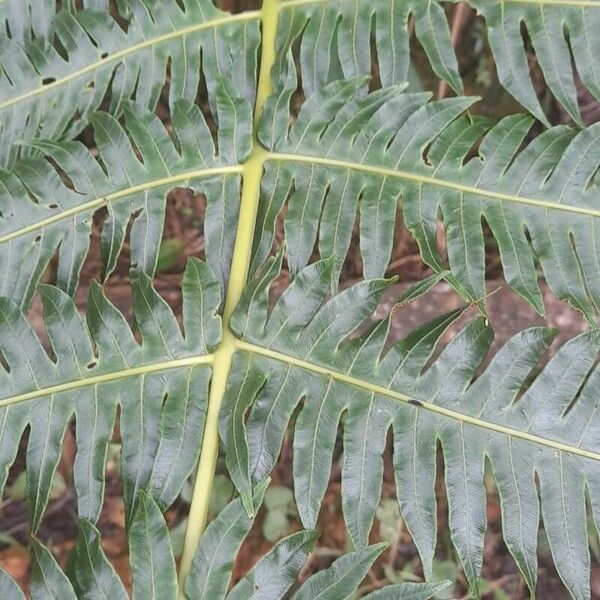
- 🌿 Massive Fronds: The leaves are impressively large and feathery (bipinnatifid), often reaching up to 6–10 feet in length, creating a wide, umbrella-like canopy.
- 🟤 Sori Patterns: On the underside of mature fronds, you will find "sori" (spore clusters) arranged in neat rows along the veins, resembling tiny brown velvet dots.
🏡 In Your Garden
- ☁️ Humidity is King: Unlike hardier ferns, the Prickly Tree Fern thrives in "cloud forest" conditions. It craves constant moisture in the air and will quickly suffer from crispy leaf edges if the environment becomes too dry.
- 💧 Thirsty Roots: This fern has a high metabolism and dislikes drying out completely. However, it requires highly organic, well-draining soil—standing water can lead to root rot despite its love for moisture.
- ⛅ Dappled Light: In the wild, it lives as an understory plant. It prefers bright, filtered light; direct afternoon sun can scorch the delicate green pinnae (leaflets) very quickly.
⚠️ Safety & Toxicity
- ⚔️ Physical Danger: While not chemically poisonous, this plant is "mechanically" dangerous. The spines are very sharp and can easily puncture skin or cause painful scratches.
- 🚶 Placement: It should be planted away from walkways, narrow paths, or areas where children and pets play to avoid accidental injury.
- 🐾 Pet Safety: There are no records of Hemistegia horrida being toxic to cats or dogs if nibbled, but the sharp texture usually acts as a natural deterrent.
✨ Fun Fact
The specific epithet horrida comes from the Latin word for "bristling" or "shaggy." In botanical Latin, this term was used to describe plants with a rough or prickly texture long before the word "horrid" took on its modern meaning of "awful"!

Detailed Care Instructions








