Plant Overview
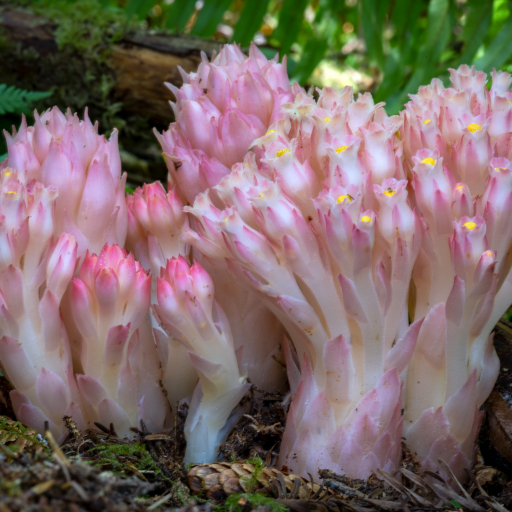
Often called the Gnome Plant, Hemitomes congestum is a ghostly forest dweller that looks more like a strange mushroom than a wildflower. Lacking any green chlorophyll, it doesn't "eat" sunlight; instead, it lives a secretive life underground, emerging only to bloom in the deep shadows of ancient trees. This rare find is often the highlight of a woodland hike for those with sharp eyes.
🔍 How to Identify
- 🌸 The "Congested" Bloom: Its name comes from the dense, brain-like cluster of small, waxy flowers that are packed tightly together at the top of a short, thick stem.
- 🎨 Eerie Coloration: Because it lacks chlorophyll, it is never green. It typically appears in shades of ghostly cream, waxy white, or a fleshy, pale pink.
- 🍂 Scaly Texture: Instead of broad leaves, the stem is covered in small, overlapping scales that feel thick and succulent to the touch.
🌲 Habitat & Ecology
- 🍄 The Master Thief: This plant is a "mycoheterotroph," meaning it doesn't photosynthesize. It survives by stealing nutrients from underground fungal networks (mycelium) that are themselves connected to the roots of nearby trees.
- 🌲 Ancient Forest Resident: You will almost exclusively find the Gnome Plant in mature, moist coniferous forests, often tucked away in the deep leaf litter under hemlocks, firs, or redwoods.
- 🕰️ Brief Appearance: It spends most of its life entirely underground as a mass of roots, only poking its "head" above the soil for a few weeks in the summer to be pollinated.
⚠️ Safety & Toxicity
- 🛑 Status: Non-edible. While not documented as a deadly poison, the Gnome Plant is not meant for human consumption and can cause digestive distress if ingested.
- 🐾 Sensitive Roots: These plants are incredibly fragile and nearly impossible to transplant or grow in a garden because they require a very specific, live fungal partner in the soil to survive.
- 🌿 Leave No Trace: Due to its rare and complex lifestyle, it is best to enjoy this plant with a camera rather than picking it, as removing the flower prevents it from spreading its seeds.
✨ Fun Fact
Because it doesn't rely on the sun for energy, the Gnome Plant can grow in total, pitch-black darkness under the densest forest canopies where 99% of other plant species would starve to death!

Detailed Care Instructions
To grow Hemitomes Congestum, also known as the clumping bird's nest fern, follow these steps:
- Start with a healthy plant: Purchase a healthy Hemitomes Congestum plant from a reputable nursery or online store. Ensure that the plant has a well-developed root system and lush green fronds.
- Choose the right location: Hemitomes Congestum prefers bright, indirect sunlight. Select a location with filtered light, such as near a north or east-facing window. Avoid direct sunlight as it can scorch the leaves.
- Provide the right temperature and humidity: This plant thrives in temperatures between 65-80°F (18-27°C) and prefers higher humidity levels. You can increase humidity by placing the pot on a tray filled with water and pebbles or by using a humidifier. Avoid exposing the plant to drafts or sudden temperature changes.
- Watering: Keep the soil of the Hemitomes Congestum plant consistently moist but not waterlogged. Water when the top inch of soil feels dry. Ensure that the pot has proper drainage to prevent waterlogging. Reduce watering during the winter months, as the plant requires less water during its dormant period.
- Fertilization: Feed the plant with a balanced, water-soluble fertilizer formulated for ferns every two weeks during the growing season (spring and summer). Follow the instructions on the fertilizer package for appropriate dilution and application.
- Potting: Use a well-draining potting mix formulated for ferns or orchids. Choose a pot that allows for growth and has drainage holes. Repot the plant when it becomes root-bound, typically every 2-3 years.
- Pruning: Trim off any discolored or damaged fronds to maintain the plant's aesthetics and health. Pruning also helps prevent the accumulation of dead or dying leaves around the base of the plant.
- Propagation: Hemitomes Congestum can be propagated through division. When repotting, carefully separate the clumps of ferns and plant them in individual pots.
By following these steps and providing proper care, your Hemitomes Congestum plant will thrive and grow into a beautiful specimen.

Place in a dark room with little light, like a dark bedroom or a spot far away from a window or directly in a north-facing window.

To water the plant in question, ensure that the soil is completely dry before providing water. Use a watering can to gently pour water around the base of the plant and into the soil. Avoid getting water on the leaves or stems, as this can lead to rot. Water the plant deeply, but do not allow excess water to sit in the saucer or tray underneath the pot. Only water when the soil is completely dry, as overwatering can lead to root rot and other issues. This plant prefers well-draining soil and may require more frequent watering in hotter, drier conditions.
To properly fertilize the Hemitomes Congestum plant, it is recommended to use a balanced blend of fertilizer that contains equal amounts of nitrogen, phosphorus, and potassium. The fertilizer should be applied during the growing season, which is typically in spring and summer. It is important to follow the manufacturer's instructions for the correct application rate. Over-fertilization can cause damage to the plant, so it is best to err on the side of caution and apply a little less than recommended. Additionally, avoid fertilizing during the dormant season, which is typically in fall and winter.
Hemitomes Congestum plant prefers a well-draining soil that is high in organic matter. It does well in soil with a slightly acidic to neutral pH (around 6.0-7.0). The soil should be well-aerated and not compacted to allow for root growth and plant development. A mix of peat moss, sand, and perlite can be used to create an appropriate soil mixture for this plant. It is recommended to avoid heavy soils or those that have a tendency to retain water for prolonged periods. The soil should also be allowed to dry out slightly between watering to prevent root rot.
Hemitomes Congestum can be propagated through stem cuttings. First, select a healthy stem from the parent plant. Prune the stem just below a node, taking a cutting that is 4-6 inches long. Remove all the leaves from the lower half of the stem. Dip the cut end of the stem in rooting hormone powder to promote root growth. Plant the stem in a well-draining soil mix, keeping the soil moist but not waterlogged. Cover the pot with a clear plastic bag or dome to retain moisture and create a humid environment for the cutting. Place the pot in a bright, filtered light location, but avoid direct sunlight. Monitor the cutting regularly and mist it if the soil or leaves start to dry out. After a few weeks, the cutting should start to root and produce new growth. Once it has established roots, gradually remove the plastic bag or dome and expose it to more sunlight.








