Plant Overview
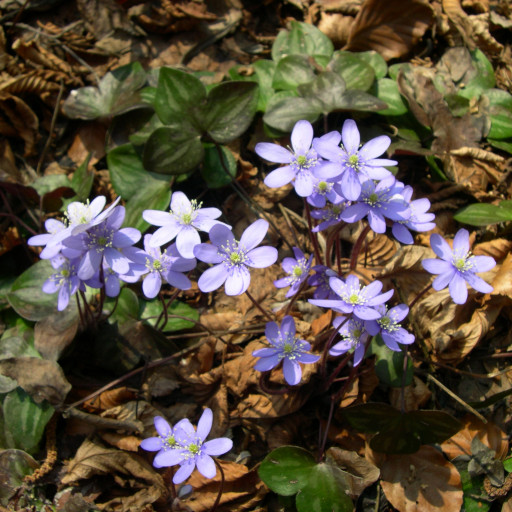
Often called Liverleaf or Pennywort, Hepatica nobilis is a cherished harbinger of spring that peeks through the leaf litter long before most other forest flowers. Its name is rooted in ancient herbalism and the "Doctrine of Signatures," where its three-lobed leaves—resembling the human liver—led medieval healers to believe it could cure liver ailments. While we now know it's best left in the garden rather than the medicine cabinet, it remains a favorite for its delicate, jewel-like presence in woodland settings.
🔍 How to Identify
- 🌸 The Blooms: Small, cup-shaped flowers with 6 to 10 petal-like sepals. They most commonly appear in a stunning sky-blue or lavender, though white and pink varieties are frequent in the wild.
- 🍃 The Foliage: Distinctive leathery, three-lobed leaves that stay evergreen through the winter. As they age, they often turn a deep reddish-purple or bronze on the underside.
- 🧶 The Texture: The stems and the undersides of new leaves are covered in fine, silky white hairs, which act as a "fur coat" to protect the plant from early spring frosts.
🏡 In Your Garden
- 🌳 Forest Mimicry: This plant is a "spring ephemeral" that thrives under deciduous trees. It loves the bright sunlight of early spring before the trees leaf out, followed by the deep, cool shade of summer.
- 🧱 The Lime Factor: Unlike many woodland plants that prefer acidic soil, Hepatica is a "calciphile." It performs best in alkaline, lime-rich soil. If your garden is naturally acidic, adding a bit of garden lime can help it feel at home.
- ⏳ Patience Required: It is a slow-growing species that hates being moved. Once planted, it can live for many decades, but it may take several seasons to reach its full flowering potential.
⚠️ Safety & Toxicity
- 🚫 Status: Mildly Toxic / Irritant.
- 🐾 Details: Like other members of the Buttercup family (Ranunculaceae), it contains protoanemonin. Handling crushed leaves can cause skin irritation or blistering for some people. It is toxic to pets and humans if ingested in large quantities, leading to mouth irritation and digestive upset.
✨ Fun Fact
Hepatica seeds are "hitchhikers" on ants! The seeds have a small, fatty attachment called an elaiosome that ants find delicious. They carry the seeds back to their underground nests, eat the fatty part, and leave the seed in a nutrient-rich "refuse pile" to germinate—a process known as myrmecochory.

Detailed Care Instructions
To grow Hepatica Nobilis (also known as liverwort), follow these steps:
- Choose the right location: Hepatica Nobilis prefers a partially shady area with well-draining soil. Avoid areas with constant direct sunlight or soggy soil.
- Prepare the soil: Ensure that the soil is rich in organic matter and well-draining. You can amend the soil with compost or well-rotted manure before planting.
- Planting: Dig a hole that is slightly larger than the root ball of the Hepatica Nobilis plant. Gently place the plant into the hole, making sure that the top of the root ball is level with the soil surface. Fill in the hole with soil and gently firm it around the plant.
- Watering: Water the plant thoroughly after planting to help settle the soil and establish the plant. Hepatica Nobilis prefers moist soil but not overly wet conditions. Water regularly and ensure that the soil remains evenly moist but never waterlogged.
- Mulching: Apply a layer of organic mulch, such as wood chips or leaf litter, around the base of the plant. This will help retain soil moisture, suppress weeds, and provide insulation to the roots.
- Fertilizing: Hepatica Nobilis generally doesn't require much fertilization. However, you can apply a balanced, slow-release fertilizer in early spring to provide some nutrients for the plant.
- Pruning: Hepatica Nobilis doesn't require extensive pruning. Simply remove any dead or damaged leaves in early spring to encourage new growth.
- Winter care: Hepatica Nobilis is generally hardy and can withstand cold temperatures. However, in areas with severe winters, you can protect the plant by applying a layer of mulch around the base to insulate the roots.
Remember to research and understand the specific growing conditions required for Hepatica Nobilis in your region, as they may vary slightly.

Place in a window with dappled sun or a spot in the middle of a room. Or directly in a window facing west or east.

Watering the plant should be done carefully and regularly. The plant prefers moist soil, but not soggy, waterlogged conditions. It is important to let the soil dry out slightly between each watering to avoid over-saturation and rotting of the plant's roots. The best way to water this plant is by using a drip irrigation system or watering can to carefully apply water at the base of the plant. Avoid watering the leaves or flowers directly, as this can create conditions for fungal growth. The plant should be watered more frequently during periods of active growth or hot weather, and less often during dormant periods or cooler weather. It is also important to ensure that the plant has good drainage and is not sitting in standing water.
To fertilize this plant, use a slow-release fertilizer with a balanced ratio of nitrogen, phosphorus, and potassium. Apply the fertilizer in late winter or early spring before new growth appears. Use the recommended dosage according to the instructions on the fertilizer package. Water the plant thoroughly after fertilizing to ensure the nutrients are absorbed by the roots. Avoid over-fertilizing as it can harm the plant.
Hepatica Nobilis plant prefers a soil that is well-draining and has a slightly acidic to neutral pH level. The soil should also be rich in organic matter and nutrients. It is important to avoid heavy, clay soils, which can cause waterlogging and root rot. A good soil mix for Hepatica Nobilis plant would include equal parts of loam, peat moss, and sand to ensure adequate drainage and moisture retention. Additionally, adding some perlite or vermiculite to the soil mix can help improve the soil structure and drainage. It is also recommended to refresh the soil every few years to ensure that the plant has access to the necessary nutrients and minerals.
The method to propagate this plant is by division of its rhizomes. Gently dig up the plant in the early spring before new growth appears. Cut the rhizomes into sections with a sharp knife, making sure each section has healthy shoots and roots. Replant the sections with appropriate spacing and water thoroughly. Keep the new plants in a cool and shaded area until new growth appears.
Common pests of the hepatica include Mealybugs, aphids, springtails. Make a habit of checking your hepatica frequently for pests so that any infestations can be caught and managed early.








