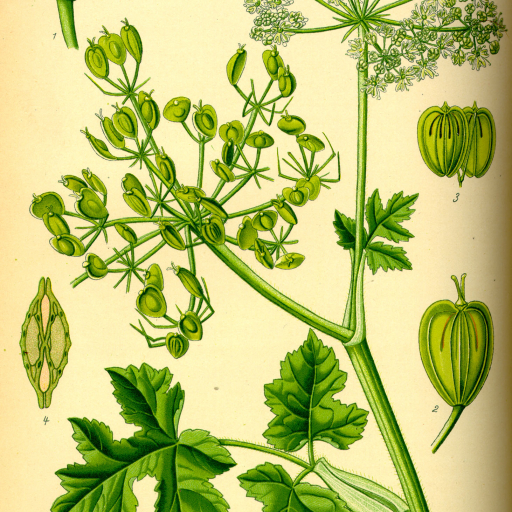
Plant Overview
Often called the Persian Hogweed or the "Tromsøpalm," this towering giant is a member of the carrot family that looks like a wildflower from a prehistoric era. Originally brought to Europe from Iran as an ornamental curiosity, it has since become a legendary invader, especially in Northern Scandinavia, where its ability to thrive in cold climates has earned it both respect and notoriety.
🔍 How to Identify
- 🌿 Stature: A true giant that can reach heights of 2 to 3 meters, easily dwarfing most surrounding garden plants.
- 🌸 Flower Umbrels: Massive, flat-topped clusters of tiny white flowers that can span up to 50 centimeters across, resembling a giant lace doily.
- 🎋 The Stem: Thick, hollow, and covered in stiff bristles with distinct purple splotches or a solid reddish-purple tint near the base.
- 🍃 Jagged Leaves: Large, deeply lobed leaves that are sharply pointed and can grow nearly a meter long.
🏡 In Your Garden
- 🚫 Invasive Nature: This plant is a "garden escapee" that spreads aggressively via thousands of seeds. In many regions, it is legally classified as an invasive species because it shades out native plants and disrupts local ecosystems.
- 🏔️ Cold Weather Specialist: Unlike its relatives, the Persian Hogweed is exceptionally hardy. It was famously embraced in the Norwegian city of Tromsø because it was one of the few plants that could grow to a "tropical" size in the Arctic circle.
- 🚜 Eradication Difficulty: It possesses a thick, stubborn taproot. If you are trying to remove it, you must dig deep; simply cutting the flower head will not stop the plant from returning the following year.
⚠️ Safety & Toxicity
- 🚫 WARNING: This plant is highly phototoxic. The sap contains furanocoumarins which, when touched and then exposed to sunlight (UV rays), cause severe skin inflammation and painful, long-lasting blisters.
- 🐾 Pet & Child Risk: Keep children and pets far away. If the sap gets into the eyes, it can cause temporary or even permanent blindness.
- 🛡️ Protection: Always wear gloves, long sleeves, and eye protection when handling this plant, and wash any skin contact areas immediately with soap and cold water before going into the sun.
✨ Fun Fact
In its native Iran, the seeds of Heracleum persicum are actually used as a spice called Golpar. The seeds are dried and ground into a fragrant, slightly bitter powder used to flavor pomegranate seeds, broad beans, and soups!

Detailed Care Instructions
To successfully grow Heracleum persicum, also known as Persian hogweed, follow these steps:
- Choose a suitable location: Persian hogweed requires full sun or partial shade. Ensure the area has well-drained soil that is rich in organic matter.
- Soil preparation: Before planting, prepare the soil by removing any weeds or rocks. Mix in organic matter, such as compost or well-rotted manure, to improve soil fertility and drainage.
- Planting: Persian hogweed can be grown from seed or transplants. If starting from seed, sow them directly into the garden after the last frost date in your area. Plant the seeds at a depth of 1/4 inch and space them about 3 feet apart. If using transplants, dig a hole that is slightly larger than the root ball, place the seedling in the hole, and gently cover with soil.
- Watering and care: Persian hogweed requires regular watering, especially during dry periods. Water deeply, but ensure the soil doesn't become waterlogged. Mulching around the plants can help retain moisture and suppress weeds.
- Fertilization: Apply a balanced fertilizer, such as a 10-10-10 formula, once a month during the growing season. Follow the instructions on the fertilizer package for proper application rates.
- Pruning: To promote bushier growth and prevent the plant from becoming leggy, prune Persian hogweed by cutting it back by 1/3 in early spring before new growth begins.
- Pest and disease control: Persian hogweed is generally resistant to pests and diseases. However, keeping the plants healthy by providing proper care and regular watering will help prevent any potential issues. Monitor the plants regularly for signs of pests or diseases, and take appropriate action if necessary.
- Harvesting: Persian hogweed is typically harvested for its edible stems, known as "angelica shoots." Harvest the shoots when they are young and tender, before they become woody. Cut the stems close to the base of the plant.
Remember to check the specific growing requirements for Persian hogweed in your region, as certain climates or microclimates may have additional considerations.
Watering this plant requires attention to the soil moisture level. It prefers well-draining soil, and the best way to check the moisture level is by inserting your finger into the soil about an inch deep. If the soil feels dry, it's time to water. When watering, make sure to saturate the soil, but avoid over-watering as it can cause root rot. It's also essential to avoid waterlogging the plant's roots, so ensure proper drainage. The frequency of watering will depend on the temperature and humidity of the plant's environment, but typically, once a week should suffice. During the winter months, reduce watering to once every two weeks.
To fertilize this plant, use a balanced fertilizer with equal proportions of nitrogen, phosphorous, and potassium. Apply the fertilizer to the soil around the base of the plant, being careful not to get any on the leaves or stems. Water the plant thoroughly after fertilizing to encourage absorption. Fertilize the plant every four to six weeks during the growing season, from spring to early fall. Avoid fertilizing during the dormant period in the winter.
The ideal soil for the Heracleum Persicum plant should be well-draining and slightly acidic in nature. It should have a loose and loamy texture that allows air circulation and efficient nutrient absorption. The soil should be rich in organic matter and adequately fertilized with nutrients such as nitrogen, phosphorus, and potassium. It should also retain moisture for extended periods to support the plant's growth, but not be waterlogged, as this can lead to root rot. Additionally, the soil should not be excessively compacted or have high clay content, as this can impede drainage and reduce oxygen availability in the root zone.
Heracleum persicum can be propagated through various methods. One method is to take stem cuttings from a healthy plant during the growing season. Choose a stem that is approximately 10-15 cm long and has several leaves. Cut the stem at a 45-degree angle to promote root growth and remove the lower leaves. Dip the cut end in rooting hormone and plant the cutting in a pot with moist soil. Keep the soil moist and place the pot in a warm, bright location. Within a few weeks, the cutting should root and begin to grow.
Another method of propagation is through division. This is best done in the spring or fall when the plant is dormant. Dig up the plant and carefully separate it into smaller sections, making sure each section has roots and a few stems. Replant the sections in pots or in the ground and keep the soil moist until they are established.
Heracleum persicum can also be propagated through seed. Collect seeds from the plant when they are dry and brown. Sow the seeds in a pot with moist soil and cover with a thin layer of soil. Keep the soil moist and the pot in a warm, bright location. Seeds should germinate within a few weeks.
Regardless of the propagation method, it is important to keep the soil moist and provide the plant with adequate light and nutrients to promote healthy growth.








