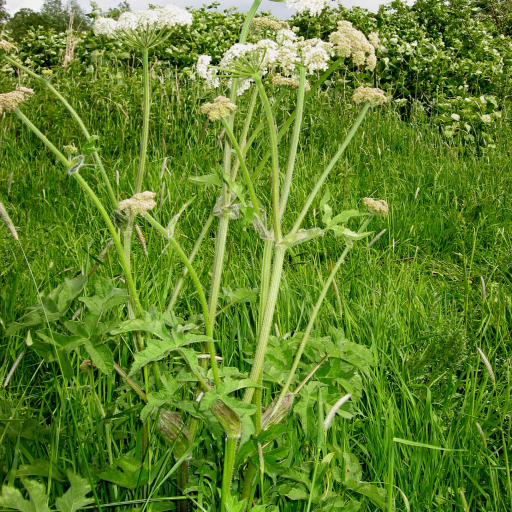
Plant Overview
Often called the "Siberian Cow Parsnip" or "Eltrot," Heracleum sibiricum is the more modest, hardy cousin of the infamous Giant Hogweed. While it lacks the monstrous height of its relative, it carries a storied history in Eastern Europe, where it was once a staple ingredient in traditional soups long before beets took center stage. It is a rugged perennial that thrives in the cool, damp meadows of Eurasia, acting as a magnet for local pollinators.
🔍 How to Identify
- 🌿 The Foliage: Large, deeply lobed leaves that are divided into three to five segments. They have a slightly fuzzy texture and a matte green finish, looking much like giant parsley.
- 🌼 The Flowers: Unlike many of its relatives that sport pure white blooms, this plant produces flat-topped clusters (umbels) of distinct greenish-yellow flowers.
- 📏 The Stem: The stalks are hollow, deeply grooved, and covered in stiff, bristly hairs. They typically reach about 1 to 1.5 meters, making them much shorter than the "giant" varieties.
🏡 In Your Garden
- 🌱 The Spreader: It is a prolific self-seeder. If you find one in your garden, expect more to follow quickly as the wind carries its flat, winged seeds across the landscape.
- 💧 Moisture Lover: This plant is an indicator of nitrogen-rich, damp soil. It struggles in dry, sandy spots but will thrive (and potentially take over) in boggy areas or near ditch banks.
- 🐝 Pollinator Magnet: While some gardeners consider it a weed, it is incredibly beneficial for biodiversity, attracting a wide array of hoverflies, bees, and beetles that favor its easily accessible nectar.
⚠️ Safety & Toxicity
- 🚫 Phototoxic Warning: Like many members of the carrot family (Apiaceae), its sap contains furanocoumarins. If the sap gets on your skin and is then exposed to sunlight, it can cause "phytophotodermatitis"—painful, blistering rashes.
- 🐾 Pet Safety: Keep curious dogs and cats away. While not as concentrated as Giant Hogweed, skin contact can still cause irritation to sensitive paws and snouts. Always wear gloves when handling or weeding this plant.
✨ Fun Fact
The word "Borscht" actually comes from the Old Slavonic name for this plant (Boršč). In ancient times, the fermented stems, leaves, and umbels of Siberian Hogweed were the primary ingredients for the original version of the famous soup!

Detailed Care Instructions
Growing Heracleum sibiricum, commonly known as Siberian hogweed or Siberian cow parsnip, requires the following steps:
- Select a suitable location: Heracleum sibiricum thrives in moist soil with partial shade. Choose a spot with well-draining soil and an adequate amount of sunlight.
- Prepare the soil: Before planting, prepare the soil by removing any weeds, rocks, or debris. Loosen the soil with a garden fork or a tiller and mix in organic matter like compost or well-rotted manure to improve drainage and fertility.
- Sow the seeds: Heracleum sibiricum can be grown from seeds. Sow the seeds directly into the prepared soil, either in early spring or late fall. The seeds should be planted about 1/4 inch deep, spaced 12-18 inches apart. Cover the seeds with soil and gently press down.
- Watering: Keep the soil consistently moist but not waterlogged. Water the plants regularly to ensure they receive adequate moisture, particularly during dry periods.
- Mulching: Apply a layer of organic mulch, such as straw or wood chips, around the base of the plants. Mulching helps to conserve moisture, control weeds, and regulate soil temperature.
- Fertilization: Heracleum sibiricum generally does not require heavy fertilization. However, you can apply a balanced fertilizer once or twice during the growing season to promote healthy growth. Follow the instructions on the fertilizer packaging for proper application rates.
- Pruning: During the growing season, you may need to prune Heracleum sibiricum plants to control their size and shape. Remove any dead or diseased foliage and cut back any long, straggly stems to encourage compact growth.
- Pests and diseases: Heracleum sibiricum is generally resistant to most pests and diseases. However, keep an eye out for common garden pests like aphids or snails, and promptly take action if infestations occur.
- Harvesting: The leaves and stems of Heracleum sibiricum are often harvested for culinary or medicinal purposes. Harvest by cutting the leaves or stems close to the base of the plant. Remember to wear protective clothing and gloves as the plant's sap can cause skin irritation.
By following these steps, you can successfully grow Heracleum sibiricum in your garden. However, be aware of the plant's invasive tendencies in some regions, and check local regulations before planting to ensure it is allowed in your area.
To properly water this plant, it is important to consider its soil requirements. It prefers to be planted in soil that is consistently moist, but not waterlogged. When the top layer of soil feels dry to the touch, it is time to water. It is recommended to water deeply, allowing the water to penetrate the soil to the roots, and then allowing the soil to partially dry out before watering again. It is important to avoid letting the soil completely dry out or completely saturating the soil with water. Overwatering can lead to root rot and other issues, while under-watering can cause the plant to wilt and die. Additionally, it is important to avoid getting water on the leaves or flowers of the plant, as this can cause damage or disease. Watering from the base of the plant using a drip tray or irrigation system is recommended to prevent this.
To fertilize this plant, use a balanced fertilizer with equal parts nitrogen, phosphorus, and potassium. Apply the fertilizer every two weeks during the growing season. Make sure to water the plant before and after fertilizing to prevent root burn. Additionally, it is important to avoid over-fertilizing as this can harm the plant.
The recommended soil for the Heracleum Sibiricum plant is a rich and well-draining soil that is loamy and slightly acidic. The soil should be light and fertile, with organic matter that helps to retain moisture. It is also important to ensure good drainage to prevent root rot. The pH level of the soil should be between 5.5 and 7, and it should be free from any contaminants or heavy metals. A mixture of compost, peat moss, and sand can be used to create the ideal soil environment for this plant. The plant prefers full sun to partial shade, so it is important to place it in a location with plenty of sunlight. Proper soil preparation and care will help the Heracleum Sibiricum plant grow healthy and strong, producing beautiful flowers and foliage.
To propagate this plant, you can gather the seeds after the flowers have wilted and turned brown. The seeds should be sown in a well-draining soil mix and kept moist. It is recommended to stratify the seeds by placing them in a cold, moist environment for several weeks to improve germination rates. Alternatively, you can take stem cuttings from the plant in spring or early summer and root them in a soil mix. Ensure the cutting has at least one node and remove any leaves from the bottom of the stem before planting. Keep the soil moist and in a warm, bright location until roots have formed.








