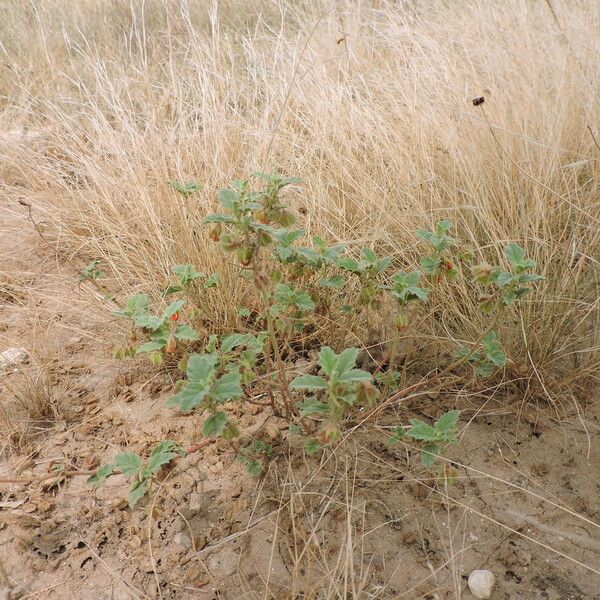
Plant Overview
Known affectionately as the Texas Hermannia or Mexican Mallow, this low-growing treasure is a desert survivor with a flair for the dramatic. It is famous for its "nodding" flowers that hang downward, looking like tiny, fiery lanterns suspended in the sun. Native to the rocky hills of South Texas and Northern Mexico, it brings a delicate, architectural beauty to arid landscapes where few other things thrive.
🔍 How to Identify
- 🌺 The Blooms: Look for deep red to orange-red flowers that never fully "open" like a daisy; instead, the five petals overlap and twist into a bell or lantern shape.
- 🍃 The Foliage: Small, oval-shaped leaves with a dusty grey-green hue and "toothed" or crinkled edges that help the plant conserve moisture.
- 🌱 Texture: The entire plant is covered in fine, star-shaped hairs (stellate hairs), giving the stems and leaves a soft, velvety feel.
🏡 In Your Garden
- 🏜️ Limestone Lover: In the wild, this plant thrives in caliche and limestone-rich soils. If you plant it in a garden, ensure the soil is gritty and alkaline; it will struggle in the rich, acidic potting soils used for tropical plants.
- ☀️ Heat Endurance: Unlike many flowering perennials that wilt in the afternoon sun, the Texas Hermannia thrives in intense heat. It is a "set it and forget it" plant for xeriscaping, requiring almost no supplemental water once its deep taproot is established.
⚠️ Safety & Toxicity
- 🐾 Pet Friendly: There are no known toxic components in Hermannia texana, making it a safe addition to gardens shared with curious dogs or cats.
- 🖐️ Skin Sensitivity: While not poisonous, the fine hairs on the leaves can occasionally cause a mild "itchy" sensation for people with very sensitive skin if handled frequently.
✨ Fun Fact
Though it looks right at home in the American Southwest, the Hermannia genus is actually a world traveler. Out of roughly 500 species in this genus, the vast majority are found in South Africa—making our Texas version a rare North American representative of a mostly African family!

Detailed Care Instructions

To water this plant, it is important to keep the soil consistently moist but not waterlogged. This is best achieved by watering deeply but infrequently, allowing the soil to dry out slightly in between watering sessions. It is important to avoid getting water on the leaves and flowers, as this can cause leaf spots and encourage the growth of fungal diseases. Additionally, it is important to use a well-draining soil mix and a pot with drainage holes to prevent water from accumulating at the bottom of the container. During periods of hot weather or dry indoor environments, the plant may require more frequent watering to prevent dehydration.








