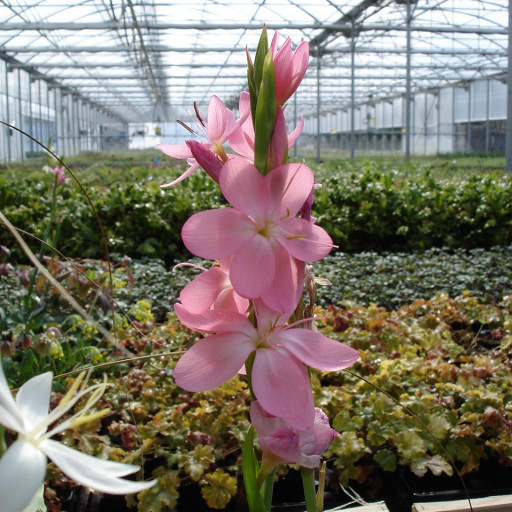
Plant Overview
Often called the Crimson Flag Lily or Scarlet River Lily, this South African native is the undisputed "grand finale" of the garden season. While most flowers begin to hibernate as autumn chills the air, Hesperantha coccinea awakens, sending up vibrant, satiny spikes that look like miniature Gladioli. It is a resilient treasure that brings a splash of fire to the garden just as the leaves begin to turn brown.
🔍 How to Identify
- 🚩 The Flowers: Satiny, star-shaped blooms with six petals, typically in a brilliant scarlet or deep crimson, though soft pink and white varieties also exist.
- 🗡️ The Foliage: Long, narrow, sword-shaped leaves that grow in dense, grass-like clumps, reaching about 12 to 24 inches in height.
- 🌾 The Stems: Slender, upright flower spikes that carry multiple buds, which open one by one from the bottom up.
🏡 In Your Garden
- 💧 Thirst for Moisture: Unlike many bulbs that rot in wet soil, this plant thrives in "damp feet." In the wild, it grows along stream banks, so it’s perfect for boggy areas or heavy clay soils that stay moist.
- ☀️ Sun Seekers: To see the flowers at their best, plant them in a sunny spot. The blooms are somewhat shy; they usually only fully unfurl their petals on bright, sunny days and may stay closed during heavy overcast weather.
- 🌱 Rhizome Spread: It spreads via underground rhizomes. If it likes its home, it will gradually form a lush carpet of green and red, but it is easy to manage by simply dividing the clumps in spring.
⚠️ Safety & Toxicity
- 🟢 General Status: Hesperantha coccinea is generally considered low-risk and is not listed on major "highly toxic" databases for humans or common pets.
- 🐾 Pet Caution: While it is a member of the Iris family (Iridaceae) rather than the true Lily family (Liliaceae—which are deadly to cats), it is always best to discourage pets from chewing on the foliage, as any plant material can cause mild stomach upset or drooling in sensitive animals.
✨ Fun Fact
The name Hesperantha is derived from the Greek words hesperos (meaning evening) and anthos (meaning flower). In its original wild forms, the flowers were known to wait until the late afternoon or early evening to release their fragrance and fully open!

Detailed Care Instructions
To grow Hesperantha coccinea, also known as the Scarlet River Lily, follow these steps:
- Climate and Location: Hesperantha coccinea thrives in temperate climates with mild winters. Choose a sunny location with well-draining soil. It can tolerate partial shade but prefers full sun.
- Soil Preparation: Prepare the soil by adding organic matter such as compost or well-rotted manure to improve drainage and fertility. Avoid heavy clay soils as they may cause root rot.
- Planting: Plant the bulbs in early spring or fall, about 4 to 6 inches deep and 4 to 6 inches apart. Ensure the pointed end of the bulb faces up and the roots point downward. Water the bulbs thoroughly after planting.
- Watering: Keep the soil moist, especially during the active growing season. However, avoid overwatering to prevent rotting. Once established, the plant can tolerate some drought.
- Mulching: Apply a layer of organic mulch like straw or wood chips around the plants to retain moisture in the soil and suppress weed growth.
- Fertilizer: Apply a balanced, slow-release fertilizer in spring to promote healthy growth. Follow the package instructions for proper dosage.
- Support: As the plant grows, it may need support to prevent bending or falling over due to wind or heavy flowers. Insert stakes or plant among other supportive plants.
- Propagation: Hesperantha coccinea can be propagated by dividing the bulbs in early spring or fall. Carefully dig up the clumps, separate the bulbs, and replant immediately.
- Pruning: Deadhead the spent flowers to encourage continuous blooming. After the blooming season, cut the foliage back to the ground in late fall to allow the plant to go dormant.
- Winter Care: Hesperantha coccinea is generally winter-hardy but can benefit from a layer of mulch or straw to protect the bulbs from extreme cold. In regions with severe winters, consider lifting the bulbs and storing them in a cool, dry place until spring.
With proper care and suitable growing conditions, Hesperantha coccinea should reward you with beautiful, vibrant blooms.

Place in a bright room that is sun drenched almost all day. Or directly in a south-facing window.

To water this flowering plant, it is important to keep the soil consistently moist, but not waterlogged. It is best to water deeply and provide enough water to saturate the soil, allowing excess water to drain out of the pot or container. It is important to avoid letting the soil dry out completely between watering, as this can cause stress to the plant and affect its ability to produce flowers. Watering should be adjusted depending on the weather and climate, with more frequent watering in hotter, drier conditions. It is also important to monitor the foliage and flowers to ensure they are not becoming too waterlogged, as this can lead to issues such as root rot. Additionally, it is important to avoid watering from above as this can cause the flowers to rot.
For best results, fertilize the Hesperantha Coccinea plant once a month during its growing season. Use a balanced fertilizer with an equal ratio of nitrogen, phosphorus, and potassium. Dilute the fertilizer according to the manufacturer's instructions and apply it to the soil around the base of the plant. The Hesperantha Coccinea plant prefers a slightly acidic soil, so be sure to choose a fertilizer that is appropriate for acidic soils. Avoid over-fertilizing, as this can lead to excessive growth and weaken the plant.
When growing this particular plant, it is important to use a well-draining soil with a slightly acidic pH level of around 6.0. The soil should be rich in organic matter and have a light, sandy texture for optimal root growth. A mixture of sandy loam and peat moss would be ideal for this plant. It is important to avoid heavy, clay soils that can become compacted and prevent proper root growth. Additionally, providing good drainage for excess water can help prevent root rot.
One method to propagate this plant is by using division. Carefully dig up the plant and separate the individual bulbs or corms. Make sure each division has at least one healthy shoot and root system. Plant each division into a well-draining potting mix in a container with good drainage. Water thoroughly and place in a bright, indirect light. Keep the soil moist but not waterlogged. After a few weeks, new growth should start to appear, indicating successful propagation.
Common pests of the kaffir lily include Mealybugs, spider mites, thrips. Make a habit of checking your kaffir lily frequently for pests so that any infestations can be caught and managed early.








