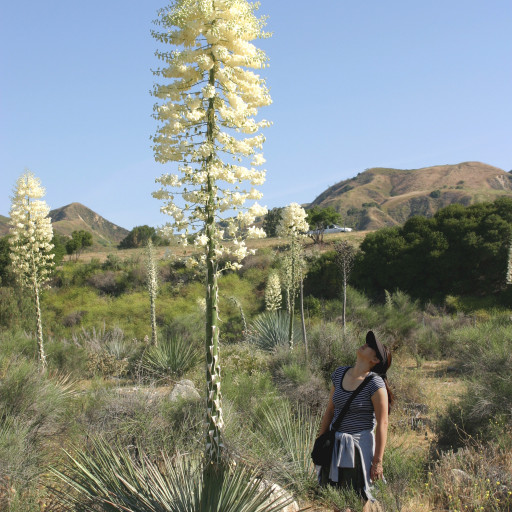
Plant Overview
Often called "Our Lord’s Candle," the Hesperoyucca whipplei is a spectacular architectural wonder of the American Southwest. Native to the chaparral of California and Mexico, it spends years as a humble, silvery-blue rosette before erupting into one of the most dramatic flowering displays in the plant kingdom. It is a true "one-hit wonder," a monocarpic species that pours its entire lifetime of energy into a single magnificent bloom before completing its life cycle.
🔍 How to Identify
- 🗡️ The Foliage: Features a dense, ground-level rosette of rigid, needle-like leaves that are bluish-green or silver-gray in color.
- 🗼 The Stalk: During the blooming season, a massive, asparagus-like stalk shoots upward, reaching heights of 10 to 15 feet in just a few weeks.
- 🔔 The Flowers: The top of the stalk is crowded with hundreds of nodding, bell-shaped flowers that are creamy white, often featuring delicate purple tips.
🏡 In Your Garden
- 🏜️ Drainage is Vital: This plant is a desert specialist and will rot quickly if kept in soggy soil. It thrives best on rocky or sandy slopes where water drains away from the crown immediately.
- ☀️ Sun Worshipper: To trigger its legendary bloom, it requires intense, full sun. Shady spots will lead to weak growth and a lack of flowering.
- 🛑 The Taproot: Like many desert succulents, it develops a deep taproot and deeply resents being moved. Choose its "forever home" carefully, as transplanting an established specimen often results in the plant's death.
⚠️ Safety & Toxicity
- ⚔️ Physical Hazard: While not chemically toxic, this plant is "armed." The tips of the leaves are needle-sharp and can easily pierce skin or denim. It should never be planted near walkways or areas where children play.
- 🐾 Pet Safety: The plant is generally considered non-toxic if ingested by dogs or cats, but the sharp leaves act as a natural deterrent that keeps most curious pets at a safe distance.
✨ Fun Fact
- 🤝 The Secret Partner: The Hesperoyucca whipplei has a "soulmate" relationship with the California Yucca Moth (Tegeticula maculata). They are entirely dependent on each other; the moth is the plant's only pollinator, and the plant's seeds are the only food the moth's larvae can eat. Neither species could survive without the other!

Detailed Care Instructions
Here are some steps to help you grow Hesperoyucca Whipplei, also known as the Our Lord's Candle plant:
- Find a suitable location: Select a sunny spot in your garden where the plant will receive at least 6-8 hours of direct sunlight daily. Ensure the soil drains well.
- Prepare the soil: Hesperoyucca Whipplei plants prefer well-draining soil. Amend the soil by adding compost or organic matter to improve its fertility and drainage. This will provide a good base for the plant to establish its roots.
- Planting: Dig a hole that is slightly larger than the root ball of the plant. Place the plant into the hole and backfill with soil, ensuring the crown of the plant is level with the soil surface. Firmly tamp down the soil around the plant to remove air pockets.
- Watering: Initially, Hesperoyucca Whipplei plants will require regular watering to establish their root system. Water deeply once or twice a week, allowing the soil to dry out between waterings. Once the plant is established, it can survive on natural rainfall and occasional supplemental watering during extended dry periods.
- Mulching: Apply a layer of organic mulch around the plant to help conserve moisture, regulate soil temperature, and reduce weed growth. Leave a small space around the base of the plant to prevent the mulch from touching the stem, which could lead to rot.
- Pruning: Hesperoyucca Whipplei plants typically do not require pruning. However, you can remove any dead or damaged leaves using sterilized pruning shears.
- Fertilizing: These plants are adapted to low-nutrient environments and generally do not require fertilizer. However, if you notice poor growth or yellowing leaves, you can apply a balanced, slow-release fertilizer once or twice a year during the growing season.
- Pests and Diseases: Hesperoyucca Whipplei plants are relatively resistant to pests and diseases. However, keep an eye out for common issues such as aphids, mealybugs, and fungal infections. Treat any problems promptly with appropriate organic insecticides or fungicides, if necessary.
Remember to check the specific care requirements for your particular species of Hesperoyucca Whipplei, as different varieties may have different needs.

Place in a bright room that is sun drenched almost all day. Or directly in a south-facing window.

The plant in question is a type of succulent that is native to certain regions in North America. As it is a succulent, it is generally tolerant of drought and does not require frequent watering.
It is important to note that overwatering can be detrimental to the health of the plant, as it can lead to root rot. Therefore, it is recommended to allow the soil to completely dry out before watering.
When watering, it is best to apply water directly to the soil rather than the leaves or stem of the plant. A deep watering once every 2-4 weeks is typically sufficient, depending on temperatures and soil conditions.
During especially hot periods, it may be necessary to increase the frequency of watering, but it is still important to ensure the soil is allowed to dry out between waterings.
Overall, the key to successfully watering this type of plant is to be mindful of its unique needs as a succulent and to avoid overwatering.
For optimal growth, apply a balanced fertilizer with an analysis of 10-10-10 in early spring, during the plant's active growing season. Repeat the fertilizer application every six weeks until late summer. Use caution not to over-fertilize, as this can damage the plant. Instead, follow package instructions carefully to ensure proper dosage.
The Hesperoyucca Whipplenii plant requires soil that is well-draining and low in organic matter. The soil should be sandy or sandy loam with a pH level between 6 and 8. It is important to avoid soils that are heavy in clay or retain water as this can lead to root rot. The plant prefers soil that is nutrient poor and does not require regular fertilization. When planting, make sure to amend the soil with a small amount of sand or gravel to improve drainage. The plant is adapted to grow in dry desert regions and can tolerate drought conditions, so it is important to avoid overwatering.
To propagate this plant, you will need to collect seeds from a mature plant. Once you have collected the seeds, you will need to plant them in a well-draining soil mix. Keep the soil moist but not waterlogged and place the container in a sunny location. The seeds should germinate in 2-4 weeks. Once the seedlings have 2-3 leaves, they can be transplanted into individual containers with well-draining soil. Keep the soil moist but not waterlogged and place in a sunny location. As the plants grow, they can be repotted into larger containers or planted in a suitable outdoor location. Alternatively, you can take stem cuttings from a mature plant. Cut a stem that is 4-6 inches long and remove the leaves from the bottom half of the stem. Dip the cut end in rooting hormone and plant the stem in well-draining soil. Keep the soil moist but not waterlogged and place in a shady location. The cutting should root in 2-6 weeks. Once the plant has rooted, it can be transplanted into a larger container or planted in a suitable outdoor location.
Common pests of the our lord's-candle include Scale insect, mealybugs. Make a habit of checking your our lord's-candle frequently for pests so that any infestations can be caught and managed early.








