Plant Overview
Commonly called the Asian Ginseng Tree or simply Heteropanax, this plant is a master of disguise, often mistaken for true Ginseng due to its thick, gnarled, and "human-like" woody trunk. Native to the subtropical forests of Southern China and Vietnam, it brings a prehistoric, Zen-like aesthetic to indoor spaces. While it isn't used for tea or medicine like its namesake, it is highly prized by bonsai enthusiasts for its ability to look like an ancient forest giant while sitting on a coffee table.
🔍 How to Identify
- 🌿 The Caudex: Look for a distinctive, swollen woody base or "foot." This thickened trunk stores water and often features silver-grey bark with a rugged, weathered texture.
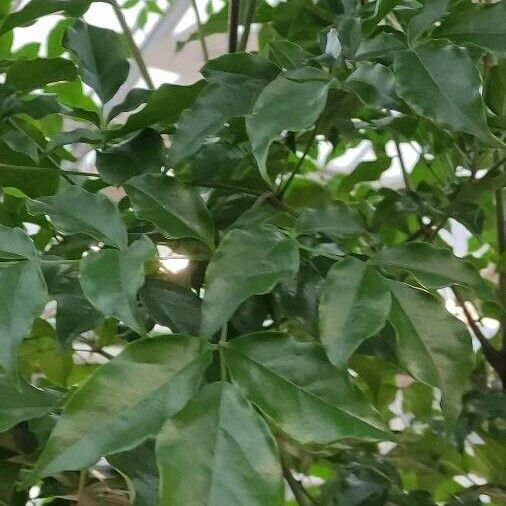
- 🍃 Bipinnate Foliage: The leaves are large, compound, and fern-like. They grow in elegant, airy clusters that give the plant a delicate, lacy appearance despite its sturdy trunk.
- 🌳 Growth Habit: It typically grows as an upright shrub or small tree. In a pot, it maintains a structured, tiered canopy that resembles a miniature umbrella.
🏡 In Your Garden
- 💧 Watering Nuance: Because that thick trunk is a built-in water reservoir, the Heteropanax is quite drought-tolerant. It despises "wet feet"—always wait for the top half of the soil to dry out completely before watering to prevent root rot.
- ☀️ Light & Air: It thrives in bright, filtered light. If the plant suddenly drops its lower leaves, it’s usually a "temper tantrum" caused by a sudden change in temperature or being placed in a dark corner with poor air circulation.
⚠️ Safety & Toxicity
- 🐾 Low Toxicity: The Heteropanax is generally considered non-toxic to humans and common household pets.
- 👄 Mild Irritation: While not deadly, ingesting the leaves can cause mild gastrointestinal upset or drooling in curious cats and dogs. It is always best to keep foliage out of reach of nibbling pets.
✨ Fun Fact
The name Heteropanax literally translates from Greek to "Different Panax." It was named this specifically to tell botanists and foragers: "This looks like the medicinal Panax (Ginseng), but it is something entirely different!"

Detailed Care Instructions
To grow a Heteropanax Chinensis plant, also known as five-finger aralia, follow these steps:
- Choose the right location: Heteropanax Chinensis prefers bright but indirect light. Avoid placing it in direct sunlight as it can scorch the leaves. It also prefers a warm and humid environment.
- Potting: Select a well-draining pot with adequate drainage holes to prevent waterlogging. Use a good quality potting mix that retains moisture but drains well.
- Planting: Place the plant in the pot at the same depth it was in its nursery container. Fill the pot with soil around the root ball, gently firming it down.
- Watering: Keep the soil consistently moist but not waterlogged. Water when the top inch of soil feels dry. Avoid letting the soil dry out completely or waterlogging.
- Humidity: Enhance humidity levels by misting the leaves regularly or placing a tray of water near the plant to increase moisture in the air. You can also use a humidifier.
- Fertilizer: Use a balanced liquid fertilizer once a month during the growing season (spring and summer) to promote healthy growth. Follow the package instructions for application rates.
- Pruning: Prune any dead or damaged leaves or stems to maintain the plant's shape and improve air circulation. You can also prune for size control if needed.
- Repotting: Heteropanax Chinensis may need to be repotted every 2-3 years or when it outgrows its current container. Choose a slightly larger pot and repot in fresh soil.
- Pest control: Check for pests like spider mites, mealybugs, or scale insects regularly. Treat infestations immediately using organic or chemical pest control methods.
- Propagation: Heteropanax Chinensis can be propagated through stem cuttings or by division. Take cuttings from healthy stems with at least two nodes and root them in moist soil or water. Division can be done when repotting, separating the plant into smaller sections with roots attached.
With proper care and attention to its requirements, your Heteropanax Chinensis plant should grow well and thrive in your indoor or outdoor space.

Place in a window with dappled sun or a spot in the middle of a room. Or directly in a window facing west or east.

1. Watering frequency: The plant should be watered on a regular basis, but not too frequently as it can lead to waterlogging of the soil. The frequency of watering depends on the season and the size of the plant.
2. Soil moisture: It is important to keep the soil evenly moist, but not waterlogged. Water the plant thoroughly, allowing the excess water to drain out of the pot.
3. Water quality: The water used for watering should be free from harmful chemicals, salts, and pollutants. Use filtered or distilled water if tap water contains such components.
4. Temperature and humidity: The plant prefers moderate to high levels of humidity and temperatures ranging from 15°C to 30°C. Avoid exposing the plant to extreme temperatures or sudden changes in temperature.
5. Watering methods: The best method for watering Heteropanax Chinensis is by using the bottom-up watering technique. Place the pot in a shallow tray filled with water and let it absorb water for about an hour before removing the pot.
6. Fertilizer: The plant can be fertilized once a month during the growing season, using a fertilizer specific to the needs of the plant. However, avoid over-fertilization, which can harm the plant.
7. Watering schedule: It is best to create a watering schedule that takes into account the season, temperature, and humidity levels, and the size of the plant. Adjust the watering frequency as needed, based on the plant's response.
To fertilize this plant, use a balanced fertilizer with equal ratios of nitrogen, phosphorus, and potassium. Feed the plant every two weeks during the growing season and every four to six weeks during the dormant period. Dilute the fertilizer to half the recommended strength to avoid over-fertilization. Apply the fertilizer near the root zone, taking care not to get it on the foliage or stem. Water thoroughly after fertilizing to prevent damage to the roots.
Heteropanax Chinensis thrives well on well-draining and fertile soil that is rich in essential nutrients. The soil should have a pH level between 5.5-7.5. The ideal soil for Heteropanax Chinensis should retain moisture but not be waterlogged. A sandy-loamy soil is preferred as it provides good drainage and facilitates aeration in the root zone. It is recommended to amend the soil with organic matter like compost or well-rotted manure to boost fertility and improve soil structure. In general, Heteropanax Chinensis prefers a slightly acidic to neutral soil that is balanced in terms of nutrients. Avoid using soil that is too heavy, clay-like, or compacted, as it might inhibit root growth and lead to poor plant performance.
To propagate this plant, you will need to take stem cuttings from a healthy and mature plant. Choose a stem with several nodes and make a cut just below a node using a sharp and sterilized pruning shear. Remove the leaves from the bottom half of the stem, leaving only a few leaves on the top.
Dip the cut end of the stem into a rooting hormone powder to promote root growth, and gently tap off any excess powder. Plant the stem into a well-draining and sterile potting mix to keep it moist. Cover the pot with a plastic bag or a glass container to create a humid environment that will help the stem cuttings root.
Place the pot in a bright and warm location but away from direct sunlight. Keep the soil moist but not waterlogged and mist the cutting once a day to maintain the humidity. After a few weeks, check for root development by gently tugging on the stem. If there is resistance, it means roots have developed and you can transplant the cutting into a larger pot or directly into the garden.
Common pests of the heteropanax chinensis include Scale insect, mealybugs, spider mites, thrips. Make a habit of checking your heteropanax chinensis frequently for pests so that any infestations can be caught and managed early.








