Plant Overview
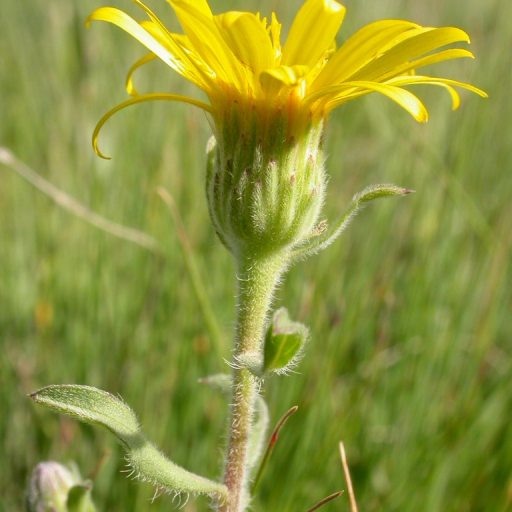
Often called the Hairy Goldenaster, this resilient wildflower is a splash of liquid sunshine across the North American prairies and rocky slopes. Its silvery, velvety foliage acts like a built-in sunshade, allowing it to thrive in harsh environments where other plants would wither. It is a favorite among wildflower enthusiasts for its "never-say-die" attitude and its ability to brighten a landscape late into the season.
🔍 How to Identify
- 🌻 Flower Power: Small, bright yellow blossoms that resemble miniature daisies, usually appearing in late summer and staying through autumn.
- 🧶 Velvety Texture: Both the stems and leaves are covered in fine, dense, stiff hairs (giving it the name villosa, meaning "shaggy"), which create a distinctive silvery-green hue.
- 📏 Growth Habit: It typically grows in low, bushy mounds, staying compact to protect itself from wind and excessive heat.
🏡 In Your Garden
- 🏜️ Drought Warrior: This plant is a superstar for xeriscaping or rock gardens. It essentially thrives on neglect, preferring poor, sandy, or rocky soil where moisture drains away quickly.
- 🦋 Pollinator Magnet: Because it blooms later in the year than many garden flowers, it provides a vital "last-call" nectar source for bees and butterflies preparing for the winter.
- ✂️ Pruning Nuance: It can become a bit "leggy" if the soil is too rich. Cutting it back in early summer encourages a tighter, more compact shape and more prolific flowering.
⚠️ Safety & Toxicity
- ✅ Non-Toxic Status: Heterotheca villosa is generally considered non-toxic to humans, dogs, and cats.
- 🧤 Skin Sensitivity: While not poisonous, the stiff hairs on the leaves can occasionally cause mild mechanical skin irritation (contact dermatitis) for those with very sensitive skin. Wearing gloves during heavy maintenance is recommended.
✨ Fun Fact
The genus name Heterotheca comes from the Greek words for "different" and "container." This refers to a fascinating survival strategy: the plant produces two different types of seeds on the same flower head—one designed to fall nearby and another equipped with "parachutes" to fly away and colonize new territory!

Detailed Care Instructions
To successfully grow Heterotheca villosa, also known as hairy golden aster, follow these steps:
- Climate and soil requirements: Heterotheca villosa is a perennial plant native to North America. It thrives in regions with a sunny climate and well-draining soil. Choose a spot in your garden that receives at least 6 hours of direct sunlight each day.
- Propagation: You can grow Heterotheca villosa from seeds or by dividing established plants. If using seeds, sow them in early spring, around 4-6 weeks before the last frost. Press the seeds lightly into the soil and cover them with a thin layer of soil. If dividing plants, do it in early spring or late summer.
- Watering: Provide regular watering during the plant's establishment period, ensuring the soil is moist but not waterlogged. Once established, Heterotheca villosa is relatively drought-tolerant and will only require occasional watering.
- Fertilization: Heterotheca villosa generally does not require much fertilization. However, you can incorporate organic matter into the soil before planting for added nutrients. If you notice poor growth or pale leaves, you can apply a balanced slow-release fertilizer once or twice during the growing season.
- Pruning: Prune Heterotheca villosa in late autumn or early spring to maintain its shape and remove any dead or diseased branches. Additionally, you can pinch back the plant during early summer to encourage bushier and more compact growth.
- Mulching: Applying a layer of mulch around the base of the plant can help to retain soil moisture, suppress weed growth, and insulate the roots during colder months. Use organic mulch, such as wood chips or compost, and spread it evenly around the plant, leaving a small gap around the stem to prevent rotting.
- Pests and diseases: Heterotheca villosa is relatively resistant to pests and diseases. However, keep an eye out for aphids, snails, or spider mites, which may occasionally infest the plant. If you notice any signs of infestation, use natural pest control methods or insecticidal soap to address the issue.
By following these steps and providing proper care, you can successfully grow Heterotheca villosa in your garden and enjoy its cheerful golden blossoms.

Place in a bright room that is sun drenched almost all day. Or directly in a south-facing window.

This plant should be watered deeply and regularly during the growing season, typically from early spring to late fall. The frequency of watering will depend on the soil type, weather conditions, and size of the plant. As a general rule, it is best to water the plant thoroughly once the top inch of soil feels dry to the touch. Be careful not to overwater, as this can lead to root rot. When watering, aim for the base of the plant rather than watering the leaves or flowers directly. It is also important to avoid getting water on the foliage, as this can increase the risk of fungal diseases. During periods of drought or extreme heat, it may be necessary to water more often or provide additional moisture through mulching.
To fertilize Heterotheca Villosa, you may follow these instructions:
- Select a balanced fertilizer with an N-P-K ratio of 10-10-10 or similar.
- Begin fertilizing the plant once it has become established, usually in its second year of growth.
- Apply the fertilizer in early spring, just before new growth starts, and again in mid-summer.
- Dilute the fertilizer according to the package instructions or use at half-strength to avoid over-fertilization.
- Water the plant thoroughly before applying the fertilizer to ensure it is well-hydrated.
- Apply the diluted fertilizer evenly around the base of the plant, keeping it away from the stems and leaves.
- Use a small gardening fork or rake to lightly work the fertilizer into the topsoil, being careful not to damage the plant's roots.
- Water the plant again after fertilizing to help distribute the nutrients throughout the soil.
- Monitor the plant's response to the fertilizer. If you notice any signs of burning or yellowing leaves, reduce the amount of fertilizer or frequency of application.
- Repeat the fertilization process annually, adjusting the timing and quantity of the fertilizer based on the plant's growth and nutrient needs.
Remember to always read and follow the specific instructions on the fertilizer package, as different brands and formulations may have varying guidelines.
Heterotheca Villosa plant prefers well-draining soil with good organic matter content. The soil should be slightly acidic to neutral, with a pH range of 6.0-7.0. It can tolerate sandy or loamy soil texture but may require watering more frequently if grown in sandy soil. It is essential to avoid waterlogged soil because it may cause root rot. Overall, a nutrient-rich and well-draining soil is an ideal choice for cultivating healthy Heterotheca Villosa plants.
Heterotheca villosa is a perennial plant that can be propagated through various methods such as seed collection and division. Here's a detailed explanation of how to propagate this plant:
- Seed Collection:
- Wait for the plant to produce mature seeds. This is usually indicated by dry and brown seed heads.
- Cut the seed heads from the plant using clean gardening shears.
- Place the seed heads in a paper bag or envelope to continue drying in a cool, dry place for a few weeks.
- Once fully dry, gently crumble the seed heads to release the seeds.
- Separate the seeds from any debris or chaff using a fine mesh sieve or your fingers.
- Store the clean, dry seeds in a sealed container in a cool and dark location until you are ready to sow them.
- Wait for the plant to produce mature seeds. This is usually indicated by dry and brown seed heads.
- Division:
- Choose a mature Heterotheca villosa plant that is at least a couple of years old.
- Dig up the entire plant with a garden fork, taking care not to damage its roots.
- Gently shake off excess soil to expose the roots and identify natural divisions in the plant.
- Using a sharp and clean garden knife or shears, carefully cut the plant into multiple sections, ensuring that each division has a portion of both roots and foliage.
- Replant the divided sections immediately in desired locations, ensuring that each is placed at the same depth as the original plant was growing.
- Choose a mature Heterotheca villosa plant that is at least a couple of years old.
- Vegetative Propagation:
- Take stem cuttings from a healthy Heterotheca villosa plant during its active growing season, typically during spring or early summer.
- Select a stem that is about 4-6 inches (10-15 cm) long and looks vigorous.
- Using a clean and sharp pair of pruning shears, make a clean cut just below a node (where leaves emerge).
- Remove the lower leaves from the cutting, leaving a few leaves at the top intact.
- Optionally, you can dip the cut end of the stem in rooting hormone powder to enhance the rooting process.
- Insert the cutting into a well-draining potting mix or rooting medium, leaving at least 1-2 nodes underground.
- Water the cutting thoroughly and place it in a warm, bright location, away from direct sunlight.
- Keep the soil consistently moist, but not soggy, until the cutting roots, which can take several weeks.
- Once roots have developed, transplant the rooted cutting into a larger pot or directly into the ground, depending on your preference.
Remember to provide optimal growing conditions, including a location with full sun to partial shade, well-draining soil, and regular watering, to ensure successful propagation and overall plant health.
- Take stem cuttings from a healthy Heterotheca villosa plant during its active growing season, typically during spring or early summer.








