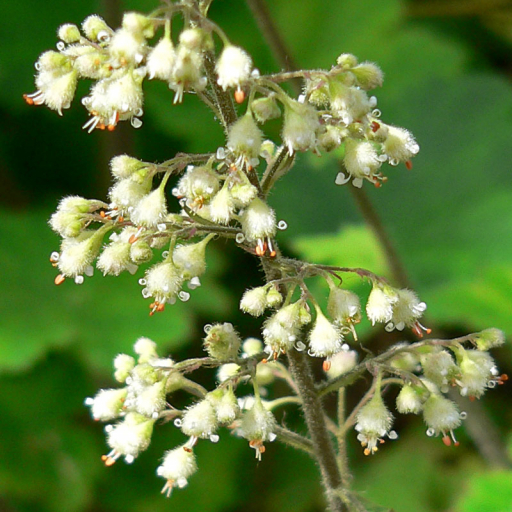
Plant Overview
Often called the Island Alumroot, Heuchera maxima is the "gentle giant" of the Heuchera world. Native only to the windswept Channel Islands off the coast of California, it is cherished for its ability to turn a dark, dry corner of the garden into a lush, emerald sanctuary. It is a rugged survivor that pairs cliffside endurance with delicate, airy elegance.
🔍 How to Identify
- 🍃 Large Foliage: Features broad, heart-shaped leaves that are significantly larger than most common "Coral Bells," often reaching 3 to 6 inches across with deeply ruffled, lobed edges.
- 🌸 Towering Spires: In spring, it sends up sturdy, tall stalks (reaching up to 2 feet) covered in hundreds of tiny, bell-shaped blossoms that transition from creamy white to soft pink.
- 🧶 Textured Surface: The leaves are a rich forest green and, along with the stems, are often covered in fine, soft hairs that give the plant a fuzzy, tactile quality.
🏡 In Your Garden
- 🌳 The Oak Companion: This plant is a superstar for "dry shade" gardening. It is one of the few plants that can thrive under the canopy of Oak trees without needing the frequent summer watering that often causes Oak root rot.
- 🏜️ Crown Care: While it is incredibly hardy, it hates "wet feet." It is best to plant it on a slight mound or in well-draining soil to ensure the central crown doesn't sit in standing water, which can lead to fungal issues.
⚠️ Safety & Toxicity
- ✅ Non-Toxic: Heuchera maxima is generally considered safe and non-toxic to cats, dogs, and horses, making it an excellent choice for pet-friendly landscapes.
- 🧤 Mild Irritation: While not poisonous, the tiny hairs on the stems may cause very mild skin tingling or irritation for gardeners with highly sensitive skin if handled extensively.
✨ Fun Fact
Despite its subtle green color, this species is a "founding father" of modern gardening! It is a primary ancestor for many of the colorful "Coral Bells" hybrids found in nurseries today, providing the vigor and heat tolerance needed for those flashy purple and red varieties to survive.

Detailed Care Instructions
To grow Heuchera Maxima plant, you can follow these steps:
- Choose the right location: Heuchera Maxima prefers partial shade to full shade. Select a location that receives a few hours of morning sunlight and receives dappled shade for the rest of the day.
- Prepare the soil: Heuchera Maxima thrives in well-draining soil with a slightly acidic pH. Amend the soil with organic matter like compost or peat moss to improve drainage and fertility.
- Planting: Dig a hole slightly larger than the root ball of the plant. Gently remove the plant from its container and place it in the hole, making sure the crown is level with the soil surface. Backfill the hole with soil and firm it gently around the plant.
- Watering: Water the plant thoroughly after planting to settle the soil and ensure good root-to-soil contact. Afterward, water regularly to keep the soil slightly moist but not overly wet.
- Mulching: Apply a layer of organic mulch, such as wood chips or shredded bark, around the plant to conserve moisture, suppress weeds, and regulate soil temperature.
- Fertilizing: Heuchera Maxima doesn't require heavy fertilization. However, you can apply a balanced, slow-release granular fertilizer in early spring. Follow the package instructions for the correct application rate.
- Maintenance: Remove any yellow or dead leaves to encourage new growth and maintain a tidy appearance. Divide the plant every few years to prevent overcrowding and promote healthier growth.
- Pests and diseases: Heuchera Maxima is generally resistant to pests and diseases. However, it's important to keep an eye out for common garden pests like aphids, slugs, or snails. If any pests are noticed, use organic insecticidal sprays or other control methods.
By following these steps, you can successfully grow Heuchera Maxima and enjoy its beautiful foliage and flowers in your garden.

Place in a bright room that is sun drenched almost all day. Or directly in a south-facing window.

The best way to water this plant is to ensure that the soil is moist but not waterlogged. You should water it deeply once a week or when the top inch of soil feels dry to the touch. It is important to water it at the base of the plant rather than overhead, which can lead to disease and rot. You can use a watering can or a hose with a gentle spray attachment to water the plant. Additionally, you should avoid getting water on the leaves of the plant, as this can also lead to disease. Finally, make sure to mulch around the base of the plant to help retain moisture in the soil.
For best results, fertilize this plant with a balanced fertilizer in the spring before new growth emerges. Use a slow-release fertilizer and apply according to package instructions. It is also recommended to fertilize again in mid-summer to encourage continuous healthy growth. Avoid over-fertilizing, as this can lead to excessive foliage at the expense of flowers. Water the plant thoroughly after fertilizing to help distribute the nutrients evenly throughout the soil.
The ideal soil for Heuchera Maxima should be well-draining and fertile with a neutral to slightly acidic pH range. It should have a good mixture of organic matter such as compost, peat moss or leaf mold. The soil should be loose and crumbly to allow for good aeration and root development. The plant prefers a soil that is moist but not waterlogged, so it is important to ensure that the soil is not compacted and drains well. It can also benefit from occasional fertilization with a balanced fertilizer to maintain its vigor and growth. Overall, it is recommended to use a soil that is high-quality and nutrient-rich to provide the optimal growing conditions for the Heuchera Maxima plant.
Heuchera Maxima is a plant species that can be propagated easily through cuttings. In order to propagate this plant, you will need to take cuttings from its stem and place them in soil or water until they root. To do this, you will first need to select a healthy Heuchera Maxima plant with strong stems and leaves. Then, use a sharp, sterilized knife or scissors to cut a stem from the plant about 2-3 inches long, just below a leaf node.
Remove any lower leaves from the cutting, leaving only a few at the top. Dip the cut end in rooting hormone (optional) and then place it in a container of sterile potting soil or clean water. If planting in soil, make sure the soil is moist but not too wet, and cover the container with a clear plastic bag to create a mini greenhouse. If rooting in water, change the water frequently to prevent bacteria growth.
Keep the cutting in a warm, bright location but out of direct sunlight. Check the soil or water regularly and mist the cutting with water if it starts to dry out. In a few weeks, you should see new growth and roots forming. Once the roots are well established, you can transplant the new plant into a larger container or outdoors in the garden.








