Plant Overview
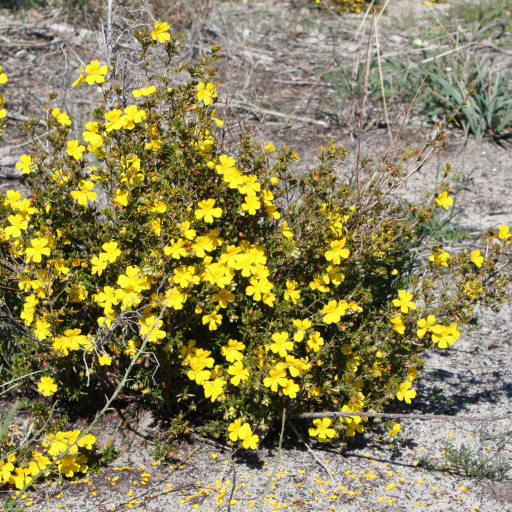
Known affectionately as "Yellow Buttercups," Hibbertia hypericoides is a cheerful West Australian native that paints the bushland in brilliant gold. This resilient little shrub belongs to the Guinea Flower family, so named because its bright, round blooms resemble the old British gold guinea coins. It is a staple of the coastal plains, bringing a splash of sunshine to even the sandiest soils.
🔍 How to Identify
- 🌼 The Flowers: Striking, five-petaled blooms in a vibrant "canary yellow." The center is filled with a dense cluster of golden stamens, giving the flower a fuzzy, sunburst appearance.
- 🍃 Leaf Texture: The foliage consists of narrow, linear leaves that are stiff and slightly hairy. They are a deep, matte green with edges that often roll slightly inward.
- 🪵 Growth Habit: This is a low-growing, multi-stemmed shrub that usually stays under one meter in height. It has a sprawling, "scrambling" habit that allows it to fill gaps between larger plants beautifully.
🏡 In Your Garden
- 🏜️ Sandy Soul: Hailing from the coastal sandplains, this plant demands exceptional drainage. It is the perfect candidate for rockeries or native gardens where the soil is too poor or sandy for more "fussy" ornamental flowers.
- ☀️ Sun Seeker: While it can handle dappled shade, its flowering is most prolific when it receives plenty of direct sunlight. It is remarkably drought-tolerant once its root system is established, making it a "set and forget" favorite for water-wise gardening.
⚠️ Safety & Toxicity
- ✅ Generally Safe: Hibbertia hypericoides is considered non-toxic to humans and is not known to pose a significant threat to livestock or pets.
- 🐾 Mild Irritation: As with many wild shrubs, the stiff, hairy texture of the leaves may cause very mild skin irritation for those with sensitive skin, and it is best to discourage pets from chewing on the foliage to avoid indigestion.
✨ Fun Fact
The genus name Hibbertia was chosen to honor George Hibbert, an 18th-century English merchant and amateur botanist who funded plant-hunting expeditions to ensure exotic species from the "New World" made it into the royal gardens of Europe.

Detailed Care Instructions

Some plants require more regular watering than others, which should be done every few days. It's critical to maintain the soil moist all of the time. The water requirements of the same plant placed in pots with varying sizes will differ. Because the water in the smaller pot evaporates faster than the water in the larger pot, it will require more watering. Regardless of pot size, the surface should constantly be maintained moist.








