Plant Overview
Often called the "Snake Vine" or "Golden Guinea Flower," this vigorous Australian native is a favorite for those wanting to bring a splash of sunshine to coastal or temperate gardens. It is a versatile climber that can scramble over fences or act as a lush groundcover, painting your landscape with brilliant buttercup-yellow blooms. While it looks delicate, it is a hardy survivor that thrives where many other plants struggle.
🔍 How to Identify
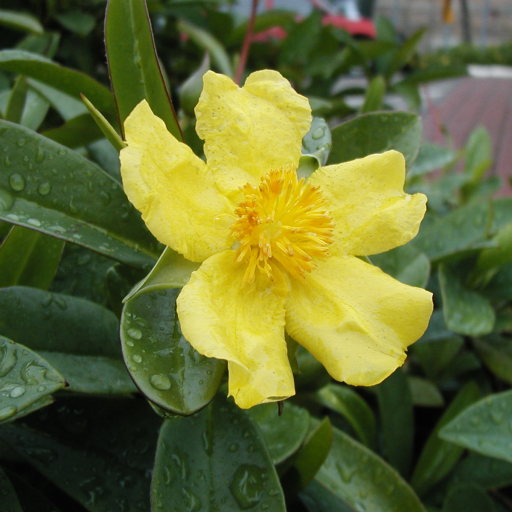
- 🌼 Golden Blooms: The flowers are large (up to 7cm across) with five bright yellow petals and a central cluster of stamens, resembling oversized buttercups.
- 🍃 Glossy Foliage: The leaves are deep green, oblong, and have a distinctive leathery texture; if you flip them over, you’ll notice fine, silky hairs on the underside.
- 🐍 Twining Stems: It features flexible, brownish-red stems that wrap tightly around supports or trail along the ground, earning it its "Snake Vine" nickname.
🏡 In Your Garden
- 🌊 Coastal Warrior: This plant is incredibly salt-tolerant and wind-resistant, making it the perfect choice for seaside gardens where salty spray usually prevents lush growth.
- ✂️ Vigorous Scrambler: Because it grows so rapidly, it requires regular pruning to keep it from "suffocating" smaller neighboring plants; it is a space-hog that needs a firm hand to stay in its lane.
- ☀️ Light Flexibility: While it craves full sun for maximum blooming, it is one of the few flowering climbers that will still perform well in partial shade, offering versatility for north-facing walls.
⚠️ Safety & Toxicity
- 🐾 Pet Friendly: Hibbertia scandens is generally considered non-toxic to dogs, cats, and horses, making it a "worry-free" addition to a pet-filled backyard.
- 🚫 Not Edible: While not considered poisonous to humans, the plant is purely ornamental and should not be ingested. The sap may cause very mild skin irritation in individuals with highly sensitive skin.
✨ Fun Fact
Even though a Snake Vine looks like it is constantly covered in flowers, each individual blossom actually only lasts for a single day! The plant maintains its golden glow by producing a massive, relentless succession of new buds that open every morning throughout the warmer months.

Detailed Care Instructions
To grow Hibbertia scandens, also known as climbing guinea flower, you can follow the steps below:
- Choose a suitable location: Select a spot in your garden that receives full sun to partial shade. The plant needs at least 6 hours of direct sunlight each day.
- Soil preparation: Prepare the soil by adding organic matter like compost or well-rotted manure to improve drainage and fertility. The pH level of the soil should be slightly acidic to neutral.
- Planting: Hibbertia scandens can be grown from seeds or cuttings. If using seeds, sow them in pots or trays filled with seed-starting mix. Press the seeds lightly onto the soil surface and cover them with a thin layer of additional potting mix. Keep the soil consistently moist until germination occurs, which may take several weeks.
- Transplanting: Once the seedlings reach a suitable size (around 2-3 inches tall), they can be transplanted into their final growing location. Dig a hole slightly larger than the root ball, gently place the seedling into the hole, and backfill with soil. Firmly press the soil around the base of the plant to eliminate any air pockets.
- Watering: Water the plants regularly, aiming for even moisture without waterlogging. Avoid allowing the soil to dry out completely between waterings.
- Support: As Hibbertia scandens is a climbing plant, provide a trellis, fence, or other support for it to vine and climb up. Secure the stems to the support structure as it grows to help guide it in the desired direction.
- Mulching: Apply a layer of organic mulch, such as wood chips or straw, around the base of the plant. Mulching helps retain soil moisture, suppresses weed growth, and regulates soil temperature.
- Fertilizing: Feed the plant with a balanced, slow-release fertilizer or with a liquid fertilizer formulated for flowering plants according to the package instructions. Apply the fertilizer at the beginning of the growing season and repeat as directed throughout the growing season.
- Pruning: Prune the plant lightly to maintain its shape and encourage bushier growth. You can remove any dead or damaged branches and any excessive or unwanted growth.
- Winter care: Hibbertia scandens is generally hardy, but in colder regions, provide protection against frost or extreme winter temperatures. Cover the plant with a frost cloth or move it to a more sheltered location during the winter months.
Remember to regularly monitor the plant for pests or diseases and address any issues promptly. Hibbertia scandens typically blooms during spring and summer, producing bright yellow flowers that add beauty to your garden.

Place in a bright room that is sun drenched almost all day. Or directly in a south-facing window.

Hibbertia Scandens is a climbing plant that requires regular watering to thrive. When watering the plant, it is important to do so deeply and thoroughly, allowing the water to penetrate the soil and reach the roots. However, it is equally important to avoid overwatering, as this can lead to waterlogged soil and root rot.
To water the plant, first check the soil for moisture levels by inserting your finger about two inches deep into the soil. If the soil feels dry to the touch, it is time to water the plant. Use a watering can or hose with a gentle spray nozzle to water the plant at the base, making sure to avoid getting water on the leaves or flowers.
Water the plant slowly and evenly, taking care not to flood the soil. Allow the water to soak in before checking the moisture levels again. Depending on the climate and season, you may need to water the plant anywhere from once a week to daily.
In addition to regular watering, Hibbertia Scandens benefits from a layer of mulch around the base of the plant to help retain moisture in the soil. Additionally, providing the plant with a trellis or other support structure can help it grow healthier and stronger, as it will be better able to climb and access sunlight.
To fertilize this plant, use a balanced, slow-release fertilizer with equal amounts of nitrogen, phosphorus, and potassium. Apply the fertilizer in early spring and late summer. Avoid applying fertilizer during periods of drought or extreme heat. Water the plant before and after applying fertilizer to prevent burning. Spread the fertilizer evenly around the base of the plant and water thoroughly after application. Over-fertilization can cause foliage burn, so it is important to follow the recommended application rate.
Hibbertia scandens is a plant that grows well in soil that is well-draining and rich in organic matter. The ideal pH range for the soil should be between 6.0 and 7.5. The soil should also be moist, but not waterlogged. It is recommended to mix in compost or other organic matter before planting to ensure that the soil stays moist and provides the necessary nutrients for the plant to grow. Avoid using soil that is heavy in clay as it can become waterlogged and suffocate the roots. Adding sand to the soil can improve drainage.
To propagate this plant, you will need to take stem cuttings from a mature plant. Look for a stem that has several sets of leaves on it, but is not yet woody.
Using a sharp, clean pair of pruning shears, cut a section of stem that is about 4-6 inches long. Remove the leaves from the bottom 2/3 of the stem.
Dip the cut end of the stem into rooting hormone powder, which can be found at most garden centers.
Fill a small container with a well-draining potting mix and make a hole in the center. Insert the cut end of the stem into the hole and tamp the soil around it gently.
Water the soil thoroughly and cover the container with a plastic bag or dome to help keep humidity levels high.
Place the container in a warm, bright location, but out of direct sunlight. Check the soil regularly and water as needed to keep it evenly moist.
After a few weeks, you should start to see new growth emerging from the stem. Once the new growth is well-established, you can transplant the new plant into a larger pot or directly into the garden.








