Plant Overview
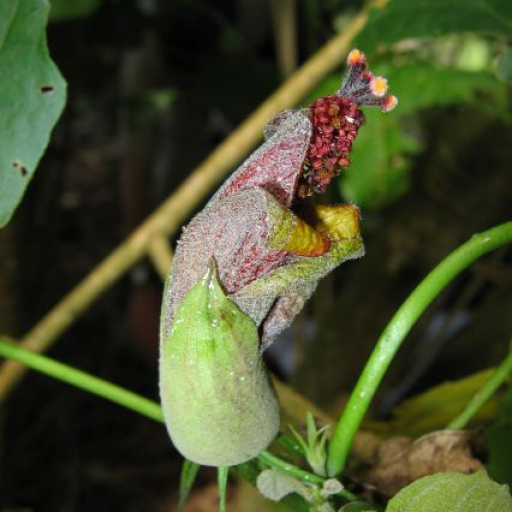
Known as the Kilauea Hibiscadelphus or Hau Kuahiwi, this tree is one of the rarest botanical treasures on Earth. Native exclusively to the volcanic slopes of Hawaii, it was once down to a single surviving individual in the wild. It is a cousin to the common hibiscus, but its "sickle-shaped" flowers give it an otherworldly, prehistoric appearance that tells a story of evolution alongside tropical birds.
🔍 How to Identify
- 🌺 Curved Blossoms: Unlike the flat, open petals of a garden hibiscus, these flowers are long, tubular, and curved like a parrot's beak to accommodate the bills of nectar-drinking birds.
- 🍃 Heart-Shaped Leaves: The foliage is lush and broadly heart-shaped (cordate) with a soft, velvety texture and prominent veins.
- 🎨 Color Shift: The flowers emerge with a grayish-green or yellowish tint and slowly mature into a deep, dusky maroon or magenta as they age.
🏡 In Your Garden
- 🌋 Specific Habitat: This is not a typical backyard plant. It evolved in deep volcanic ash and montane mesic forests. It thrives in cool, humid upland environments and struggles in the heat and salt of coastal areas.
- 🦜 Pollinator Specialist: In its native Hawaii, it relies on "I’iwi" (honeycreeper birds). If you are lucky enough to see one in a botanical garden, you’ll notice the flower shape is a perfect "lock and key" fit for the bird's curved beak.
⚠️ Safety & Toxicity
- ✅ Non-Toxic Status: There are no known toxic properties for humans or common household pets associated with this genus.
- 🛡️ Legal Protection: Because it is a critically endangered species, the primary "safety" concern is for the plant itself. It is strictly protected by federal law, and removing seeds or cuttings from the wild is prohibited.
- 🐾 Pet Interaction: While not poisonous, the plant is delicate and slow-growing; it should be kept away from curious pets to ensure the survival of its fragile branches.
✨ Fun Fact
In 1911, the entire species was thought to be represented by just one single tree remaining in the wild. Every Hibiscadelphus giffardianus currently in existence is a direct descendant of that one "lonely" survivor, saved through intensive grafting and conservation efforts by Hawaiian botanists!

Detailed Care Instructions
To grow Hibiscadelphus Giffardianus plants, you can follow these steps:
- Obtain seeds or cuttings: Hibiscadelphus Giffardianus is a rare plant, so acquiring seeds or cuttings may be challenging. Try contacting local nurseries, botanical gardens, or rare plant collectors to see if they have any available.
- Prepare the soil: Hibiscadelphus Giffardianus prefers well-draining soil that is rich in organic matter. Add compost or well-rotted manure to the soil to improve its fertility.
- Provide the right conditions: This plant thrives in warm, tropical climates. It requires full sun to partial shade and temperatures between 60-80°F (15-27°C). Make sure it is shielded from strong winds and frost, as it is not frost-tolerant.
- Planting seeds or cuttings: If using seeds, soak them in warm water overnight to help with germination. Afterward, plant them about ¼ inch deep in prepared soil. If using cuttings, dip the cut ends in rooting hormone and plant them in the soil, keeping the soil moist but not waterlogged.
- Watering and fertilizing: Keep the soil consistently moist during the growing season, but do not overwater as it can cause root rot. Fertilize with a balanced, slow-release fertilizer according to the package instructions.
- Pruning: Regularly prune your Hibiscadelphus Giffardianus plant to maintain a compact shape and remove any dead or diseased branches. Pruning also encourages more blooms.
- Protect from pests and diseases: Keep an eye out for common garden pests like aphids, spider mites, and whiteflies. They can be treated with appropriate organic or chemical pest controls. Also, avoid overwatering to prevent root rot.
- Support and training: Since Hibiscadelphus Giffardianus is a climbing shrub, you may need to provide it with support like a trellis or stake to help it grow vertically. Gently tie the branches to the support structure as they grow.
Remember, the Hibiscadelphus Giffardianus is a rare and endangered plant, so consider contacting local conservation organizations or specialists for further advice on cultivation and preservation efforts.

To water this plant, it is important to keep its soil consistently moist but not waterlogged. You can do this by checking the soil's moisture level regularly, either by using a soil moisture meter or simply inserting your finger into the soil up to the first knuckle. If the soil feels dry at this depth, it's time to water.
When watering, use room temperature or lukewarm water and saturate the soil until it begins to drain out the bottom of the pot. Be careful not to pour water directly onto the plant's leaves or flowers, as this can cause damage or encourage fungal growth.
During the plant's active growth period, which is typically in spring and summer, it may require more frequent watering. You can also mist the leaves with a spray bottle to provide extra humidity, which this plant enjoys.
In the winter months, when the plant may enter a dormant period, it will require less frequent watering to prevent the soil from becoming overly saturated.
To fertilize this plant, you should use a balanced fertilizer with equal ratios of nitrogen, phosphorus, and potassium. Apply the fertilizer during the plant's growing season, typically in the spring and summer, following package instructions for dosage and frequency. Avoid over-fertilizing, which can lead to burned leaves and other problems. You can also supplement with organic matter, such as compost or well-rotted manure, to provide additional nutrients to the soil.
The ideal soil to use with this plant should be rich, well-draining, and high in organic matter. It should also have a slightly acidic to neutral pH level. A mix of high-quality potting soil and compost can be used to achieve these conditions. It is important to avoid soils that are too compact, heavy, or waterlogged as they can lead to root rot and other issues. Additionally, adding a layer of mulch around the base of the plant can help to maintain moisture levels and protect the roots.
To propagate this plant, take a cutting from a healthy, mature plant using a sharp, sterile knife. The cutting should be around 4-6 inches in length and have at least one or two sets of leaves. Remove the lower set of leaves and dip the cut end of the stem into rooting hormone. Plant the cutting in a well-draining potting mix and water thoroughly. Keep the cutting in a warm, bright location with indirect light and keep the soil consistently moist. After a few weeks, the cutting should begin to form roots and new growth. Once the plant has become established, it can be transplanted into a larger pot or planted outdoors in a suitable location.








