Plant Overview
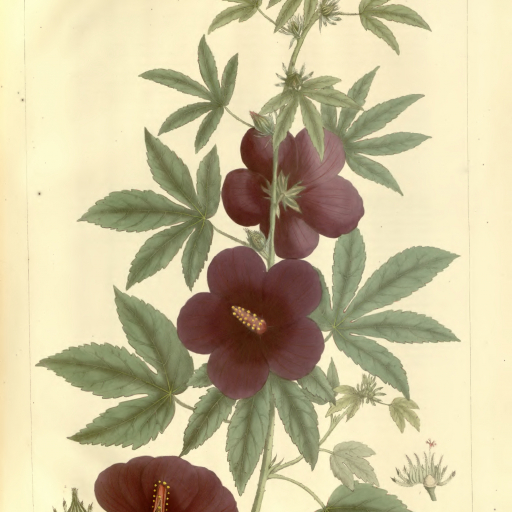
Often called the Monarch Rosemallow, Hibiscus radiatus is the "goth" cousin of the tropical hibiscus family. With its deep maroon blooms and dramatic, jagged foliage, it looks like it belongs in a dark fairytale garden. Originating from Southeast Asia, this plant is prized for its architectural silhouette and its ability to add a moody, sophisticated edge to sunny landscapes.
🔍 How to Identify
- 🍃 Serrated Foliage: The leaves are deeply lobed and heavily "toothed," often resembling Japanese Maple or even hemp leaves. They are a rich, dark green that sometimes takes on a bronze tint.
- 🌸 Velvet Blooms: The flowers are funnel-shaped and usually a deep, dusky purple or wine-red, featuring a prominent dark "eye" in the center that looks almost black.
- 🌵 Bristly Stems: Look closely at the branches; unlike many smooth hibiscus varieties, the radiatus has stems covered in tiny, sharp prickles or stiff hairs.
🏡 In Your Garden
- ☀️ Sun for Saturation: To get those deep, moody colors, this plant needs full sun. In the shade, the leaves will stay a dull green and the plant may become weak and "leggy" as it reaches for light.
- 💧 Moisture Management: This is a thirsty species that mimics tropical marshlands. It prefers soil that stays consistently moist but has enough grit to allow excess water to drain away from the roots.
- ✂️ Structural Pruning: Because it grows rapidly in a single season, it can get top-heavy. Periodic "pinching" of the growth tips will encourage it to branch out into a fuller, more stable shrub.
⚠️ Safety & Toxicity
- ✅ Non-Toxic: Hibiscus radiatus is generally considered safe and non-toxic for both humans and common household pets like cats and dogs.
- 🧤 Prickle Protection: While not chemically toxic, the stems are quite prickly. The tiny bristles can cause mechanical skin irritation or small scratches, so it is best to wear gloves when pruning or transplanting.
✨ Fun Fact
Due to its unique leaf shape, this plant is frequently involved in cases of "mistaken identity"—it is often reported to local authorities by neighbors who confuse its serrated, palmate leaves with those of the cannabis plant!

Detailed Care Instructions
To grow Hibiscus radiatus, also known as the scarlet rosemallow, you can follow these steps:
- Select a suitable location: Hibiscus radiatus thrives in full sun, so choose a spot in your garden that receives at least 6-8 hours of direct sunlight daily. The soil should be well-draining but rich in organic matter.
- Prepare the soil: Before planting, loosen the soil and remove any weeds or debris. You can improve the soil quality by adding compost or aged manure.
- Propagation: Hibiscus radiatus can be propagated from seeds or cuttings. If using seeds, sow them in well-draining potting soil or directly in the garden bed, making sure to cover them lightly with soil. For cuttings, take a 4-6 inch (10-15 cm) cutting from a healthy, mature plant and remove the lower leaves. Dip the cut end in rooting hormone and plant it in a pot with moist potting soil.
- Watering: Keep the soil consistently moist but not waterlogged. Water the plant deeply once or twice a week, depending on the weather and soil conditions. During hot and dry periods, you may need to water more frequently.
- Fertilization: Feed your plants every 4-6 weeks with a balanced fertilizer, preferably one with a higher phosphorus content to promote blooming. Follow the instructions on the fertilizer packaging for proper application.
- Pruning: In early spring, before new growth starts, prune the plant to remove any dead or damaged branches. Pruning will help maintain the plant's shape and promote bushier growth.
- Pests and diseases: Hibiscus radiatus is generally resistant to pests and diseases. However, keep an eye out for aphids, spider mites, or whiteflies. If necessary, treat the plant with insecticidal soap or neem oil.
- Support: Provide support for your Hibiscus radiatus if it tends to grow tall or becomes top-heavy. You can use stakes or a trellis to support the plant and prevent it from bending or breaking.
- Winter care: In areas with frost or freezing temperatures, Hibiscus radiatus may not be winter hardy. Consider bringing potted plants indoors or protecting them with mulch or a frost cover.
With proper care, your Hibiscus radiatus plant should grow and produce beautiful scarlet flowers throughout the growing season.
Hibiscus Radiatus is a flowering plant that requires adequate watering to thrive. When watering this plant, it is crucial to avoid overwatering or underwatering, which can lead to the plant's death. To properly water Hibiscus Radiatus, there are several steps you need to follow.
Firstly, assess the moisture level in the soil before watering. Insert a finger into the soil up to the first knuckle. If the soil feels dry, it is time to water your plant. However, if the soil is still moist, hold off on watering.
Secondly, select the right watering method. You can opt for a watering can or a hose with a spray nozzle. Avoid using a high-pressure hose as it can damage the plant.
Thirdly, water your plant slowly and evenly around the base. Do not water the leaves as it can lead to fungal diseases. Ensure that the water penetrates deep into the soil to reach the root zone.
Fourthly, allow any excess water to drain away. Do not leave the plant standing in water, as this can cause root rot.
Lastly, water your Hibiscus Radiatus regularly, preferably at the same time each day to ensure that the soil remains moist. Avoid watering during the hottest part of the day as the water will evaporate quickly.
By following these steps, you can ensure that your Hibiscus Radiatus gets the right amount of water, leading to healthy growth and beautiful flowers.
For best results, use a balanced fertilizer with an N-P-K ratio of 10-10-10. Apply the fertilizer every two weeks during the growing season (usually from early spring to late fall) and reduce to once a month during the dormant season (winter). Be sure to dilute the fertilizer in water according to the package instructions before applying it to the soil around the plant. Avoid getting fertilizer on the foliage or flowers, as this can cause damage or burns. Monitor the plant for signs of over or under-fertilization, such as yellowing leaves or stunted growth, and adjust your fertilizing schedule accordingly.
Hibiscus Radiatus requires a well-draining soil that is rich in organic matter. It prefers a slightly acidic soil with a pH level between 6.0 and 7.0. A mixture of sand, perlite, and peat moss can be used to create a suitable growing medium. It is important to ensure that the soil is not compacted and allows for proper water drainage. The plant also requires regular fertilization with a balanced fertilizer to promote healthy growth and flowering.
Propagation of this plant can be done through stem cuttings. Select a healthy stem that is about 6-8 inches long and has two or three nodes on it. Cut the stem below the lowest node using a sharp, sterilized knife or scissors. Remove any leaves or flowers from the lower half of the stem.
Dip the cut end of the stem into rooting hormone powder and shake off any excess. Plant the stem cutting in a well-draining soil mix in a pot or container. Water the soil and keep it moist but not waterlogged.
Place the container in a warm, bright area but not in direct sunlight. The cutting should root within a few weeks. Once roots have formed, the new plant can be transplanted into a larger container or planted outdoors in a suitable location.
It is important to note that this method of propagation should only be done during the growing season, typically in the spring or summer.








