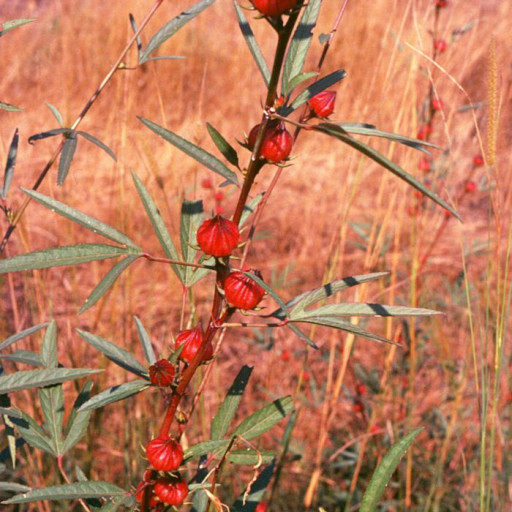
Plant Overview
Often called the "Cranberry of the Tropics," Hibiscus sabdariffa—commonly known as Roselle—is much more than a pretty garden ornamental. While most hibiscus varieties are grown for their massive, ephemeral blooms, this species is world-famous for its succulent, ruby-red calyxes that produce the tart, refreshing tea known as Agua de Jamaica. It is a vibrant, multi-purpose shrub that brings a splash of deep crimson and a taste of the Caribbean to any sunny landscape.
🔍 How to Identify
- 🔴 The Stems: Look for striking, deep mahogany or dark red stems that provide a sharp contrast against its green foliage.
- 🍁 Leaf Shape: The leaves are typically deeply lobed (palmate), often resembling a maple leaf, and frequently feature reddish veins running through the center.
- 🌺 The Bloom & Calyx: It produces modest, creamy-yellow flowers with a deep maroon "eye" at the center. After the flower fades, the outer sepals (the calyx) become thick, fleshy, and bright red, enclosing the seed pod.
🏡 In Your Garden
- ☀️ Sun Seeker: This plant is a true child of the sun. It requires maximum light exposure to develop the deep red pigmentation in its stems and calyxes; without enough light, the plant becomes leggy and the "fruit" will fail to ripen.
- 📅 Daylight Sensitivity: Roselle is a "short-day" plant. This means it often waits until the days begin to shorten in late autumn to trigger its flowering and calyx production, so don't worry if you don't see "fruit" in the height of summer.
- 💧 Taproot Nuance: It develops a significant taproot, making it quite drought-tolerant once established. However, this also means it hates being moved; choose its permanent home carefully, as transplanting an adult Roselle often results in shock.
⚠️ Safety & Toxicity
- 🍵 Edible Status: The red calyxes are widely considered safe and are highly prized for teas, jams, and syrups. They are naturally rich in Vitamin C and antioxidants.
- 🐾 Pet Safety: Unlike its cousin the Hibiscus syriacus (Rose of Sharon), which can be toxic to dogs, Hibiscus sabdariffa is generally considered non-toxic to common household pets.
- 💊 Human Caution: Because the tea has natural diuretic properties and can lower blood pressure, individuals on hypertension medication or those who are pregnant should consult a healthcare provider before consuming it in large quantities.
✨ Fun Fact
In many parts of West Africa and Southeast Asia, the leaves are just as popular as the flowers! Known as "sour-sour" or "chin baung," the leaves have a sharp, citrusy tang and are used as a spicy, spinach-like green in stews and curries.

Detailed Care Instructions
| Soil Ph | Neutral To Acidic |
| Lighting | Full Sun |
| Soil Type | Moist But Well-Drained |
| Bloom Time | Summer To Fall In Containers; Year-Round Outdoors In Tropical Climates |
| Plant Type | Evergreen Shrub |
| Mature Size | 4–10 Ft. Tall, 5–8 Ft. Wide |
| Native Area | West Africa |
| Sun Exposure | Full Sun, Partial Shade |
| Hardiness Zones | 9-12 |
To grow a Hibiscus Sabdariffa plant, also known as Roselle or the Roselle plant, follow these steps:
- Choose a planting location: Hibiscus Sabdariffa requires full sun, so select a spot in your garden that receives at least 6-8 hours of direct sunlight per day. Ensure the soil is well-draining and rich in organic matter.
- Prepare the soil: Before planting, loosen the soil and remove any weeds or debris. Amend the soil with compost or well-rotted manure to improve its fertility and drainage.
- Sow the seeds: Hibiscus Sabdariffa plants can be grown from seeds. Sow the seeds about 1/4 inch deep in the soil, spacing them about 12-18 inches apart. Keep in mind that the plant grows quite large, so give it enough space to spread out.
- Watering: After planting, water the seeds thoroughly but avoid over-watering to prevent root rot. Once the plants are established, water consistently to keep the soil moist but not soggy. Avoid letting the soil dry out completely between watering.
- Fertilizing: Fertilize the plants every 4-6 weeks during the growing season with a balanced fertilizer. Follow the package instructions for application rates and methods.
- Pruning: Prune the plant lightly to encourage bushy and compact growth. Pinch back the growing tips when the plant is about 6-8 inches tall to promote branching.
- Pests and diseases: Hibiscus Sabdariffa can be susceptible to pests like aphids, whiteflies, and spider mites. Regularly inspect the plants for any signs of infestation and treat them with organic insecticides if necessary. Be on the lookout for diseases like powdery mildew or root rot and take appropriate measures if detected.
- Harvesting: Hibiscus Sabdariffa is typically harvested for its calyces – the fleshy, bright red structure found behind the flowers. Calyces are harvested when they are fully developed but still tender, usually 10-12 weeks after planting. Simply cut the calyces from the plant using sharp, clean scissors or pruning shears.
By following these steps, you can successfully grow a Hibiscus Sabdariffa plant and enjoy its beautiful flowers and tasty calyces.

Place in a bright room that is sun drenched almost all day. Or directly in a south-facing window.

To water this plant, first, make sure the soil is dry to the touch before watering. Then, slowly pour water at the base of the plant, being careful not to let any water splash onto the leaves. Allow excess water to drain away, and do not let the plant sit in standing water. Water as needed to keep the soil consistently moist, but not waterlogged.
Apply a balanced fertilizer once every two weeks during the growing season, diluting the fertilizer to half-strength. Be careful not to apply too much fertilizer, as this can lead to burning of the plant's roots and foliage. Water the plant thoroughly before and after fertilizing.
Hibiscus Sabdariffa plant prefers a well-draining soil with good fertility and moisture retention. The soil pH should be in the range of 6.0 to 7.5. It is important to avoid using heavy or clay soils as they can retain too much moisture and lead to root rot. A loamy soil mixed with organic matter such as compost or aged manure is recommended. Adding perlite or coarse sand can improve drainage and airflow in the soil. When planting, ensure the soil is thoroughly moistened and allow for proper drainage. During the growing season, regular fertilization with a balanced fertilizer can help provide the nutrients needed for optimal growth and flowering.
To propagate the plant, you will need to take stem cuttings from a mature plant. Choose a healthy stem that has at least two nodes and cut it at an angle just below the bottom node. Remove any leaves from the bottom half of the stem and dip the cut end into rooting hormone powder. Plant the stem in a pot filled with well-drained soil and keep it moist. Place the pot in a bright, shaded area and mist the cutting regularly. It should root within a few weeks and you can then gradually acclimate it to full sunlight.
Common pests of the roselle include Mealybugs, spider mites, fungus gnats, aphids, thrips. Make a habit of checking your roselle frequently for pests so that any infestations can be caught and managed early.








