Plant Overview
Often called the Rough Hawkweed, this wildflower looks like a dandelion that decided to move into the woods and grow a rugged, bristly beard. Native to the dry uplands and sandy clearings of North America, it is a hardy member of the sunflower family that thrives where more delicate plants fail. Its name carries an ancient legend involving the sharp eyes of birds of prey.
🔍 How to Identify
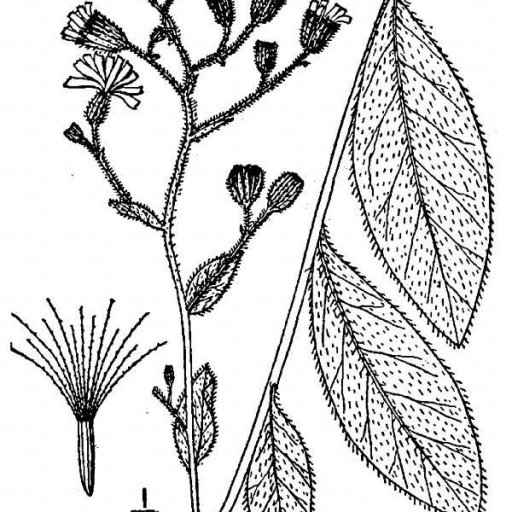
- 🌼 The Flowers: Small, dandelion-like yellow flower heads (about 1/2 inch wide) that grow in loose, branched clusters at the top of the stem.
- 🪵 The Stem: True to its name "Scabrum" (meaning rough), the stem is covered in stiff, dark, glandular hairs that give it a coarse, sandpaper-like texture.
- 🍃 The Leaves: Oval to lance-shaped leaves that are mostly concentrated near the bottom of the plant, often sporting a fuzzy or bristly coating on both sides.
🏡 In Your Garden
- 🏜️ The "Poor Soil" Specialist: Rough Hawkweed is an excellent indicator of dry, acidic, or nutrient-poor soil. It is a great choice for "wild" or rock gardens where other perennials might struggle with drainage.
- 🌬️ Self-Sufficient Seeder: Like its cousins, it produces fluffy "pappus" (parachute seeds) that travel on the wind. It doesn't need much help to propagate, often finding its own way into sunny gaps in the landscape.
⚠️ Safety & Toxicity
- ✅ Generally Safe: Rough Hawkweed is not known to be toxic to humans, dogs, or cats. It is generally ignored by most grazing livestock.
- 🩹 Skin Irritation: While not chemically toxic, the stiff, bristly hairs on the stems and leaves can be a "mechanical" irritant. Some people with sensitive skin may experience a mild, itchy rash after handling the plant without gloves.
✨ Fun Fact
🦅 The Hawk’s Secret: The genus name Hieracium comes from the Greek word hierax, meaning "hawk." Ancient Roman naturalist Pliny the Elder recorded a folk belief that hawks would tear the plant open and use the milky sap to sharpen their eyesight!

Detailed Care Instructions
To grow Hieracium scabrum (rough hawkweed) plant, follow these steps:
- Choose the right location: Hieracium scabrum prefers full sun to partial shade. Make sure the area has well-draining soil.
- Prepare the soil: Loosen the soil and remove any weeds or grass. Mix in organic compost to improve soil fertility and drainage.
- Planting: Dig a hole slightly larger than the root ball of the plant. Place the plant in the hole and backfill with soil. Pat down gently to remove any air pockets.
- Watering: Water the plant immediately after planting to ensure the soil is evenly moist. After that, water the plant regularly, keeping the soil moist but not soggy.
- Mulching: Apply a layer of mulch around the plant to help conserve moisture and suppress weeds. Use organic materials like wood chips, straw, or compost.
- Fertilizing: Hieracium scabrum doesn't require much fertilization. However, you can apply a balanced, slow-release fertilizer during the growing season to provide nutrients.
- Pruning: Prune the plant after it finishes flowering to remove faded blooms and maintain a neat appearance. This will also help promote better blooming the following year.
- Controlling pests and diseases: Keep an eye out for common garden pests like aphids or slugs. If infested, use appropriate organic pest control methods to treat the problem.
- Propagation: Hieracium scabrum can be propagated by division or from seeds. To divide, carefully separate the plant into smaller clumps and replant. Collect seeds and sow them in trays or pots in late winter or early spring, then transplant outdoors once the seedlings have developed.
- Winter care: Hieracium scabrum is a perennial plant that can withstand cold temperatures. However, in areas with severe winters, you may want to apply a layer of mulch or cover the plant to protect it from extreme cold and frost.
By following these steps and providing proper care, your Hieracium scabrum plant should thrive and grow well in your garden.

Place in a bright room that is sun drenched almost all day. Or directly in a south-facing window.

To water this plant, you will need to ensure that the soil is consistently moist but not waterlogged. This can be achieved by watering the plant deeply once a week or more frequently if the soil begins to feel dry to the touch. Make sure not to water the leaves or flowers as this can lead to rot or fungal growth. Additionally, avoid watering during the hottest part of the day to prevent evaporation. Instead, water in the early morning or late evening when temperatures are cooler. Finally, be sure to monitor the soil drainage as this plant prefers well-draining soil.
To properly fertilize this particular plant, you will want to apply a balanced fertilizer in the spring and again in the early summer. Be sure to follow the fertilizer package instructions and apply it evenly around the base of the plant. It is recommended to water thoroughly after fertilizing to ensure the nutrients are properly absorbed by the plant's roots. Avoid over-fertilizing as this can lead to excessive growth and weak stems. It is best to monitor the plant's growth and adjust fertilization accordingly.
The soil requirements for the Hieracium Scabrum plant include the use of well-draining soil that is rich in nutrients. It is recommended to use a slightly acidic to neutral soil with a pH range between 5.5 and 7.0. The ideal soil type should be loamy with a good amount of organic matter that can aid in water retention. It is also important to ensure that the soil is free from any pests or diseases that can harm the plant.
When planting the Hieracium Scabrum, it is recommended to mix the soil with compost or other organic materials to improve the soil structure and nutrient content. The plant prefers a slightly moist soil, but it is important not to overwater as this can lead to root rot and other issues.
Overall, the Hieracium Scabrum plant thrives in well-draining, slightly acidic to neutral soil that is rich in nutrients and organic matter. Proper soil composition and maintenance are crucial to the growth and health of this plant.
To propagate the plant species known as Hieracium Scabrum, one can start by collecting mature seeds from the plant during its normal flowering time. These seeds should be planted in well-draining soil and kept in a warm, humid environment until they germinate.
Another method of propagation is by taking stem and leaf cuttings from the plant. Cuttings should be taken from the parent plant and rooted in a pot of sterile soil mix. The best time to take cuttings is during the growing season when the plant is actively producing new growth.
Once the roots have formed, the new plants can be transplanted to their desired location. It is important to keep the new plants well-watered and protected from direct sunlight until they become established.
As with any propagation method, it is important to monitor the new plants closely and adjust the growing conditions as necessary to ensure their continued health.








