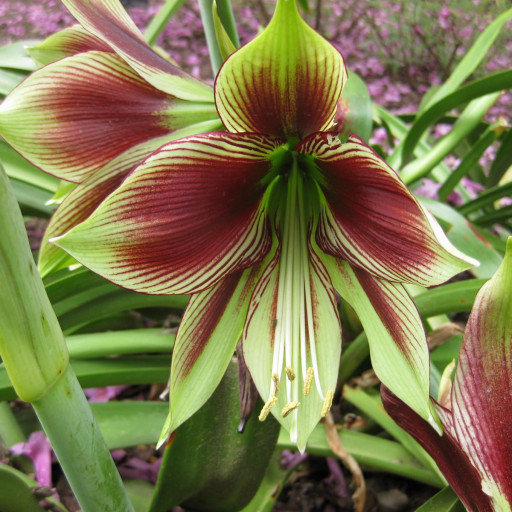
Plant Overview
Known as the "Butterfly Amaryllis," this exotic beauty is a far cry from your typical grocery-store bulb. Hailing from the misty Atlantic forests of Brazil, its dramatic, winged appearance and sophisticated color palette earned it its name. Unlike its hybrid cousins, Hippeastrum papilio carries a wild, elegant air that makes it a prized jewel for collectors and indoor gardeners alike.
🔍 How to Identify
- 🦋 The "Wings": The most striking feature is the bloom—four large, pointed petals featuring intricate, symmetrical maroon or burgundy veining against a pale lime-green or creamy base, perfectly mimicking a butterfly's wings.
- 🍃 Evergreen Foliage: While many Amaryllis species go completely bald in the winter, the Butterfly Amaryllis is semi-evergreen. It produces long, sword-shaped, deep green leaves that often persist throughout the year.
- 📏 The Stalk: It produces tall, sturdy, hollow green stems (scapes) that typically hold two to three large blossoms, which face slightly downward or outward rather than upward.
🏡 In Your Garden
- ⛰️ Natural Upbringing: In the wild, this plant often lives as an "epiphyte," growing on trees or in rocky crevices. Because of this, it hates "wet feet." Use a very airy, well-draining mix (like orchid bark and perlite) to mimic its tropical home and prevent bulb rot.
- 💤 The Dormancy Myth: Unlike common hybrids that require a dark, bone-dry resting period to bloom, H. papilio is more flexible. It prefers a slightly cooler, drier period in late summer but doesn't necessarily need to lose its leaves to produce those spectacular flowers.
⚠️ Safety & Toxicity
- 🚫 Toxic Status: Highly toxic to pets and moderately toxic to humans.
- 🐾 The Culprit: The bulb and leaves contain lycorine, an alkaloid that can cause severe stomach upset, drooling, and tremors in cats and dogs. Always keep this plant on a high shelf away from curious nibblers.
- 🧤 Skin Care: The sap from the leaves or the bulb can cause mild skin irritation for some people. It is a good idea to wear gloves when dividing the bulbs.
✨ Fun Fact
🧬 A Rare Survivor: For several decades, the Butterfly Amaryllis was feared to be extinct in its native Brazilian habitat due to deforestation. It was only "rediscovered" in the 1960s. Today, it is actually more common in household pots than it is in the wild!

Detailed Care Instructions
Here are some steps to help you grow Hippeastrum Papilio plant:
- Choose a healthy bulb: Select a large, firm bulb from a reputable source. Look for one without any signs of pests or disease.
- Potting mix: Use a well-draining potting mix that is rich in organic matter. Avoid using heavy garden soils as they may retain too much moisture and cause the bulb to rot.
- Pot selection: Select a pot that is at least 6-8 inches in diameter and has drainage holes at the bottom to prevent waterlogging. Hippeastrum Papilio bulbs like to be slightly crowded in their pots.
- Planting: Place the bulb in the pot with the pointed end facing up. Position it so that about one-third to one-half of the bulb is above the potting mix surface. Gently press the bulb down to ensure good contact with the soil.
- Watering: Water the plant thoroughly after planting to settle the soil and initiate growth. After that, water sparingly until you see growth emerging from the bulb.
- Light conditions: Hippeastrum Papilio prefers bright but indirect light. Place the plant near a sunny window or in a spot with filtered sunlight. Avoid exposing it to direct sunlight, especially during the hottest parts of the day.
- Temperature: These plants thrive in temperatures between 60-70°F (15-21°C). Avoid placing them in areas with drastic temperature fluctuations or drafts.
- Watering and humidity: Water the plant moderately, allowing the top inch of the soil to dry out before watering again. Maintain moderate humidity levels around the plant by misting it regularly or placing a tray with water next to it.
- Fertilizing: Feed the plant with a balanced houseplant fertilizer every two to three weeks during the growing season (spring and summer). Follow the package instructions for the appropriate dilution and application.
- Dormancy period: After the flowers fade, reduce watering and allow the foliage to die back naturally. This signals the start of the dormancy period. Store the bulb in a cool (50-55°F or 10-13°C), dark, and dry place for about 8-10 weeks. During this time, do not water or fertilize the bulb.
- Replanting: After the dormancy period, remove the bulb from storage and plant it again following the same planting guidelines. Resume regular care, and you should see new growth and flowers in the next cycle.
Remember to monitor the plant regularly, checking for signs of pests, diseases, or any specific care requirements that Hippeastrum Papilio might have.

Place in a window with dappled sun or a spot in the middle of a room. Or directly in a window facing west or east.

The plant should be watered thoroughly, but allow the soil to dry out slightly before watering again. It is important not to overwater the plant, as this can lead to root rot. Water the soil directly, avoid getting water on the leaves or stem of the plant. Use room temperature water for watering. Water more frequently during the growing season and less during the dormant season.
To fertilize this plant, use a balanced fertilizer with equal amounts of nitrogen, phosphorus, and potassium. Fertilize once every two weeks during the growing season and reduce feeding during the winter months. Dilute the fertilizer to half strength before applying it to the soil around the base of the plant. Avoid getting the fertilizer on the leaves or flowers to prevent burning. Water the plant thoroughly after fertilizing.
Hippeastrum Papilio plant requires a particular type of soil to grow healthily. It thrives in well-draining soil that is nutrient-rich and contains a good balance of organic matter. The ideal soil for this plant is slightly acidic with a pH range between 5.5 to 6.5.
The soil should be loose, as it allows the roots to penetrate easily and absorb nutrients and water efficiently. The soil should never be waterlogged; hence, soil that has proper drainage holes is recommended. Soil with a mixture of loam, peat moss, and perlite is suitable for Hippeastrum Papilio plant.
The soil should be rejuvenated every year to maintain its nutrient content. Adding compost and fertilizer during the spring months can help to nourish the plant and encourage healthy growth.
Hippeastrum Papilio is a type of flowering plant that can be propagated through a process called bulb division. To do this, carefully dig up the plant's bulbs, being careful not to damage them. Then, gently separate the bulbs from each other and replant in well-draining soil. Make sure to keep the soil moist and provide the plant with adequate light. It may take a few weeks for the plant to establish itself and begin growing new leaves. With proper care, the plant should eventually produce new flowers.
Common pests of the butterfly amaryllis include Spider mites, aphids, thrips. Make a habit of checking your butterfly amaryllis frequently for pests so that any infestations can be caught and managed early.








