Plant Overview
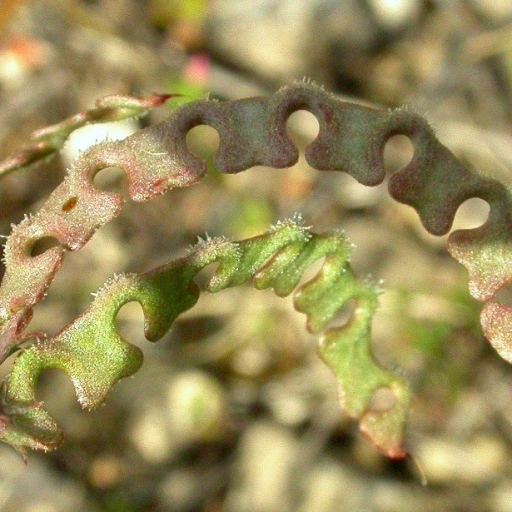
Often called the Fringed Horseshoe Vetch, this Mediterranean native is a master of the "dry and dusty" lifestyle. While it might look like a simple yellow wildflower at first glance, its true beauty lies in its bizarrely shaped seed pods that look like a chain of tiny, hairy crescents. It is a resilient pioneer species, often found hugging the ground in sun-scorched rocky outcrops or sandy coastal plains.
🔍 How to Identify
- 🌼 Pea-Shaped Blooms: Features small, bright yellow flowers that cluster together in groups of 2 to 5, showcasing the classic "banner and wing" shape typical of the legume family.
- 🌿 Feathery Foliage: The leaves are pinnate, meaning they are divided into several pairs of small, oblong leaflets, giving the plant a delicate, airy appearance against the soil.
- 🥨 Horseshoe Pods: The most iconic feature is the seed pod. It is deeply curved with circular indentations, making each segment look like a tiny horseshoe, and the edges are lined with fine, fringe-like hairs (cilia).
🏡 In Your Garden
- 🏜️ Thirst for Limestone: This plant is a "calcicole," meaning it thrives in alkaline soils rich in lime or chalk. It is an excellent choice for rock gardens or "brownfield" style landscaping where drainage is sharp and the sun is intense.
- 🌱 Soil Improver: Like its cousins in the bean family, it works silently underground with specialized bacteria to "fix" nitrogen from the air into the soil, effectively fertilizing the ground for future generations of plants.
⚠️ Safety & Toxicity
- ✅ Non-Toxic: Hippocrepis ciliata is generally considered safe and is not known to contain the high levels of toxins found in some other wild legumes.
- 🐾 Pet & Child Friendly: There are no reported risks regarding skin irritation or accidental ingestion for curious pets or toddlers, though it is always best to discourage eating wild plants.
✨ Fun Fact
- 🐎 The genus name Hippocrepis comes directly from the Greek words hippos (horse) and krepis (shoe). If you look closely at a maturing seed pod, it looks exactly like a miniature string of golden horseshoes waiting to be found!

Detailed Care Instructions

Place in a bright room that is sun drenched almost all day. Or directly in a south-facing window.

To successfully water this plant, it is important to follow certain guidelines. Firstly, be sure to use room temperature water and avoid extreme temperatures. Water the plant deeply and thoroughly, ensuring that the water reaches the root system. Allow the top layer of soil to dry out slightly before watering again. Overwatering or allowing the plant to sit in standing water can lead to root rot and damage to the plant. Additionally, it is important to avoid getting water on the foliage and instead focus on watering at the base of the plant to minimize the risk of disease.
Hippocrepis ciliata is a plant that prefers well-draining, sandy soil with a pH range of 6.0 to 7.5. It also requires soil that is rich in nutrients and organic matter. A mixture of peat moss, sand, and perlite can be used to create a suitable soil mix for this plant. It is important to ensure that the soil is not too heavy or compacted, as this can impede drainage and lead to root rot. Additionally, this plant prefers soil that is slightly acidic to neutral, and will not tolerate soil that is too alkaline. When planting, it is important to ensure that the soil is moist but not waterlogged, as this can also lead to root rot. Regular fertilization with a balanced fertilizer can help to ensure that the plant has the nutrients it needs to thrive.








