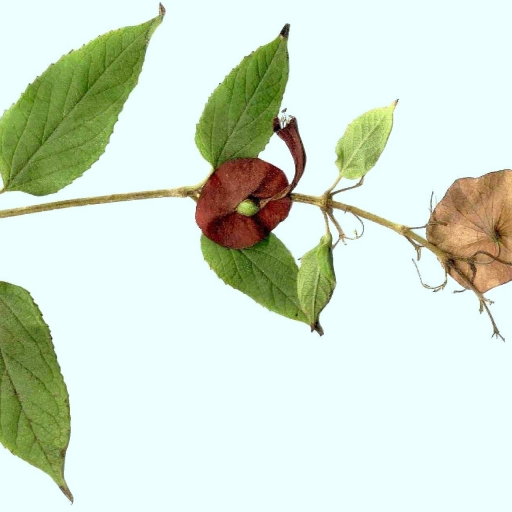
Plant Overview
Known affectionately as the "Chinese Hat Plant" or the "Cup-and-Saucer Plant," this Himalayan native looks like something plucked straight from a botanical curiosity shop. Its arching, "scrambling" branches are adorned with vibrant, saucer-shaped flowers that seem to defy standard floral shapes. It is a favorite in warm climates for gardeners who want to add a touch of whimsy and bright, scarlet color to their landscape.
🔍 How to Identify
- 🎩 The "Hat": The most striking feature is the persistent, flat, circular calyx that looks like a miniature wide-brimmed hat or a saucer. Even after the flower dies, these colorful "hats" remain on the plant.
- 🎺 The Corolla: A narrow, trumpet-like tube emerges from the center of the saucer, typically in a deep scarlet or fiery orange-red.
- 🍃 Foliage: The leaves are heart-shaped or ovate with slightly toothed edges, growing in an "opposite" pattern along slender, woody stems that can reach up to 30 feet in the wild.
🏡 In Your Garden
- 🧗 A Scrambling Habit: This plant is often described as a "scrambling shrub." It doesn't have tendrils to climb like a vine, but its long, flexible branches will lean on and grow over nearby structures. Give it a trellis or a sturdy wall to help it shine.
- ✂️ The Pruning Nuance: Without regular maintenance, it can become "leggy" or sparse. Pruning it back hard after the flowering season is over encourages a bushier shape and leads to a much more dramatic floral display the following year.
- 🦋 Wildlife Magnet: Because of the tubular shape of the flowers, it is a high-priority target for butterflies and hummingbirds who are looking for a nectar-rich snack.
⚠️ Safety & Toxicity
- 🐾 Pet Safety: Holmskioldia sanguinea is generally considered non-toxic to dogs, cats, and horses. It is a "safe" choice for a pet-friendly backyard.
- 👶 General Caution: While not known for being poisonous, the plant is not edible. The bright, toy-like appearance of the "hats" can be tempting for small children, so keep an eye on curious toddlers to prevent choking hazards.
✨ Fun Fact
The genus name Holmskioldia was chosen to honor Johan Theodor Holmskiold, an 18th-century Danish physician and botanist who was a personal doctor to the Danish Royal Family and a prominent nobleman.

Detailed Care Instructions
| Humidity | Normal |
| Lighting | Full Sun |
| Difficulty | Medium |
| Hardiness Zones | 10A - 11 |
To grow Holmskioldia sanguinea, also known as the Chinese hat plant or Mandarin hat plant, follow these steps:
- Choose the right location: Holmskioldia sanguinea prefers a warm climate, so it should be grown in a location with full sun to partial shade. It is recommended to grow it outdoors in USDA hardiness zones 10-11 or as a potted plant that can be brought indoors during colder months.
- Soil requirements: The plant does well in well-draining, fertile soil. Prepare the soil by adding organic matter such as compost or well-rotted manure to improve drainage and nutrient content.
- Planting: Start by obtaining a healthy Holmskioldia sanguinea plant or obtain seeds from a reputable source. If starting from seeds, sow them in containers or directly in the ground during spring. The seeds should be lightly covered with soil and kept moist but not waterlogged.
- Watering: Keep the soil consistently moist, but avoid overwatering, as excessive moisture can cause root rot. Water when the top inch of soil feels dry. During hot and dry periods, the plant may require more frequent watering.
- Fertilizer: Apply a balanced, water-soluble fertilizer once a month during the growing season. Follow the manufacturer's instructions for application rates.
- Pruning: Prune the plant regularly to maintain its shape and promote bushier growth. Pruning can be done after the blooming period or as needed throughout the year. Remove any dead or diseased branches and trim back overgrown areas.
- Flowering: Holmskioldia sanguinea produces showy clusters of orange or red flowers that resemble Chinese hats. The plant will typically bloom during spring and summer, attracting hummingbirds and butterflies.
- Pests and diseases: Monitor the plant for common pests such as aphids, spider mites, and mealybugs. Treat infestations promptly with an appropriate insecticide or by using environmentally friendly pest control methods. The plant is generally resistant to diseases but may be susceptible to root rot if overwatered.
By following these guidelines, you should be able to successfully grow and enjoy Holmskioldia sanguinea in your garden or as a potted plant.

Place in a window with dappled sun or a spot in the middle of a room. Or directly in a window facing west or east.

To water this particular plant, it is important to follow a few guidelines. Firstly, it is important to ensure that the soil is moist but not waterlogged, as this can lead to root rot and other issues. One way to determine if the plant needs watering is to stick a finger into the soil to a depth of about an inch. If the soil feels dry at this depth, it may be time to water.
When watering, it is important to avoid getting water on the leaves and flowers of the plant, as this can cause damage and lead to fungal issues. Instead, water at the base of the plant and allow the water to soak into the soil.
It is important to note that the watering needs of this plant may vary depending on factors such as temperature, humidity, and the size of the container it is planted in. Keeping these factors in mind can help ensure that the plant receives the appropriate amount of water to thrive.
Fertilize the plant during the growing season, which is typically from spring to fall. Use a balanced, all-purpose fertilizer with equal amounts of nitrogen, phosphorus, and potassium. Dilute the fertilizer to half strength and apply it to the plant's soil every two weeks. Ensure that the soil is moist before fertilizing, as applying fertilizer to dry soil can damage the plant's roots. In the winter months, reduce fertilization to once a month or stop fertilizing altogether.
The recommended soil for Holmskioldia Sanguinea should have good drainage and be rich in organic matter. A mixture of loamy soil, perlite or sand, and well-rotted compost can be used to create the ideal soil mix for this plant. It is important to avoid using heavy clay soils that may retain too much moisture, as this can cause root rot. The pH of the soil should be slightly acidic, around 6.0 to 6.5, for optimal growth. Additionally, regular fertilization with a balanced fertilizer can help to ensure healthy growth and development.
Holmskioldia Sanguinea plant can be propagated through stem cuttings. First, select a healthy stem that is about 4 to 6 inches long. The cutting should be taken from the tip of the stem and have at least two to three nodes. Remove the lower leaves from the stem, leaving only a few at the tip. Dip the cut end of the stem in rooting hormone to encourage root growth. Then, plant the stem cutting in a well-draining soil mix. Water the cutting and place it in a bright, indirect light. Keep the soil moist but not too wet and mist the cutting daily. In a few weeks, the cutting should root and new growth will appear.
Common pests of the chinese hat plant include Mealybugs, spider mites, thrips. Make a habit of checking your chinese hat plant frequently for pests so that any infestations can be caught and managed early.








