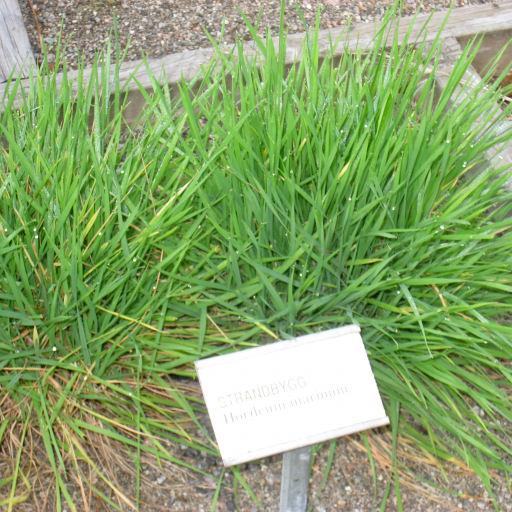
Plant Overview
Often known as Sea Barley or Seaside Barley, this resilient wild grass is a master of survival in harsh environments. While it shares a lineage with the barley used in your favorite brews, this cousin has adapted specifically for the salty spray of the coast and the tough, compacted soils of the roadside. It is a pioneer plant, often the first to colonize land where other greenery struggles to breathe.
🔍 How to Identify
- 🌾 The Seed Spike: It produces a dense, bristly flower head (spike) that looks like a miniature, fuzzy brush, usually appearing from late spring to summer.
- 🗡️ The Awns: Each seed is equipped with long, stiff bristles called "awns" that give the plant a shimmering, hairy appearance when caught in the light.
- 🍃 Leaf Texture: The leaves are flat, grayish-green, and slightly rough to the touch, often twisting slightly as they grow upward.
🏡 In Your Garden & Landscape
- 🌊 Salt Tolerance: As a "halophyte," Sea Barley loves salt. If you live near the ocean or have a driveway heavily salted in winter, this grass will thrive where others wither.
- 🚜 Resilient Groundcover: It is incredibly tough against foot traffic and poor soil. However, because it is an annual grass, it relies on dropping its seeds to return the following year, which can lead to it spreading faster than a hobbyist might want.
⚠️ Safety & Toxicity
- 🐕 Mechanical Hazard: While the plant is not chemically toxic to humans or pets, the dried seed heads (foxtails) are dangerous.
- 📍 Physical Risk: The sharp awns are designed to burrow into the soil, but they can just as easily get stuck in a dog’s fur, ears, or paws, potentially causing painful infections or requiring a vet visit to remove.
✨ Fun Fact
Sea Barley is a "genetic goldmine" for scientists! Because it can grow in high-salt environments that would kill normal crops, researchers are studying its DNA to help create new types of wheat and barley that can survive climate change and rising sea levels.

Detailed Care Instructions
To grow Hordeum Marinum, also known as sea barley or sea barley grass, you can follow these steps:
- Obtain seeds: Purchase Hordeum Marinum seeds from a reputable seed supplier, botanical garden, or online. Make sure the seeds are fresh and viable.
- Prepare the planting area: Select a sunny location with well-drained soil. Clear the area of weeds, rocks, and debris. Hordeum Marinum can tolerate poor soil conditions, including sandy or saline soils.
- Sow the seeds: Scatter Hordeum Marinum seeds directly onto the prepared soil surface. Alternatively, you can start the seeds indoors in seed trays or pots, then transplant them outside once they reach a suitable size.
- Watering: Keep the soil moist until germination occurs. After that, Hordeum Marinum is relatively drought-tolerant and requires minimal watering. However, water the plants during extended dry periods to promote healthy growth.
- Thin the seedlings: Once the seedlings emerge, thin them out to provide enough space for each plant to grow. Space the plants several inches apart to allow proper air circulation and prevent overcrowding.
- Fertilization: Hordeum Marinum generally does not require regular fertilization since it can adapt to poor soils. However, if your soil lacks nutrients, you can apply a balanced, slow-release fertilizer sparingly.
- Pruning: Unlike regular cultivated barley, Hordeum Marinum is grown for its ornamental value rather than its grains. As such, it doesn't typically require pruning or trimming. However, you can remove any dead or yellowed leaves to maintain its appearance.
- Pests and diseases: Hordeum Marinum is relatively resistant to pests and diseases. However, be on the lookout for common garden pests like aphids, spider mites, or slugs. If a problem arises, treat it with organic pest control methods or appropriate insecticides.
- Harvesting: If you want to collect seeds, allow the Hordeum Marinum plants to mature and naturally drop their seeds. Collect the seeds before they disperse. Otherwise, you can leave the plant as an ornamental grass and enjoy its aesthetic appeal.
By following these steps, you should be able to successfully grow Hordeum Marinum in your garden or outdoor space. Remember to observe the specific growing conditions in your region to ensure optimal growth.

Place in a bright room that is sun drenched almost all day. Or directly in a south-facing window.

The watering requirements for this plant will depend on the specific growing conditions, such as the temperature, humidity, and soil moisture levels. In general, it is important to keep the soil consistently moist but not waterlogged. Allow the top inch or so of soil to dry out before watering again. When watering, avoid getting water on the foliage as this can increase the risk of fungal diseases. Instead, water at the base of the plant and allow the water to soak in slowly. In periods of high temperatures or dry weather, you may need to increase the frequency of watering to prevent the plant from becoming stressed.
To fertilize this plant, begin by preparing the soil. Mix in organic matter such as compost or well-rotted manure, as well as a slow-release organic fertilizer. As the plant grows, apply a balanced fertilizer with equal parts nitrogen, phosphorus, and potassium. Be careful not to over-fertilize, as this can lead to excessive growth and weak stems. Water the plant thoroughly after fertilizing to ensure that the nutrients are absorbed by the roots.
The ideal soil for this plant should be well-draining with a neutral to slightly alkaline pH. It should have good water retention but also allow for proper aeration. The soil should be rich in nutrients, especially nitrogen, potassium, and phosphorus. It is recommended to add organic matter such as compost or aged manure to the soil to increase fertility and improve soil structure. Additionally, this plant prefers soils that are not too compacted and have good drainage to prevent waterlogging.
To propagate this particular plant, one can start by collecting its seeds. The seeds can be sown directly into the soil, but it is advisable to first provide suitable conditions for germination. It is best to sow the seeds in a mixture of sand and compost, and water them regularly until they germinate.
The plant can also be propagated through the division of its mature clumps. This should only be done during the plant’s growing season. The clumps should be lifted from the soil, carefully divided into smaller sections, and replanted. It is important to make sure that each section has enough roots to support it.
Another way to propagate the plant is through stem cuttings. This method is best suited for the plant’s growing season as well. Cuttings should be taken from the plant’s healthy stems, and should measure about 8-10 cm. Remove the leaves from the lower half of the cutting, and plant it in a mixture of sand and compost. Keep the cutting moist and in a warm, light place until it starts to root.
Regardless of the method chosen, it is important to provide proper growing conditions for the propagated plant, including suitable soil, light, and water.








