Plant Overview
Commonly known as the Sasi or a wild cousin of the Nutmeg, Horsfieldia kingii is a majestic evergreen tree that calls the dense, humid rainforests of Northeast India and Southeast Asia home. Often admired for its tall, straight trunk and umbrella-like canopy, it plays a vital role in its ecosystem, providing both shade and a feast for forest wildlife.
🔍 How to Identify
- 🍃 The Foliage: Look for large, leathery, dark green leaves that are shaped like long ovals. They have a glossy sheen on top and distinct veins that feel slightly raised to the touch.
- 🟡 The Blooms: It produces tiny, globose (ball-shaped) flowers that are yellowish-orange. These grow in branched clusters called panicles and emit a subtle, spicy fragrance.
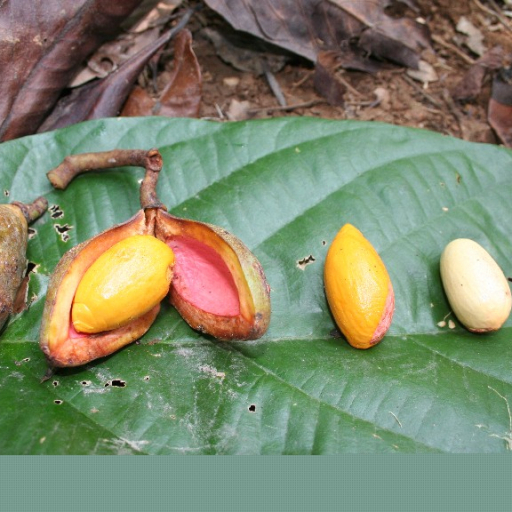
- 🌰 The Fruit: The most striking feature is its ellipsoid fruit. When ripe, the outer husk splits into two valves to reveal a single seed wrapped in a bright, fleshy red covering (aril), much like a classic nutmeg seed.
🏡 In Your Garden
- 🌳 Growth Habit: Unlike small ornamental shrubs, this is a forest giant that can reach towering heights. If you are lucky enough to grow one, it requires deep, well-draining soil and plenty of vertical space to thrive.
- 💧 Climate Needs: It is a true tropical soul. It craves high humidity and consistent warmth. It hates "cold feet" (soggy roots in cold soil) and will drop leaves if the air becomes too dry or the temperature dips significantly.
⚠️ Safety & Toxicity
- 🐾 Mildly Toxic: While not considered "deadly," the seeds of many Horsfieldia species contain compounds similar to myristicin (found in nutmeg).
- 🚫 Keep Away: Ingesting large quantities of the seeds can cause digestive upset or neurological symptoms in pets and small children. It is best treated as an ornamental tree rather than a source of food.
✨ Fun Fact
In its native habitats, Horsfieldia kingii is a favorite supermarket for Great Hornbills! These large, colorful birds swallow the fruits whole, digest the fleshy outer layer, and "replant" the seeds across the forest through their droppings, making the tree a key player in forest regeneration.

Detailed Care Instructions

Place in a window with dappled sun or a spot in the middle of a room. Or directly in a window facing west or east.

When the top few inches of soil dry out, water your plants. If the top few inches of soil are still moist, do not water your plant. Wait a few days, then poke your finger into the soil to see if anything has changed. Overwatering poses a disease risk, such as the development of fungal diseases in the roots. These plants have adaptations in there leaves that allow them to survive in low water supply.








